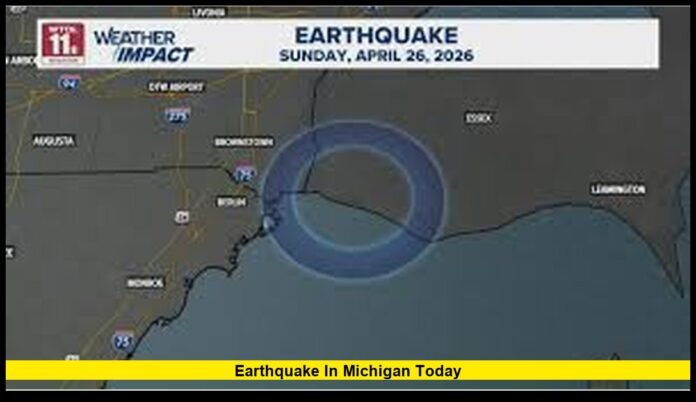

Earthquake in Michigan today is drawing strong attention across the United States as residents look for confirmed updates about possible seismic activity. As of May 5, 2026, there are no verified reports of a significant or damaging earthquake in Michigan, based on the latest available seismic monitoring data. Despite rising online discussions and search trends, officials have not confirmed any event that would indicate widespread shaking, structural damage, or emergency conditions.
Interest has surged due to scattered reports of brief vibrations and online chatter, but current verified information shows no major earthquake has occurred in Michigan today. Understanding what is happening—and what is not—is essential for staying informed and avoiding unnecessary concern.
Latest Verified Situation Across Michigan
The most recent checks of seismic monitoring systems show no notable earthquake event recorded in Michigan today. This includes both statewide monitoring and broader national seismic tracking.
What is confirmed right now:
- No earthquake of damaging magnitude has been recorded
- No emergency alerts or warnings have been issued
- No injuries or property damage tied to seismic activity have been reported
- No official confirmation of a widely felt tremor event
Small vibrations can occur naturally or from human activity, but they often do not register as meaningful seismic events.
Why “Earthquake in Michigan Today” Is Trending
Search spikes like this often happen quickly, even when no major event occurs. A few common triggers can explain the sudden attention:
- Residents may feel a brief shaking sensation and report it online
- Social media posts can spread rapidly without verification
- Loud noises or ground vibrations may be mistaken for earthquakes
- Increased awareness of earthquakes nationwide can heighten sensitivity
Even a few isolated reports can lead to thousands of searches within minutes. That does not always mean a confirmed seismic event has taken place.
Can Minor Tremors Occur Without Major Reports?
Yes. Michigan can experience very small tremors that may not be widely recorded or reported.
These minor movements can:
- Be too weak to cause damage
- Last only a few seconds
- Be felt by a limited number of people
- Go unnoticed by most residents
In many cases, what people feel may not be a true earthquake at all.
Common Causes of Earthquake-Like Sensations
Several everyday activities can mimic the feeling of an earthquake. These include:
Possible Non-Seismic Causes
- Heavy truck traffic passing near buildings
- Construction or roadwork vibrations
- Industrial operations or machinery
- Quarry blasting in certain regions
- Sudden atmospheric pressure changes
These events can create short bursts of vibration that feel similar to a mild tremor.
Michigan’s Seismic Profile: A Low-Risk Region
Michigan is widely known as a low earthquake-risk state. It sits far from major tectonic boundaries, which reduces the likelihood of strong earthquakes.
Key Characteristics of Michigan’s Geology
- Stable continental crust
- No major active fault lines nearby
- Limited underground stress buildup
- Rare occurrence of measurable earthquakes
Because of this stability, Michigan does not experience frequent or powerful seismic events.
How Often Do Earthquakes Happen in Michigan?
Earthquakes in Michigan are uncommon and typically very small.
Typical Patterns
- Most events are below magnitude 3.5
- Many are not felt by residents
- Significant earthquakes are extremely rare
- Activity does not follow a regular pattern
This means that even when a tremor occurs, it is unlikely to cause disruption.
Historical Perspective on Michigan Earthquakes
Although rare, Michigan has experienced minor seismic events over time. These events provide useful context for today’s situation.
Past Observations
- Small tremors have been recorded intermittently across the state
- Some events were felt lightly in local areas
- Damage from past earthquakes has been minimal to nonexistent
These historical patterns reinforce the state’s reputation as a stable region.
How Seismic Activity Is Monitored
Earthquake detection relies on advanced technology that continuously tracks ground movement.
Monitoring Process
- Sensors measure vibrations deep underground
- Data is transmitted instantly to monitoring centers
- Analysts determine the strength and location of any event
- Verified events are quickly recorded and shared
This system ensures that any meaningful earthquake would be detected and reported quickly.
What Residents Might Have Experienced Today
Even without a confirmed earthquake, some residents may have felt unusual sensations.
Reported Experiences Can Include:
- A quick rumble beneath the ground
- Light shaking of objects indoors
- A subtle vibration lasting a few seconds
- A distant, low-frequency sound
These experiences can feel real and concerning, even when they are not linked to seismic activity.
How to Tell If It Was an Earthquake
If you feel shaking, consider a few quick checks:
- Did others nearby feel it at the same time?
- Did the shaking last more than a few seconds?
- Was there any visible movement of furniture or objects?
If the answer to these is unclear, the event may not have been a true earthquake.
Safety Steps Everyone Should Know
Even in low-risk areas, knowing how to respond to shaking is important.
During Shaking
- Drop to your hands and knees
- Take cover under a sturdy surface
- Hold on until movement stops
- Stay away from windows
After Shaking Stops
- Check yourself and others for injuries
- Look for hazards like broken glass
- Avoid unstable structures
- Stay alert for further movement
Preparation helps ensure quick, calm responses.
Public Awareness and Rapid Information Spread
In today’s digital environment, information travels fast. While that can be helpful, it also creates challenges.
What Happens During Trending Events
- Initial reports spread quickly on social platforms
- People share personal experiences in real time
- Confusion can grow without confirmed data
- Searches increase as people look for answers
This cycle can make a minor or unverified event appear larger than it is.
Why Verified Updates Matter
Accurate information prevents panic and helps communities respond appropriately.
Unverified claims can:
- Lead to unnecessary fear
- Spread misinformation
- Distract from real emergencies
- Create confusion about actual risks
Sticking to confirmed updates ensures clarity and safety.
Read Also – Earthquake California
Comparing Michigan to High-Risk Earthquake States
Michigan’s seismic profile differs greatly from states like California.
Key Differences
| Factor | Michigan | High-Risk States |
|---|---|---|
| Fault Lines | Minimal | Numerous |
| Frequency | Rare | Frequent |
| Magnitude | Low | Moderate to High |
| Damage Risk | Very Low | Elevated |
This comparison highlights why major earthquakes are unlikely in Michigan.
Is There Any Sign of Increased Activity?
Current data shows no unusual increase in seismic activity in Michigan.
- No pattern of rising tremor frequency
- No clusters of recent earthquakes
- No signs of escalating intensity
The state continues to follow its long-standing pattern of minimal seismic movement.
Could Future Earthquakes Occur?
While unlikely, no area is completely free from seismic risk.
What Experts Understand
- Small earthquakes may happen occasionally
- Large earthquakes remain extremely rare
- Geological stability reduces long-term risk
Preparedness remains important, even when risk is low.
What to Watch Moving Forward
Residents should stay aware but not alarmed.
Keep an Eye On
- Official alerts from emergency systems
- Confirmed seismic reports
- Repeated or stronger shaking sensations
If something significant occurs, it will be clearly communicated.
Quick Facts About Earthquake Activity in Michigan
- Earthquakes are rare in the state
- Most tremors are minor and short-lived
- Damage from past events has been minimal
- Monitoring systems operate continuously
- No major earthquake has been confirmed today
Understanding Public Concern
Even without a confirmed event, concern is natural. Feeling unexpected movement can be unsettling.
People often:
- Seek immediate answers online
- Share experiences with others
- Look for reassurance about safety
Clear, factual updates help address these concerns quickly.
The Bottom Line on Earthquake in Michigan Today
At this time, there is no confirmed major earthquake in Michigan today, despite widespread online interest and discussion. Reports of shaking may be linked to minor vibrations or non-seismic causes rather than a verified earthquake event.
Michigan remains one of the most stable regions in the country when it comes to seismic activity. While awareness is important, there is no indication of a dangerous or damaging situation at this time.
Have you noticed any unusual vibrations today, or are you tracking updates as they develop? Share your thoughts and stay informed as new information becomes available.