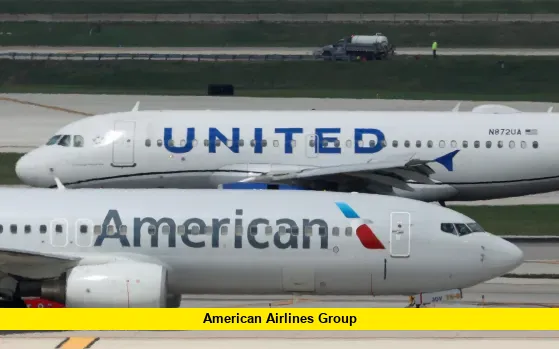

In a move that sent shockwaves through the aviation industry, American Airlines Group has drawn a firm line, publicly declaring it will not merge with United Airlines under any circumstances. The rejection, issued late Friday, April 17, 2026, came directly from the carrier’s headquarters in Fort Worth, Texas, and it effectively closed the door on what would have been the largest airline consolidation deal in the history of commercial aviation.
The statement from American Airlines Group was short, deliberate, and unmistakably clear: no merger with United Airlines — not now, not under the current proposal, and not on these terms. For travelers, investors, and industry watchers across the country, the declaration raises important questions about where the U.S. airline industry is headed and what it means to fly in America going forward.
Stay informed as this story continues to develop — bookmark this page and check back for the latest updates.
How This Story Began: United’s CEO and a Bold Pitch
The story did not start with American Airlines. It started with United Airlines CEO Scott Kirby, one of the most ambitious executives in the airline business and, notably, a former American Airlines veteran himself.
Over the course of several months, Kirby had been quietly shopping the idea of a mega-merger between United and American to some of the most powerful people in Washington. The concept eventually made its way directly to President Donald Trump, with Kirby reportedly arguing that combining the two carriers would create a global aviation powerhouse capable of competing against heavily subsidized foreign airlines on the world stage.
The argument had a certain logic to it. Foreign carriers — many of them backed by their home governments — supply a disproportionate share of international seat capacity out of U.S. airports, even though a large majority of passengers on those flights are American citizens. Kirby’s pitch framed the merger as a matter of national economic competitiveness, a way to reclaim a larger share of international air travel revenue and, in his telling, even help reduce the U.S. trade deficit.
It was a bold argument, and it was crafted specifically to appeal to an administration that has been vocal about prioritizing American economic strength on the global stage.
What the Deal Would Have Created
Had it ever materialized, a United-American combination would have been staggering in scale. American Airlines already ranks among the world’s largest carriers by passengers flown. United is not far behind. Together, the two would have dwarfed every other airline operating in the United States and would have stood as the largest commercial airline on the planet by a significant margin.
The combined carrier would have controlled somewhere between 30 and 40 percent of total U.S. domestic air travel capacity. The country’s current Big Four — American, United, Delta, and Southwest — already account for the overwhelming majority of domestic flights. A United-American merger would have reduced that group to a Big Three, with one dominant player sitting above the rest.
The geographic implications were equally significant. Both carriers operate major hubs in Chicago, Los Angeles, and the New York metropolitan area. In those markets particularly, a merged carrier would have faced almost no meaningful competition on dozens of key routes, giving it enormous pricing power and little incentive to keep fares low or service quality high.
American Airlines Group’s Response: Firm, Strategic, and Carefully Worded
American Airlines Group’s statement on April 17 was notable not just for its content, but for the way it was framed. The company opened by expressing appreciation for President Trump, Transportation Secretary Sean Duffy, and other administration figures who have supported the aviation industry. Then it delivered the rejection.
American stated clearly that a combination with United would be negative for competition and harmful to consumers. Crucially, the company argued that such a deal would be inconsistent with the administration’s own philosophy toward industry and the foundational principles of antitrust law. The airline added that its focus will remain on executing its own strategic objectives and positioning itself to win over the long term.
This was not a passive or defensive statement. American was making an argument — telling the White House that approving this deal would, in the company’s view, contradict the administration’s stated values. It was a smart rhetorical move. Rather than simply saying no, American Airlines Group turned the rejection into a policy argument, one designed to make approval politically uncomfortable for the administration as well.
The Antitrust Reality That Makes This Deal Nearly Impossible
Even setting aside American’s rejection, legal and aviation experts have been near-unanimous in their assessment: getting a United-American merger past regulators would be an extraordinary challenge, even in a more merger-friendly political environment.
Antitrust law in the United States is designed to prevent exactly this kind of transaction — one where two of the largest competitors in a market eliminate each other as rivals and gain the power to dictate prices to consumers. The airline industry has already undergone significant consolidation over the past two decades. Adding another enormous merger to that history would be very difficult to justify under existing antitrust frameworks.
Legal scholars and aviation industry analysts have called this kind of deal everything from extraordinarily difficult to dead on arrival. The concern is not hypothetical. Courts have already demonstrated willingness to block airline deals far smaller in scale. A federal judge struck down American’s partnership with JetBlue in the Northeast in 2023. Another court blocked JetBlue’s planned acquisition of Spirit Airlines in early 2024. These rulings signaled clearly that judicial scrutiny of airline consolidation remains sharp and serious.
Beyond the Department of Justice, a deal of this scale would also face challenges from state attorneys general, consumer advocacy organizations, and potentially foreign regulatory authorities who control access to international routes. Even if federal officials approved it, the legal battles could stretch on for years.
The Trump Administration’s Careful Non-Commitment
The White House has not taken a hard position on the merger, and that careful neutrality is telling. Transportation Secretary Duffy acknowledged in early April that there may be room for some airline consolidation, but added that any merger between larger carriers would need to involve asset divestitures and that he would not pre-commit to any outcome.
When the White House press secretary was asked about the United proposal directly, the response was measured and non-committal. Trump himself has publicly said he likes big deals, but has also expressed concern about reducing competition. That tension — between enthusiasm for large business combinations and awareness that consumers could get hurt — has kept the administration from formally endorsing what would be the most consequential airline merger in a generation.
In practice, this means the administration is unlikely to actively push for a deal that American Airlines itself has rejected and that legal experts believe faces nearly insurmountable antitrust hurdles. Without a willing target and without clear regulatory support, the United merger idea appears to have run out of runway, at least in its current form.
An Honest Assessment: Who Is Right Here?
This is where the analysis gets interesting, because both sides of this debate have legitimate points.
Scott Kirby is not manufacturing a crisis. The competitive pressure that U.S. airlines face from foreign carriers is real. International aviation is a tough business, and state-backed airlines from the Middle East, Asia, and Europe have deep resources and government support that U.S. carriers simply do not have. Kirby’s argument that American airlines need greater scale to compete globally is not without merit, and his track record of building United into a profitable, premium-focused carrier gives him credibility when he talks about airline strategy.
But the leap from “we need to be more competitive internationally” to “we should eliminate our largest domestic rival” is a significant one. The bulk of what American and United do every day is fly American passengers between American cities. Reducing competition on those routes — the ones that matter most to everyday travelers — in order to gain scale on international routes is a trade-off that falls heavily on the passenger paying for a flight from Dallas to Chicago or Los Angeles to New York.
American Airlines Group is right to call this out. A merger that harms domestic competition in the name of international competitiveness asks ordinary travelers to pay a higher price — literally — for a strategy that primarily benefits the combined airline’s balance sheet. That is not a neutral outcome for consumers, and it is precisely the kind of trade-off that antitrust law was designed to scrutinize carefully.
What American Airlines Group Is Actually Focused On
By rejecting the merger, American Airlines Group is signaling something important about its strategy: it believes it can grow and win on its own. That is a meaningful statement from a carrier that has faced real challenges in recent years, including losing ground in the lucrative corporate travel segment and navigating a period of strategic repositioning under current leadership.
The airline has been working to improve operational reliability, recapture business travelers, and invest in the passenger experience. A massive merger would have consumed enormous management bandwidth and regulatory energy at precisely the moment when American needs to be focused on its own execution. Walking away from the distraction of a deal that was never going to be easy — and that American never invited — was the right call for the business.
American’s path forward is not about being bigger than United. It is about being better than it has been — more reliable, more competitive for premium customers, and more attractive to the traveling public across all fare classes.
What This Means for Travelers Right Now
For the average American who just wants to get from one city to another at a fair price, this rejection is good news in the short term. More airlines competing for your business means more pressure to keep fares reasonable and service quality high. A world in which American and United merged would have been a world with fewer choices, more concentrated hub markets, and less incentive for airlines to compete on anything other than loyalty program points.
That does not mean the airline industry is without problems. Fares, fees, and service quality remain persistent concerns for travelers across the country. But the answer to those problems is not fewer airlines — it is stronger competition, better consumer protections, and regulatory frameworks that keep carriers accountable.
American Airlines Group’s decision to stand apart from the United merger idea, on the grounds that it would hurt competition and consumers, aligns the company with the interest of the traveling public in a way that should be recognized and respected.
What Comes Next for the Industry
With American firmly out of the picture, the immediate question is whether Kirby looks elsewhere for consolidation opportunities or quietly lets the idea rest. Industry observers have noted that even raising the possibility of a United-American combination has already sparked broader speculation about other potential deals involving Delta, Southwest, and mid-sized carriers. The consolidation conversation in American aviation is not going away.
What has changed is that American Airlines Group has made its position clear. It is not for sale, it is not interested in discussion, and it believes the path forward runs through competition — not combination. Whether the rest of the industry follows a similar philosophy or continues to pursue scale through consolidation will define the next chapter of American aviation.
For now, the skies remain competitive. And for travelers, that is exactly where they should stay.
What do you think — is American Airlines Group making the right call, or is consolidation the only way U.S. airlines can truly compete on the world stage? Share your thoughts in the comments below and pass this along to a fellow frequent flyer.