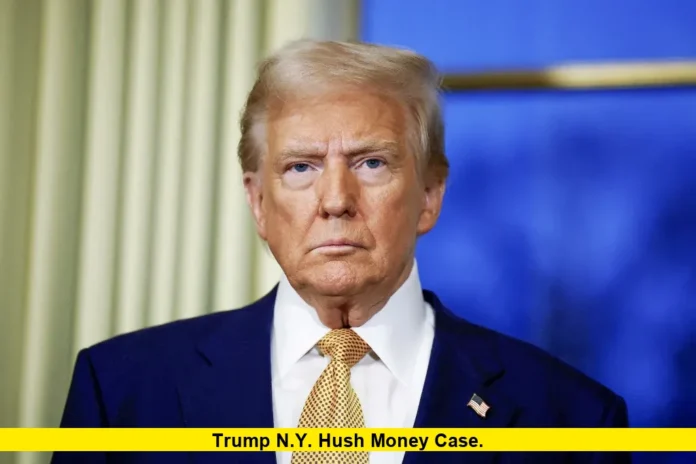

The Trump N.Y. Hush Money Case continues to capture national attention years after the initial verdict, with fresh legal maneuvers keeping the matter alive in both state and federal courts.
Donald Trump faced 34 felony counts of falsifying business records in New York state court. Prosecutors alleged the charges stemmed from efforts to conceal a $130,000 payment made to adult film actress Stormy Daniels ahead of the 2016 election. The payment aimed to suppress her account of an alleged encounter with Trump. A jury convicted him on all counts in May 2024, marking a historic moment as the first former U.S. president found guilty of felony crimes.
If you want the complete picture of how this landmark case unfolded and where it stands today, keep reading to unpack every major development step by step.
The case originated from events dating back to 2016. Michael Cohen, then Trump’s personal attorney, arranged the payment to Daniels through a shell company. Court records showed reimbursements to Cohen disguised as legal expenses in Trump’s business ledgers. Prosecutors argued this scheme violated New York election laws by concealing information from voters. Defense attorneys maintained the payments represented legitimate legal work and denied any intent to influence the election improperly.
Jury selection began in April 2024 in Manhattan under the oversight of Justice Juan M. Merchan. Witnesses included Cohen, Daniels, and former National Enquirer publisher David Pecker. The trial featured detailed testimony about the payment mechanics and internal Trump Organization records. Jurors deliberated for less than two days before delivering a unanimous guilty verdict on May 30, 2024.
Sentencing faced multiple delays due to appeals and the Supreme Court’s July 2024 ruling on presidential immunity for official acts. Trump’s team argued certain evidence at trial implicated protected conduct. Justice Merchan ultimately scheduled sentencing for January 10, 2025. At that hearing, he imposed an unconditional discharge on all 34 counts. This outcome carried no fine, probation, or jail time, reflecting leniency tied to Trump’s status as incoming president. The judge emphasized the symbolic nature of the conviction while allowing the felony record to stand.
Read Also-Is Donald Trump a Felon? The Legal Status Explained
The timeline of the Trump N.Y. Hush Money Case reveals a complex interplay of state charges, federal immunity questions, and repeated removal attempts.
Following the verdict, Trump launched appeals in New York state courts. His legal team filed formal notices challenging the conviction on grounds that the trial evidence included official acts protected by immunity and that jury instructions contained errors. The state appellate process advanced slowly, with briefs submitted throughout 2025. Meanwhile, Trump’s attorneys pursued a parallel strategy to shift the entire matter into federal court.
In late 2025, the 2nd U.S. Circuit Court of Appeals directed a federal judge to reconsider whether the case qualified for removal. The appeals panel highlighted the need to examine how the Supreme Court’s immunity decision applied to post-trial removal requests. This order gave Trump’s lawyers another opportunity to argue that federal jurisdiction offered a faster path to overturning the verdict.
On February 4, 2026, U.S. District Judge Alvin K. Hellerstein presided over oral arguments in Manhattan federal court. Trump did not attend the session. His attorney pressed the case for removal, citing presidential immunity and arguing the state proceedings improperly included protected conduct. Prosecutors from the Manhattan District Attorney’s office opposed the move, stressing the advanced stage of the case and the defendant’s prior strategic choices.
Judge Hellerstein questioned the timing of the federal removal effort. He noted that Trump’s team had first raised immunity claims in state court before seeking federal intervention weeks later. The judge described the approach as seeking “two bites at the apple” and suggested the delay could prove fatal to the removal bid. He listened attentively to both sides but expressed clear reservations about granting the transfer at this late stage. No immediate ruling came from the bench; instead, the judge indicated a written decision would follow.
The federal removal effort represents the latest chapter in the Trump N.Y. Hush Money Case. Legal observers note that even if removal is denied, the state appeal continues on its own track. Trump’s attorneys have already filed extensive briefs in the New York appellate division, arguing the conviction rests on flawed evidence and instructions. Prosecutors counter that the jury’s findings rest on ample private conduct unrelated to official presidential duties.
Unconditional discharge leaves Trump with a felony record but no active penalties. New York law treats the conviction as final unless overturned on appeal. The outcome allows him to serve as president while the legal challenges play out. Supporters view the sentence as overly lenient given the felony counts; critics argue the entire prosecution reflected political motivation. Both perspectives remain part of the public discourse surrounding the case.
Throughout the proceedings, the defense emphasized that the underlying payment involved personal matters rather than campaign violations. Prosecutors presented documents showing the reimbursements spread across multiple months in 2017, each tied to specific ledger entries. Testimony detailed how Cohen received $420,000 total, including the original payment plus taxes and a bonus. The jury accepted the prosecution’s framing that these entries constituted falsified records intended to conceal another crime.
Post-sentencing developments focused heavily on immunity arguments. The Supreme Court’s 2024 decision granted broad protection for official acts but left private conduct exposed. Trump’s team contends some trial evidence blurred those lines, particularly references to White House communications or campaign strategy that overlapped with his later presidency. Federal prosecutors have not taken a formal position on the removal merits, leaving the decision to the court.
The Trump N.Y. Hush Money Case also illustrates broader tensions between state and federal authority. Removal statutes allow defendants to shift cases under specific conditions, such as federal questions or civil rights concerns. Here, the immunity claim provides the federal hook. However, judges must balance timely removal requests against the finality of completed state trials. Judge Hellerstein’s February 2026 comments highlighted this balance, suggesting strategic decisions made years earlier limited later options.
Public interest in the matter remains high. News coverage tracks every filing and hearing, reflecting the case’s status as a precedent-setting event. As the first criminal conviction of a sitting or former president, it raises questions about accountability, immunity, and the separation of powers. Legal experts continue to debate whether future presidents could face similar state-level prosecutions for pre-office conduct.
Trump maintains his innocence and describes the case as politically driven. His legal team vows to pursue every available avenue, including further appeals if the federal removal bid fails. The Manhattan District Attorney’s office defends the original verdict and sentencing as appropriate under state law. Both sides prepare for prolonged litigation that could stretch into 2027 or beyond.
Additional context emerges from the trial evidence itself. Bank records, emails, and handwritten notes formed the backbone of the prosecution’s case. Defense cross-examinations sought to undermine Cohen’s credibility, given his own prior guilty pleas in related federal matters. Jurors weighed these factors and reached consensus after reviewing thousands of pages of exhibits.
The sentencing hearing on January 10, 2025, drew intense media coverage. Justice Merchan acknowledged the unique circumstances of imposing judgment on an incoming president. He opted against harsher measures to avoid interfering with executive functions, yet upheld the jury’s determination of guilt. The unconditional discharge means no supervision or financial obligations, but the felony labels remain on Trump’s record unless reversed.
In the months since sentencing, state appellate filings have grown voluminous. Trump’s October 2025 appeal brief labeled the trial “fatally marred” by evidentiary issues tied to immunity. Prosecutors responded that the conviction targeted purely personal conduct from 2016 and 2017, well before any official acts as president. The appellate division continues to review these arguments on a standard timeline.
The federal front adds another layer. Should Judge Hellerstein deny removal, Trump’s lawyers could appeal that decision to the 2nd Circuit and ultimately the Supreme Court. Such escalation would prolong uncertainty but also keep the case in the spotlight. Conversely, a grant of removal could allow fresh federal proceedings aimed at dismissal on immunity grounds.
Observers note the case’s ripple effects on Trump’s second term. While the conviction stands, the lack of active punishment permits full focus on presidential duties. Allies point to the outcome as validation that the legal system ultimately imposed minimal consequences. Opponents argue the felony record itself damages institutional norms regardless of sentence.
Detailed examination of the payment timeline shows checks signed by Trump from his personal account while he was president. Prosecutors linked each of the 34 counts to specific invoices, ledger entries, or checks. This granular approach convinced the jury that systematic falsification occurred. Defense witnesses attempted to reframe the entries as standard accounting practice for legal retainers, but the jury rejected that explanation.
Jury instructions became another flashpoint on appeal. Trump’s team claims the judge allowed conviction on any of several possible underlying crimes without requiring unanimity on which one. Prosecutors maintain the instructions followed New York law precisely. Appellate courts will decide whether these nuances warrant reversal.
The Trump N.Y. Hush Money Case also intersects with Trump’s broader legal portfolio, though each matter proceeds independently. The New York conviction remains the only completed criminal verdict against him. Its resolution through unconditional discharge sets a precedent for handling similar high-profile cases involving elected officials.
As appeals advance, both sides file regular updates with the courts. The public receives periodic status reports through docket entries, though no new trial date exists. The focus stays on written briefs and potential oral arguments in higher courts. Legal costs on both sides continue to mount, though exact figures remain private.
Many Americans track these developments closely because the case tests fundamental principles of justice and executive power. The interplay between state prosecutors and federal immunity claims creates novel legal questions that scholars will study for years. Regardless of final outcomes, the proceedings have already reshaped discussions about presidential accountability.
Further hearings could arise if Judge Hellerstein issues his removal ruling soon. Parties on both sides stand ready to respond quickly. The 2nd Circuit stands poised to review any decision, maintaining the case’s momentum through the appellate system.
The original indictment in 2023 launched a series of events few could have predicted would culminate in a sitting president’s felony conviction. From grand jury proceedings through trial testimony and sentencing, each phase added layers of complexity. The payment to Daniels, once a tabloid story, became the foundation for historic legal precedent.
Courtroom logistics during the 2024 trial included tight security and daily media scrums outside the Manhattan courthouse. Trump attended most sessions, often speaking to reporters afterward. These moments amplified public engagement with the proceedings. Inside the courtroom, strict rules limited what participants could say publicly under gag orders that the judge later modified.
Witness credibility played a central role. Cohen’s testimony, while central, faced intense scrutiny due to his criminal history. Daniels described the alleged encounter and subsequent payment negotiations. Pecker outlined efforts to suppress negative stories. The prosecution wove these accounts into a coherent narrative of election interference through concealment.
Defense strategy emphasized reasonable doubt and alternative explanations for the records. Attorneys argued the payments reflected personal privacy concerns rather than campaign strategy. They also highlighted inconsistencies in prosecution witnesses’ statements over time. Despite these efforts, the jury found the evidence sufficient for conviction on every count.
Post-verdict polling reflected deep partisan divides in public opinion. Supporters of Trump viewed the outcome as election meddling; opponents saw it as accountability for rule-of-law violations. These reactions underscore the case’s polarizing nature even years later.
The unconditional discharge in January 2025 balanced legal requirements with practical governance realities. Justice Merchan explicitly cited the presidency as a factor in forgoing traditional penalties. Legal analysts describe the sentence as the minimum possible while preserving the conviction’s integrity.
Looking ahead, the state appeal could take additional months or years before a decision. If unsuccessful there, further review at New York’s highest court or federal constitutional claims remain possible. The federal removal path offers a parallel but uncertain route. Judge Hellerstein’s eventual ruling will likely address whether the timing and prior state-court actions bar removal.
Throughout, the Trump N.Y. Hush Money Case demonstrates how one set of facts can spawn years of litigation across multiple court levels. The core allegations remain unchanged since 2023, yet procedural battles continue to evolve. Each filing adds to the public record and shapes future interpretations of similar laws.
Readers interested in the full scope of these legal battles will find the details here illuminating—consider how these developments might influence broader conversations about justice and leadership in America.
What do you think the next chapter holds for the Trump N.Y. Hush Money Case? Share your thoughts in the comments and stay updated on every new twist in this historic legal saga.