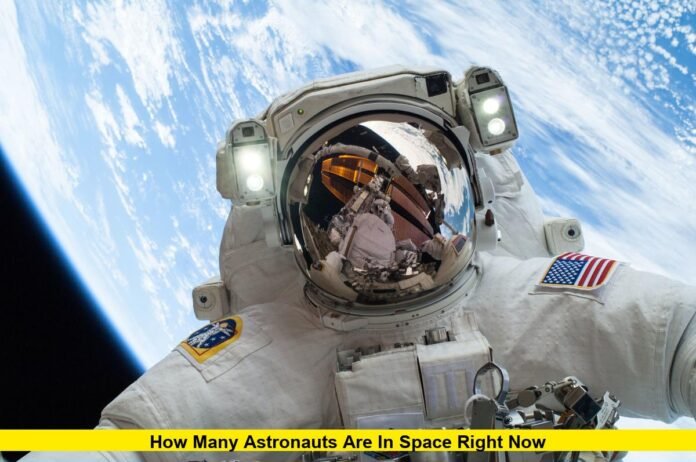

If you’ve been wondering how many astronauts are in space right now, the answer reflects one of the most active periods in modern space exploration. As of today, there are four astronauts currently living and working aboard the International Space Station (ISS) following recent mission activity and crew rotations.
This number can change quickly depending on launches, returns, and short-duration missions. Just days ago, additional astronauts were traveling around the Moon as part of a historic deep-space mission—but they have now safely returned to Earth, leaving the current count focused on those still in orbit.
Stay with us as we break down who is in space, what they are doing, and why this number matters more than ever.
After reading, share this update with fellow space enthusiasts or drop your thoughts below—how many humans do you think we’ll see in orbit by the end of this decade?
Current Number of Astronauts in Space
As of now, four astronauts are aboard the International Space Station, representing multiple countries and space agencies.
These astronauts are part of SpaceX Crew-12, which launched in February 2026 and is currently in orbit conducting long-duration missions.
Meet the Crew in Space Right Now
- Jessica Meir (NASA)
- Jack Hathaway (NASA)
- Sophie Adenot (European Space Agency)
- Andrey Fedyaev (Roscosmos)
They are the only humans currently off the planet following the return of the Artemis II lunar crew.
Why the Number Recently Changed
Just hours ago, the number of astronauts in space was higher.
A major deep-space mission sent four astronauts around the Moon for the first time in more than 50 years. That mission concluded successfully with a splashdown on April 10, 2026.
With their return, the total number of humans in space dropped back to the four currently aboard the ISS.
This highlights how quickly the number can fluctuate depending on mission timelines.
What Astronauts Are Doing Right Now in Space
Life aboard the ISS is far from idle. The current crew is engaged in a wide range of scientific and operational tasks.
1. Scientific Research
Astronauts conduct experiments that cannot be performed on Earth. These include:
- Microgravity effects on the human body
- Advanced materials testing
- Biotechnology and medicine
These studies help improve healthcare, technology, and long-term space travel.
2. Station Maintenance and Upgrades
Keeping the ISS running requires constant attention. Crew members:
- Maintain life-support systems
- Install new equipment
- Test robotic technologies
3. Communication with Earth and Other Missions
Recently, ISS astronauts even communicated with astronauts traveling around the Moon, showing how interconnected space missions have become.
How Long Astronauts Stay in Space
Most astronauts on the ISS stay for about six months.
This duration allows:
- Enough time to conduct meaningful research
- Study long-term effects of microgravity
- Rotate crews safely
The current Crew-12 astronauts are expected to remain in orbit for several months before returning to Earth.
Why There Are Only Four Astronauts Right Now
You might wonder why the number isn’t higher, especially since the ISS can support more crew members.
Here’s why:
1. Crew Rotation Timing
Space missions are carefully scheduled. Sometimes there are overlap periods with more astronauts, but at other times—like now—the station operates with a smaller team.
2. Mission Transitions
Recent changes, including earlier crew returns and new mission schedules, temporarily reduced the number of people in orbit.
3. Resource Management
Every astronaut requires:
- Oxygen
- Food
- Water
- Space
Operating with fewer crew members during certain phases ensures safety and efficiency.
The Bigger Picture: Human Presence in Space
Even with just four astronauts in orbit, the bigger story is the rapid expansion of human spaceflight.
A New Era of Exploration
- Lunar missions have officially resumed
- Commercial spaceflight is growing
- International partnerships are stronger than ever
The recent Moon mission marked a turning point, proving that humans are once again venturing beyond low-Earth orbit.
How This Compares to the Past
Historically, the number of astronauts in space at any given time has varied:
- Early space era: Usually 1–3 astronauts
- Shuttle era: Up to 13 at once during overlaps
- Modern ISS era: Typically 6–7
Right now’s count of four astronauts is slightly lower than average, but still part of a continuous human presence in space that has lasted for over two decades.
Could the Number Increase Soon?
Yes—and very soon.
Upcoming missions planned for 2026 include:
- New crew rotations to the ISS
- Cargo missions supporting long-duration stays
- Additional test flights for future exploration
As more spacecraft launch, the number of astronauts in space could rise again quickly.
Why This Question Matters More Than Ever
The question how many astronauts are in space right now is no longer just trivia—it reflects a growing human presence beyond Earth.
Each astronaut represents:
- Scientific progress
- International cooperation
- The future of exploration
With missions expanding to the Moon and eventually Mars, this number will likely increase in the coming years.
What’s Next for Space Exploration
The pace of space activity is accelerating.
Near-Term Goals
- Continued ISS research
- More commercial astronaut missions
- Expanded international collaboration
Long-Term Vision
- Permanent lunar bases
- Human missions to Mars
- Larger crews living and working in space
The current four astronauts are part of a much bigger journey that is only just beginning.
Final Thoughts
Right now, four astronauts are in space, orbiting Earth aboard the International Space Station and continuing humanity’s mission beyond our planet.
But if recent events are any indication, that number won’t stay the same for long.
What do you think—will we see 10 or more astronauts in space at the same time again soon? Share your thoughts and keep checking back for the latest updates on life beyond Earth.