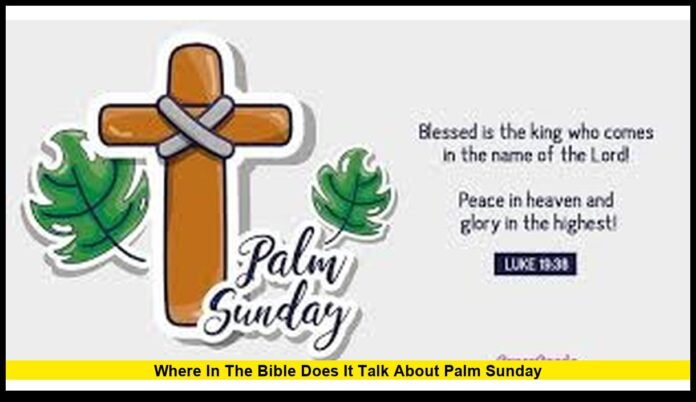

Where in the Bible does it talk about Palm Sunday is a question many Americans are asking today, March 29, 2026, as churches nationwide mark the beginning of Holy Week. The answer is clear and fully grounded in the New Testament, where all four Gospels record the same historic moment—Jesus Christ’s entry into Jerusalem.
This event forms the biblical foundation of Palm Sunday and remains one of the most consistently documented scenes in scripture.
Understanding Palm Sunday in the Bible
Palm Sunday commemorates the day Jesus entered Jerusalem shortly before his crucifixion. It marks the start of Holy Week, leading up to Easter.
In scripture, people welcomed Jesus with excitement. They spread cloaks on the road and waved branches, praising him openly. The crowd recognized him as a king, even though he arrived in humility.
This moment carries deep meaning because it connects prophecy, public recognition, and the final days of Jesus’ earthly ministry.
Where in the Bible Does It Talk About Palm Sunday? Full Gospel Breakdown
The account of Palm Sunday appears in four separate books of the Bible. Each Gospel confirms the same event with slight differences in detail and emphasis.
Matthew 21:1–11 — A King Fulfilled in Prophecy
Matthew presents the most detailed narrative. Jesus instructs his disciples to bring a donkey, fulfilling a well-known prophecy.
The crowd responds with strong praise, shouting “Hosanna to the Son of David.” People lay down garments and branches, creating a path of honor.
Matthew highlights Jesus as the promised Messiah and rightful King.
Mark 11:1–10 — A Simple, Powerful Account
Mark delivers a concise version of the event. The sequence remains clear and direct.
People spread branches and garments along the road. They shout blessings as Jesus enters the city. The message focuses on action and the immediate response of the crowd.
Mark’s account reinforces the public recognition of Jesus without adding extra detail.
Luke 19:28–40 — Rising Tension with Religious Leaders
Luke includes an important interaction not found in the other Gospels.
As the crowd praises Jesus, religious leaders ask him to stop the celebration. Jesus responds by saying that if the people remain silent, even the stones would cry out.
This moment highlights growing conflict and shows that the significance of the event could not be ignored.
John 12:12–19 — The Source of the Name “Palm Sunday”
John’s Gospel specifically mentions palm branches, which is why the day is called Palm Sunday today.
A large crowd gathers after hearing about Jesus. They wave palm branches and greet him with praise. Jesus rides a young donkey, reinforcing the image of humility.
John connects this event with the rising attention surrounding Jesus before his final days.
The Prophecy Behind Palm Sunday
The events described in the Gospels connect directly to an Old Testament prophecy.
Zechariah 9:9
This verse speaks of a king arriving in peace, riding on a donkey rather than a war horse.
The Gospel writers clearly present Jesus’ entry as the fulfillment of this prophecy. This connection strengthens the biblical significance of Palm Sunday.
Why Palm Branches Were Important
Palm branches carried strong symbolic meaning in biblical times. They represented victory, honor, and celebration.
When people waved them during Jesus’ arrival, they were making a public statement. They saw him as a leader and a source of hope.
This cultural detail helps explain why the moment became so powerful and memorable.
Palm Sunday Observance in the United States Today
As of March 29, 2026, churches across the United States are actively observing Palm Sunday.
Common traditions include:
- Distributing palm leaves during church services
- Reading passages from the four Gospels
- Holding processions that reflect the biblical event
- Singing hymns and offering prayers
Many congregations also use this day to begin deeper reflection leading into Good Friday and Easter Sunday.
Why People Continue Searching This Question
Interest in the question “where in the Bible does it talk about Palm Sunday” rises every year during Holy Week.
This trend reflects a broader desire to understand faith through scripture rather than tradition alone.
Across the U.S., people are:
- Preparing for religious services
- Studying biblical history
- Teaching younger generations about Christian beliefs
This ongoing curiosity keeps the biblical accounts relevant today.
Key Biblical Facts About Palm Sunday
Here are the most important points based on scripture:
- The event appears in Matthew, Mark, Luke, and John
- Jesus enters Jerusalem riding a donkey
- Crowds welcome him with praise and branches
- The moment fulfills Old Testament prophecy
- The event leads directly into the final week before the crucifixion
These facts remain central to how Palm Sunday is understood and observed.
The Message Behind the Event
Palm Sunday presents a powerful image of leadership and humility. Jesus enters as a king, yet without force or wealth.
This contrast continues to resonate with modern audiences. It challenges traditional ideas of power and highlights peace as a defining trait.
Church leaders across the U.S. often focus on this message during Palm Sunday sermons.
Conclusion
Palm Sunday stands on a strong biblical foundation, recorded consistently across all four Gospels. It is not based on tradition alone but on clear scripture that describes a defining moment in Christian history.
The event continues to shape how millions understand faith, humility, and leadership today.
What does Palm Sunday mean to you? Share your thoughts and join the conversation today.