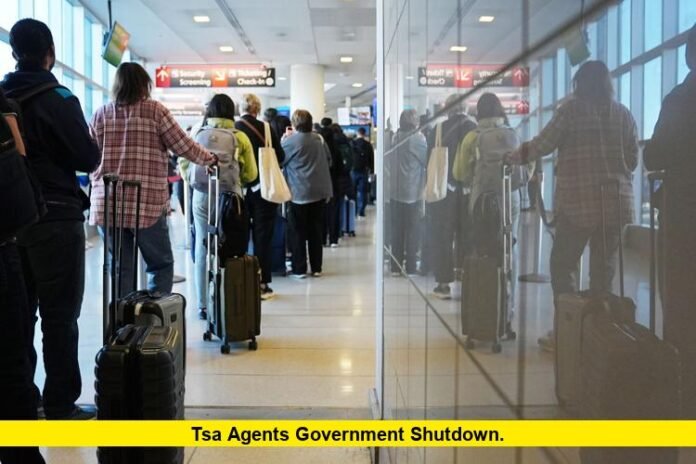

After more than 40 days of chaos at airports nationwide, the government shutdown standoff over the Department of Homeland Security reached a dramatic turning point in the early morning hours of Friday, March 27, 2026. The Senate voted unanimously to approve funding for most of DHS — covering TSA agents, the Coast Guard, FEMA, and other critical agencies — while deliberately leaving immigration enforcement operations out of the deal. The measure now heads to the House, where its fate remains uncertain. For thousands of federal workers who have gone without paychecks for weeks, and for millions of American travelers who have endured record-breaking airport wait times, this moment represents both a breakthrough and an unfinished battle.
If you fly, work for the federal government, or simply care about what’s happening in Washington right now — this is the story you need to read.
How We Got Here: A Shutdown Built on an Immigration Standoff
The DHS funding lapse began in mid-February 2026 when Congress failed to reach a spending agreement for the department. Unlike most government shutdowns, which affect broad swaths of federal agencies, this one was narrowly focused on the Department of Homeland Security — the massive agency that oversees everything from airport security to disaster response to border enforcement.
From the beginning, the dispute was not really about budgets. It was about immigration. Senate Democrats refused to approve DHS funding unless the Trump administration agreed to put meaningful guardrails on how federal immigration officers conduct their operations. Senate Republicans refused to accept any deal that restricted what they viewed as the administration’s core law enforcement mandate. That impasse held for over six weeks — and the people who paid the heaviest price were not politicians. They were the 61,000 TSA workers who showed up to work every day without receiving a paycheck.
The Human Cost: TSA Workers on the Brink
The numbers that emerged from this shutdown are staggering. By the time the Senate voted, TSA had already lost more than 480 officers who quit outright — unable to sustain themselves on zero income. Daily callout rates, which normally hover around 4% nationwide, surged to 11% and beyond. At multiple airports across the country, between 40% and 50% of the scheduled workforce failed to show up on any given day.
The acting TSA administrator testified before a House committee that the agency was recording the highest security wait times in its entire history. Some travelers waited more than four and a half hours at checkpoints. Airports in Houston, Atlanta, and New Orleans were among the hardest hit. In Houston, travelers described missing their flights after spending over two hours in line and still not reaching the checkpoint. In New York, federal immigration agents were deployed to major airports like JFK and LaGuardia to help fill the staffing gaps left by absent TSA workers.
TSA workers described donating plasma to pay rent. Some received grocery store and gas gift cards donated by the public. Eviction notices piled up. By March 27, the agency had accumulated nearly $1 billion in unpaid wages. The men and women responsible for screening roughly three million passengers per day on peak travel days were doing so without any financial support from the federal government.
Trump Steps In Before the Senate Vote
Late Thursday evening, with senators still negotiating and another missed payday looming for TSA workers, President Trump announced he would not wait for Congress. Using his social media platform, Trump declared he would sign an executive order directing newly sworn-in Homeland Security Secretary Markwayne Mullin to immediately pay TSA agents, calling the airport chaos a national emergency of Democrats’ making.
The announcement shifted the dynamics on Capitol Hill almost instantly. Senate Majority Leader John Thune acknowledged the move took the immediate pressure off the negotiations, though he characterized it as a short-term fix rather than a permanent solution. Trump’s action is expected to draw on funding from the tax and spending law he signed in 2025, which allocated tens of billions of dollars to DHS for a range of purposes including security for the 2026 FIFA World Cup, the 2028 Olympics, and presidential residence protection.
Critics noted the move raised serious questions. With TSA agents set to be paid through executive action, what incentive remained for Congress to reach a broader deal quickly? Democrats were quick to point out the irony — a president who blamed the shutdown entirely on the opposing party was now effectively working around the legislative process to address a crisis his administration argued that party had created.
What the Senate Deal Actually Covers
Despite those tensions, the Senate moved forward and voted unanimously in the early morning hours of Friday, March 27. The package funds the bulk of DHS — including TSA, the Coast Guard, FEMA, and significant portions of Customs and Border Protection. The one glaring exception is Immigration and Customs Enforcement’s Enforcement and Removal Operations division, the unit responsible for deportations and immigration raids.
The deal does include some concessions to Democratic priorities that were negotiated earlier in the year — funding for officer-worn body cameras and reduced detention-center bed capacity among them. But it does not include the broader reforms Democrats spent weeks demanding: a requirement that immigration agents obtain judicial warrants before entering homes and businesses, a ban on face coverings for agents during operations, and restrictions on enforcement near schools, churches, and other sensitive locations.
Senate Democratic Leader Chuck Schumer said the outcome could have been reached weeks ago and vowed the fight over immigration enforcement accountability was far from over.
Why ICE Kept Getting Paid While TSA Didn’t
One of the most striking aspects of this shutdown has been the stark contrast between two agencies that both fall under the DHS umbrella. TSA officers went without paychecks for over 40 days. ICE agents never missed a single one.
The reason comes down to the sweeping tax and spending legislation Trump signed into law in 2025. That bill included approximately $75 billion in dedicated funding for ICE operations over four years — $45 billion for new immigration detention facilities and $30 billion for hiring, equipment, and infrastructure. That separate funding stream kept ICE fully operational and fully paid throughout the entire DHS funding lapse, even as TSA workers struggled to keep the lights on at home.
The arrangement frustrated Democrats and many TSA employees who found it difficult to understand why border enforcement agents were insulated from the shutdown while airport security workers were not. Some Republican senators argued this distinction actually helped clarify the debate: the shutdown was specifically about whether to fund immigration enforcement with new congressional dollars, not about whether that enforcement would continue.
The Battle Over Immigration Enforcement Rules
At the heart of this entire standoff is a dispute over how far federal immigration agents can go in carrying out their duties — and who gets to decide.
Democrats demanded that ICE agents be required to obtain judicial warrants — signed by a judge — before entering private homes and businesses to make arrests. Currently, agents can operate on administrative warrants, which are internally issued documents that do not require court approval. Democrats argued that this distinction matters enormously for the constitutional rights of the people being detained.
Democrats also pushed for a requirement that agents identify themselves visibly during operations, remove face coverings, and avoid conducting enforcement actions in and around locations like schools, hospitals, and places of worship. These demands were shaped in part by two deaths that occurred during immigration protests in Minneapolis earlier this year.
Republicans rejected most of these demands, arguing they would functionally handcuff the administration’s ability to carry out immigration enforcement at the scale it had promised voters. Senate Majority Leader Thune declared that the warrants and mask requirements had never been on the table and accused Democrats of moving the goalposts. Democrats said Republicans were the ones negotiating in bad faith.
The Senate’s final deal threads this needle — imperfectly — by funding everything except ICE’s removal operations, leaving the underlying dispute about enforcement rules to be resolved another day.
What Happens Next: The House Vote
The Senate deal now moves to the House of Representatives, where its reception is uncertain. House Republicans will need to decide whether to bring the measure to the floor under suspension of the rules — which requires a two-thirds majority — or to route it through the Rules Committee for a simple majority vote.
Even if the deal clears the House, TSA officials have warned that the agency’s problems will not disappear overnight. The systems used to disburse federal salaries take time to process. Workers who have quit over the past six weeks are gone — many of them likely for good. Rebuilding staffing levels at airports across the country will take months, not days.
TSA’s deputy administrator has acknowledged that even after funding is restored, the agency’s operations will feel the effects of this shutdown for a long time. The 480-plus officers who resigned during the crisis represent experienced screeners who will need to be replaced, recruited, and trained. The record-high callout rates that crippled airports won’t reverse themselves the moment paychecks start flowing again.
The Bigger Picture: A Test of Institutional Limits
This shutdown exposed something uncomfortable about how the federal government operates. Essential workers — people responsible for the physical security of millions of air travelers every single day — were used as leverage in a political fight that had nothing to do with their jobs. TSA agents screen passengers for weapons and threats. They are not immigration policy makers. Yet they bore the financial consequences of a debate they had no part in starting.
The resolution, such as it is, leaves the most contentious questions unanswered. Immigration enforcement will continue. The rules governing how it is carried out remain contested. The House still has to act. And even if a final deal passes, the administration’s executive action to pay TSA workers through alternative funding raises its own questions about the proper boundaries between the executive and legislative branches.
For now, American airports may soon see shorter lines. TSA agents may finally see a paycheck. But the fight over how this government operates — and who gets to decide — is nowhere near finished.
Have you been affected by the airport chaos, the government shutdown, or the immigration enforcement debate? Drop your thoughts in the comments below and stay tuned as the House takes up this critical vote.