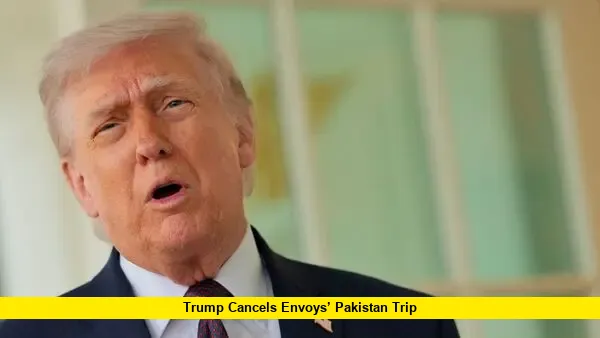

In a significant geopolitical development, Donald Trump has canceled a planned diplomatic visit by U.S. envoys to Pakistan, while simultaneously signaling a conditional openness to dialogue with Iran. The decision comes amid escalating tensions in the Strait of Hormuz, where Iranian officials have raised serious concerns about U.S. military actions.
Sudden Shift in U.S. Diplomatic Strategy
The abrupt cancellation of the Pakistan trip reflects a broader recalibration of U.S. foreign policy priorities. According to the latest confirmed statement, Trump halted the envoy visit without providing extensive logistical details, but the move appears closely tied to intensifying developments in the Middle East.
At the same time, Trump stated that Iran can “call if they want to talk,” suggesting a willingness to engage diplomatically despite rising hostilities. This dual-track approach—canceling one diplomatic engagement while opening the door to another—highlights the administration’s evolving strategic posture.
Iran Questions U.S. Credibility
Iranian officials have responded cautiously, expressing skepticism over the possibility of meaningful dialogue. Their concerns stem from recent U.S. military actions, particularly the reported blockading of Iranian ports in the Strait of Hormuz.
This waterway is one of the most critical النفط transit routes in the world, handling a significant portion of global oil shipments. Any disruption or military activity in the region carries immediate global economic and security implications.
Iran’s leadership has questioned how negotiations could proceed under such conditions. Officials argue that trust is difficult to establish when military pressure is simultaneously being applied.
Strategic Importance of the Strait of Hormuz
The Strait of Hormuz remains at the center of the unfolding situation. Its narrow passage connects the Persian Gulf to international waters, making it a chokepoint for global energy supplies.
Heightened tensions in this region often lead to increased oil price volatility and concerns among international stakeholders. The alleged U.S. blockade has therefore amplified anxieties not only in Iran but also across global markets.
Pakistan Visit Cancellation: What It Means
The cancellation of the Pakistan trip may signal a temporary deprioritization of South Asian diplomacy in favor of addressing urgent Middle Eastern tensions. The planned envoy visit was expected to cover regional cooperation, security, and economic engagement.
By pulling back from this engagement, the U.S. appears to be concentrating its diplomatic and military resources on managing the escalating situation with Iran.
Pakistan, which maintains complex relationships with both the U.S. and regional powers, now finds itself sidelined in this immediate diplomatic cycle.
Mixed Signals: Diplomacy vs. Pressure
Trump’s statement that Iran can initiate talks contrasts sharply with the ongoing military measures reported in the Strait of Hormuz. This combination of pressure and openness reflects a strategy often described as “maximum pressure with conditional diplomacy.”
However, such an approach carries risks. While it may be intended to bring Iran to the negotiating table, it can also deepen mistrust and reduce the likelihood of successful engagement.
Iran’s response indicates that the current environment may not yet be conducive to productive dialogue.
Global Reactions and Market Implications
The developments have drawn attention from global leaders and economic analysts alike. Any escalation in the Strait of Hormuz has immediate ripple effects on energy markets, shipping routes, and international security.
Investors and governments are closely monitoring the situation, particularly for signs of either de-escalation or further confrontation.
What Comes Next?
The situation remains fluid. The key questions moving forward include:
- Whether Iran will respond to Trump’s invitation for talks
- How long U.S. military actions in the Strait of Hormuz will continue
- Whether diplomatic channels can be restored amid rising tensions
The cancellation of the Pakistan envoy trip underscores how rapidly geopolitical priorities can shift in response to emerging crises.
Conclusion
Trump’s decision to cancel the Pakistan visit while inviting Iran to initiate talks highlights a complex and high-stakes moment in global diplomacy. With tensions escalating in one of the world’s most critical waterways, the balance between military action and diplomatic engagement will be crucial in determining the next phase of U.S.-Iran relations.