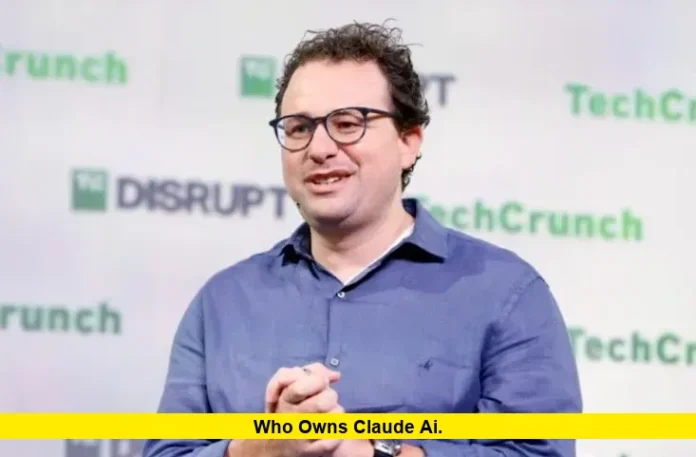

Who owns Claude AI? That question is on the rise across tech circles, business news feeds, and among innovators as Anthropic’s conversational AI gains unprecedented attention. Claude AI has become one of the most talked-about artificial intelligence platforms in the U.S., driven by rapid adoption, strategic funding rounds, and a growing spotlight on AI governance and ethics. In this article, we’ll explore exactly who owns Claude AI, who runs the company behind it, and why it’s at the center of today’s tech and geopolitical headlines.
📌 Find out why industry watchers and business leaders are talking about Claude AI’s ownership and influence — read on to learn the facts.
Who Owns Claude AI and the Company Behind It
Claude AI is owned and developed by Anthropic PBC, a cutting-edge artificial intelligence company based in San Francisco, California. Anthropic operates as a public benefit corporation, a corporate structure that combines a commercial mission with explicit commitments to social and ethical goals. Rather than traditional profit-maximizing motives, this corporate form requires Anthropic to consider broader interests in how its technology is developed and deployed, particularly around issues of safety and human impact.
Founded in 2021 by former OpenAI leaders, Anthropic was conceived when a group of researchers and engineers, including siblings Dario Amodei (CEO) and Daniela Amodei (President), left their previous roles to pursue a different vision for responsible, transparent AI. Since that founding moment, Anthropic has retained control over the development and direction of Claude and related AI tools such as Claude Code, Claude Cowork, and the broader Claude family of models.
Today, Anthropic’s ownership includes large tech investors, long-term venture capital backers, and strategic partners from across the global technology ecosystem. The company has repeatedly raised substantial capital — including a massive Series G funding round that valued Anthropic at around $380 billion, proving strong confidence from major institutional backers.
Anthropic’s Mission and Corporate Identity
As the owner of Claude AI, Anthropic describes its mission as building AI tools that are “helpful, reliable and steerable.” Rather than simply pursuing market share, the company emphasizes long-term research into how AI can be aligned with human values, manage risk, and avoid harmful or unpredictable behaviors.
That approach is reflected in the company’s products, which are designed to follow principles of “Constitutional AI” — a set of internal safety guidelines that guide how Claude generates responses and interacts with users. Anthropic’s leadership believes prioritizing safety and interpretability will ultimately make AI more useful and trustworthy for commercial, enterprise, and public use.
Recent Developments: Claude AI in the Spotlight
In early 2026, Claude AI drew major national attention due to a series of high-profile events involving U.S. government agencies and regulatory action. The U.S. Department of Defense had been a significant user of Claude models under a multi-million-dollar contract. However, Anthropic’s refusal to loosen safety restrictions for military usage — specifically around autonomous weaponization and surveillance — led the U.S. government to direct that federal agencies stop using Claude. This decision has generated headlines, debate, and controversy around AI governance.
Despite the shifting government relationship, Claude’s popularity among general users has surged. The AI assistant recently became the number one free app on the U.S. Apple App Store, overtaking other mainstream AI tools. This rise in adoption highlights how public interest in Claude remains strong even amidst regulatory headwinds.
In parallel, Anthropic has taken further steps to extend Claude’s usefulness for business users. Recent releases of specialized plugins and integrations aim to embed Claude into enterprise workflows — from legal document review to investment analysis and HR tasks — further solidifying its role beyond casual conversation or simple query responses.
Leadership at Anthropic: The People Behind Claude
At the core of Claude’s ownership is a leadership team that blends deep AI technical expertise with strategic business vision. CEO Dario Amodei remains a central figure in shaping Anthropic’s direction, emphasizing safety-first innovation and resisting pressure to commercialize in ways that could undermine ethical standards. His sister, Daniela Amodei, plays a leading role in shaping company policy and strategy.
Beyond the Amodeis, Anthropic’s executive team includes leaders with diverse experiences in AI research, product development, and large-scale computing infrastructure. This combination has enabled the company to grow rapidly while maintaining a focus on building robust, scalable AI systems.
Why Claude AI’s Ownership Matters Now
Understanding who owns Claude AI is crucial because it speaks to how the technology is governed, deployed, and accountable in real-world scenarios. In a climate where governments are still debating how to regulate AI responsibly, Anthropic’s status as a public benefit corporation — backed by significant private investment — positions Claude at a unique intersection of innovation, regulation, and public interest.
For everyday users and businesses alike, knowing that Claude’s development and strategic decisions are shaped by a mix of ethical priorities and commercial backing provides context for how and why the system behaves the way it does.
Looking Ahead: What to Expect from Claude and Anthropic
Claude AI’s ongoing evolution — from research breakthroughs to mainstream adoption — will continue to be shaped by Anthropic’s ownership structure and leadership philosophy. As AI becomes more embedded in business workflows, consumer tools, and even public sector systems, the decisions made by Claude’s owners today could influence broader debates over AI safety, standards, and societal impact in the years to come.
Thank you for reading — we’d love to hear your thoughts on who owns Claude AI and what this means for the future of artificial intelligence. Share your perspective in the comments below.