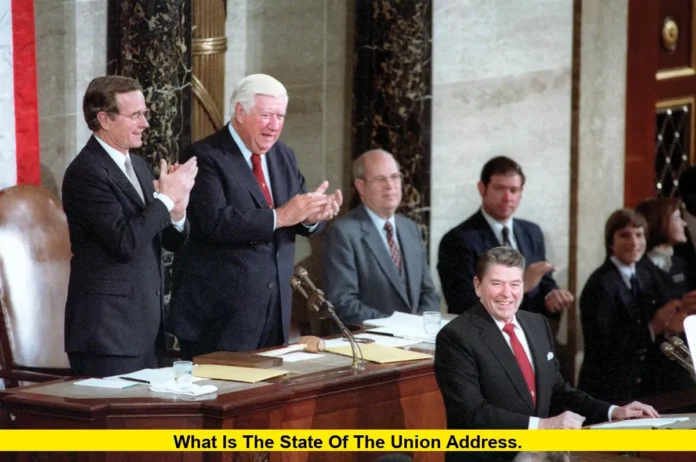

The question what is the state of the union address surfaces every year when the president steps before Congress to deliver one of the most closely watched speeches in American government. The address serves as a formal update on national conditions and outlines the administration’s priorities, offering a roadmap for lawmakers and the public.
It is both a constitutional duty and a political moment. Millions of Americans tune in to understand how leaders view the economy, national security, domestic challenges, and legislative goals for the year ahead.
The speech has evolved into a central event that influences debate across Washington and beyond.
A Constitutional Duty That Became a National Event
The requirement originates in Article II of the U.S. Constitution. The president must provide Congress with information about the country’s condition and recommend policy measures.
In the early years of the republic, presidents delivered written reports rather than speeches. That changed over time as public communication became a larger part of presidential leadership.
Today, the address is delivered in person before a joint session of Congress, turning a constitutional obligation into a major national broadcast.
How the Modern State of the Union Is Delivered
The event takes place inside the House chamber at the U.S. Capitol. Lawmakers from both parties attend alongside members of the Cabinet, Supreme Court justices, military leadership, and invited guests.
The speech is carefully prepared over weeks, often involving policy teams, economic advisers, and communications staff.
One Cabinet official remains away from the Capitol as the designated survivor to preserve government continuity.
Television networks and digital platforms carry the speech live, making it one of the most widely viewed political events each year.
What Presidents Use the Speech to Do
Presidents rely on the address to explain their agenda clearly and directly.
The speech usually aims to:
- Highlight economic performance
- Promote legislative proposals
- Frame national challenges
- Reinforce political achievements
- Define priorities for Congress
Because it reaches lawmakers and the public simultaneously, it shapes the policy conversation immediately.
Core Policy Areas Typically Highlighted
While each address reflects the moment, several themes appear consistently.
Economy and Cost of Living
Presidents often focus on wages, inflation, employment, taxes, and industrial investment. Economic messaging frequently dominates the speech because it affects voters most directly.
Domestic Policy Priorities
Healthcare affordability, education funding, housing supply, immigration policy, and public safety remain recurring topics.
National Security and Foreign Policy
Global conflicts, military readiness, alliances, and strategic competition are usually central sections of the address.
Technology and Infrastructure
Recent speeches increasingly highlight artificial intelligence, energy policy, manufacturing investment, supply chains, and infrastructure modernization.
Recent Context Shaping the Speech
In the current political climate, the address has centered on economic stability, consumer costs, industrial policy, border policy debates, and international security challenges.
Presidents have used the speech to emphasize:
- Domestic manufacturing expansion
- Supply chain resilience
- Middle-class affordability concerns
- Competition in advanced technology
- Ongoing global tensions
Guest stories featured during the speech often reflect these policy themes through individual experiences.
Why Congress Pays Close Attention
Although the speech does not create law, it strongly influences legislative activity.
After the address, lawmakers frequently align hearings, budget negotiations, and committee work with the priorities outlined by the president.
Policy proposals mentioned prominently in the speech often move more quickly through the legislative process, especially when they receive bipartisan interest.
The opposition party’s response also shapes how proposals are debated.
Public Opinion and Political Messaging
The State of the Union can affect public perception of leadership and policy direction.
Viewers evaluate tone, priorities, and economic framing. Polling sometimes shifts following the speech, particularly on economic confidence and major initiatives.
Because it offers a direct message to the country, the address provides presidents with a rare opportunity to define the narrative without interruption.
Moments That Defined the Address Historically
Across decades, several addresses reshaped national debate.
Speeches have introduced major economic recovery plans, framed civil rights priorities, explained wartime strategy, and responded to national crises.
Over time, the address evolved from a formal report into a strategic storytelling platform that combines policy detail with symbolic messaging.
How the Event Reflects Political Reality
The atmosphere inside the chamber often mirrors the broader political climate.
Applause patterns, bipartisan moments, visible disagreement, and guest recognition segments all communicate signals about national unity and division.
These visual elements frequently become headline moments that shape how the speech is remembered.
Digital Media’s Growing Influence
Technology transformed how the address is consumed and discussed.
Today, the speech unfolds alongside:
- Real-time commentary
- Short video clips shared across platforms
- Rapid political reactions
- Data-driven analysis
Presidential teams now craft lines designed for both the chamber and digital audiences.
What Viewers Analyze Closely
Observers focus on more than the policy proposals themselves.
Key signals include:
- The order of topics
- Budget priorities mentioned
- Bipartisan language
- Economic tone
- References to global events
- Legislative urgency
These details help analysts understand which issues the administration considers most important.
Why Americans Continue Searching for Clarity
Interest rises each year as the speech approaches because people want practical insight into national direction.
Many viewers look for answers about:
- Job markets
- Taxes and spending
- Healthcare costs
- Immigration policy
- Foreign policy strategy
Understanding what is the state of the union address helps citizens interpret policy debates that unfold throughout the year.
Symbolism That Extends Beyond Policy
The address carries ceremonial weight.
Invited guests represent policy priorities. Standing ovations highlight bipartisan themes. Moments of tension reveal political divides.
These symbolic elements shape how the public experiences the event and how media coverage frames its impact.
What Happens After the Speech Ends
The policy cycle accelerates quickly.
Typical next steps include:
- Congressional hearings aligned with proposals
- Budget negotiations influenced by priorities
- Legislative drafts reflecting major initiatives
- Nationwide travel by administration officials promoting policy themes
Opposition critiques and bipartisan negotiations often determine which proposals advance.
Why the State of the Union Still Matters
Despite changing media habits and political polarization, the address remains one of the most influential annual events in U.S. governance.
It functions as:
- A national policy blueprint
- A communication strategy
- A leadership message
- A signal to global partners
For citizens, it provides a clear view of how leaders define the country’s challenges and opportunities.
The speech continues to anchor the political calendar, guiding debate across Washington and shaping expectations for the year ahead.
Understanding its purpose allows Americans to better interpret legislation, economic messaging, and political strategy long after the speech concludes.