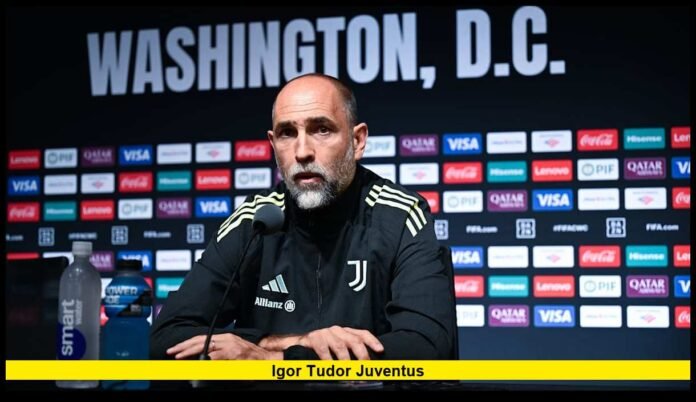

Igor Tudor Juventus remains one of the most discussed managerial storylines in European soccer as of February 13, 2026. The Croatian coach’s departure from Juventus in October 2025 and his recent appointment as interim head coach of Tottenham Hotspur have kept his name at the center of conversations across Italy and England.
For American fans who closely follow Serie A and the Premier League, Tudor’s journey over the past year reflects the intense pressure that surrounds elite clubs and the rapid pace of change at the highest level of the sport.
How Igor Tudor Took Charge in Turin
Juventus appointed Igor Tudor as head coach on March 23, 2025, during a critical stretch of the Serie A season. The club sought stability after inconsistent performances and aimed to secure qualification for the UEFA Champions League.
Tudor stepped into a demanding environment. Juventus faced heavy expectations from supporters, ownership, and media. The club measures success in trophies and top-four finishes. Anything less often triggers immediate change.
He quickly tightened the team’s defensive structure. Juventus conceded fewer goals in the closing months of the 2024–25 campaign. Players responded to his direct style and clear tactical instructions.
The turnaround proved effective. Juventus finished fourth in Serie A that season, clinching a Champions League spot. That achievement restored financial security and reinforced the club’s presence among Europe’s elite.
Contract Commitment and High Expectations
After securing Champions League qualification, Juventus leadership rewarded Tudor with a long-term deal extending through 2028. The decision signaled trust in his approach and belief in long-term continuity.
Club executives emphasized discipline, structure, and accountability as pillars of his leadership. Tudor demanded intensity in training and tactical precision on matchdays. He often deployed compact defensive lines and prioritized organization over flair.
Supporters welcomed the stability. Juventus had experienced managerial turnover in recent seasons, and continuity seemed like a step forward.
However, the 2025–26 campaign introduced new challenges.
The Difficult Start to 2025–26
The new season opened with optimism, but results soon faltered. Juventus struggled to convert possession into goals. The attack lacked fluidity, and the team failed to build momentum in league play.
An eight-match winless streak across competitions ultimately proved decisive. Pressure mounted quickly in Turin. Juventus operates under constant scrutiny, and extended poor runs rarely receive extended patience.
On October 27, 2025, the club dismissed Igor Tudor. The move surprised some supporters given his success only months earlier, yet it aligned with Juventus’ history of swift action when results dip.
The club installed an interim coach before officially appointing Luciano Spalletti as permanent manager for the remainder of the 2025–26 season.
What Igor Tudor Achieved at Juventus
Despite the abrupt ending, Tudor’s time in Turin included tangible accomplishments:
- Secured Champions League qualification for 2025–26
- Stabilized defensive performances during a key stretch
- Reintroduced tactical discipline during a transitional period
- Maintained Juventus’ competitive standing in Serie A
Juventus’ fourth-place finish in the 2024–25 season remains a defining moment of his tenure. That achievement ensured financial stability and preserved the club’s European ambitions.
For many observers, Tudor’s dismissal illustrates how quickly circumstances can shift in modern soccer.
Juventus’ Direction After Tudor
Since his departure, Juventus has focused on consistency and squad balance. Under new management, the club continues competing in Serie A and the Champions League.
Current priorities include:
- Securing another top-four finish in Serie A
- Advancing in European competition
- Integrating younger players into key roles
- Restoring offensive fluidity
Juventus remains one of Italy’s most globally recognized teams. American audiences have increasingly followed the club due to its Champions League presence and historic brand.
Although Tudor no longer leads the team, his role in guiding Juventus back to Europe remains part of the club’s recent timeline.
A Rapid Return to Management
Igor Tudor did not remain without a job for long. In February 2026, he agreed to become interim head coach of Tottenham Hotspur in the English Premier League.
Tottenham made the change after inconsistent league performances placed the club in a precarious position. Leadership sought a manager capable of stabilizing the squad quickly.
Tudor’s agreement runs through the end of the 2025–26 season. His immediate objective centers on improving league results and restoring defensive organization.
This move marks his first managerial position in England.
Why Tottenham Chose Tudor
Tottenham’s leadership valued several aspects of Tudor’s résumé:
- Experience managing high-pressure environments
- Proven ability to stabilize teams midseason
- Tactical discipline and defensive structure
- Familiarity with European competition
The Premier League’s intensity demands adaptability. Tudor’s background in Serie A, combined with previous coaching roles in France and elsewhere in Europe, positioned him as a credible short-term solution.
American viewers closely track Tottenham due to the club’s global visibility and competitive presence in the Premier League. Tudor’s arrival adds another compelling storyline to the 2025–26 campaign.
Tactical Philosophy and Leadership Style
Igor Tudor builds teams around structure and accountability. His approach often emphasizes:
- Organized defensive blocks
- Clear positional roles
- Aggressive pressing in key zones
- Quick transitions following turnovers
At Juventus, he prioritized compact formations. He sought to limit space between defensive lines and reduce opponents’ scoring opportunities.
While his style produced short-term success, critics noted that attacking creativity sometimes suffered. Balancing defensive solidity with offensive freedom remains a central challenge for him in England.
The Pressure of Elite Clubs
Juventus and Tottenham share similarities despite competing in different leagues. Both clubs operate under intense scrutiny. Supporters expect European competition and consistent results.
Modern soccer leaves little room for gradual rebuilding at top-tier teams. Television revenues, sponsorship deals, and Champions League qualification influence managerial decisions.
Tudor experienced that pressure firsthand in Turin. He now faces it again in London.
What Igor Tudor Juventus Represents in 2026
The story of Igor Tudor Juventus captures the volatility of contemporary management. Success in one season does not guarantee long-term security.
His tenure demonstrated both capability and vulnerability. He delivered Champions League qualification. Months later, he faced dismissal after a winless stretch.
That contrast defines elite coaching careers today.
For American fans who follow European leagues, Tudor’s path offers insight into how quickly fortunes shift at major clubs.
Career Resilience
Tudor’s quick return to management highlights resilience. Rather than stepping away, he embraced another high-pressure opportunity in one of the world’s most competitive leagues.
The Premier League’s global platform ensures his performance will receive worldwide attention. Success at Tottenham could reshape perceptions of his managerial trajectory.
Failure would raise new questions about his long-term prospects at the highest level.
Impact on Juventus’ Legacy Timeline
Juventus continues its pursuit of domestic and European success. While Tudor’s chapter closed earlier than expected, it remains a meaningful segment in the club’s recent history.
He guided the team through a transitional period and achieved a critical objective. Champions League qualification reinforced Juventus’ stature in international competition.
The club now aims to build on that foundation under new leadership.
Looking Ahead
As of February 13, 2026, Igor Tudor focuses on Tottenham’s immediate needs while Juventus pursues stability in Serie A and Europe.
The developments surrounding Igor Tudor Juventus highlight the speed and intensity of elite soccer management. Careers evolve quickly. Clubs adjust rapidly. Results dictate direction.
Fans in the United States will continue monitoring Tudor’s performance in England and Juventus’ progress in Italy. Both narratives remain tightly connected through the events of the past year.
Stay with us for continued coverage as Igor Tudor’s Premier League chapter unfolds and Juventus pushes forward in the 2026 season.