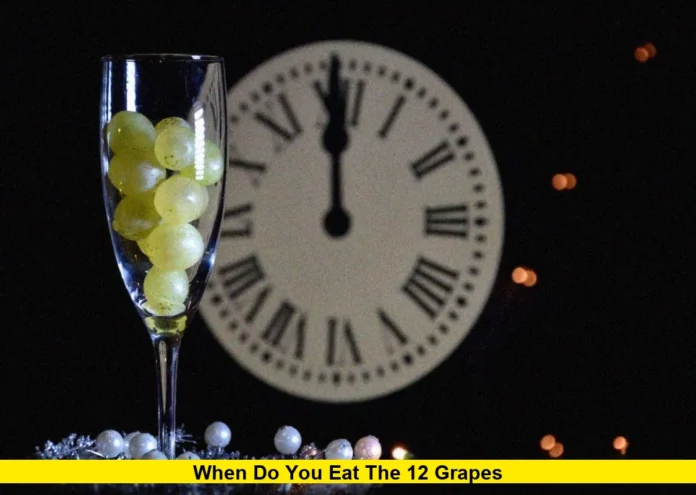

As the final seconds of the year approach, many people around the world prepare for fireworks, countdowns, and celebrations. Yet one simple ritual continues to spark curiosity every December 31: when do you eat the 12 grapes? This time-honored New Year’s Eve tradition blends precise timing, cultural symbolism, and a sense of hope that resonates across generations. While it may look simple, the ritual carries a deeper meaning that has helped it endure for more than a century and spread far beyond its origins.
This article explores the tradition in detail, explains the exact moment the grapes are eaten, traces its cultural significance, and looks at how it is practiced today by millions, including in the United States.
Understanding the 12 Grapes New Year’s Tradition
The 12 grapes tradition is a New Year’s Eve custom in which people eat twelve grapes at the moment the new year begins. Each grape represents one month of the upcoming year. Completing all twelve grapes during the countdown is believed to bring good luck, prosperity, and positive outcomes throughout the year ahead.
Although simple in execution, the ritual is deeply tied to the idea of transition. It marks the shift from one year to the next with intention and focus, turning the abstract idea of time into a shared, physical experience.
The Exact Timing: Why Midnight Is Essential
The tradition depends entirely on timing. The grapes are not eaten before midnight or after the New Year has begun. Instead, they are eaten during the twelve seconds that mark the arrival of the New Year.
The ritual follows a clear structure:
- The clock reaches midnight
- Twelve chimes sound, one after another
- One grape is eaten with each chime
- All twelve grapes are consumed before the final chime ends
This narrow window gives the ritual its excitement and challenge. The precise timing is what transforms the grapes from a snack into a meaningful New Year’s symbol.
Why Twelve Grapes Matter
The number twelve holds universal significance, particularly in calendars and timekeeping. In this tradition:
- Each grape corresponds to one month of the year
- The act of eating all twelve symbolizes completeness
- Finishing the grapes represents readiness to face the year ahead
Some participants associate each grape with a personal intention, while others simply focus on completing the ritual. Either way, the number twelve reinforces the idea of balance and continuity.
Historical Roots of the Custom
The custom dates back to Spain in the late 1800s, when New Year’s celebrations began incorporating public clock chimes. Over time, eating grapes at midnight became a popular way to mark the moment.
In the early 20th century, the tradition became firmly established across Spain and later spread to Latin America. Families adopted it as part of their annual celebrations, passing it down through generations.
As people migrated and cultures mixed, the ritual traveled with them. Today, it is practiced in many parts of the world, often adapted to local customs while preserving its core timing and meaning.
How the Tradition Is Practiced Today
While the essential timing has remained unchanged, the way people prepare for the ritual has evolved.
Traditional Preparation
- Twelve whole grapes
- Placed on a plate or in a small bowl
- Eaten at midnight with the chimes
Modern Approaches
- Seedless grapes for convenience
- Grapes peeled or sliced to make eating easier
- Personal wishes or goals assigned to each grape
- Group participation at parties or public events
Despite these variations, the tradition’s heart remains the same: eating twelve grapes during the first moments of the New Year.
Why the Tradition Has Gained Global Popularity
Several factors have helped the ritual gain international attention:
- Its simplicity makes it easy to adopt
- It requires no special tools or expenses
- It adds meaning to the New Year countdown
- It creates a shared moment across cultures
In recent years, social media has amplified interest, introducing the ritual to new audiences who enjoy participating in symbolic traditions.
Cultural Meaning Beyond Superstition
While the ritual is often associated with luck, many people view it as more than superstition. For them, the grapes serve as a moment of reflection.
Midnight represents a pause between what has passed and what is yet to come. Eating the grapes during this moment encourages mindfulness, intention, and hope.
Even those who do not believe in luck often enjoy the ritual as a way to start the year with focus and positivity.
Who Participates in the 12 Grapes Ritual
The tradition is practiced by a wide range of people:
- Families maintaining cultural heritage
- Couples and friends creating shared rituals
- Partygoers looking for meaningful New Year activities
- Individuals seeking symbolic ways to welcome the year
Its flexibility allows people to adapt it to their own beliefs while preserving its timing and structure.
Safety and Preparation Tips
Because the grapes are eaten quickly, preparation is important:
- Use seedless grapes to reduce risk
- Avoid rushing too aggressively
- Prepare grapes in advance
- Supervise children during the ritual
These simple steps ensure the tradition remains enjoyable and safe.
Why People Ask This Question Every Year
The question when do you eat the 12 grapes returns annually because the ritual depends entirely on timing. Missing the moment means missing the experience.
That urgency creates anticipation. As midnight approaches, attention sharpens, conversations pause, and the countdown takes center stage. The grapes become a focal point that unites everyone in the room.
The Role of the Ritual in Modern New Year’s Celebrations
In today’s fast-paced world, many people look for ways to slow down and mark meaningful moments. The 12 grapes tradition does exactly that.
It turns the New Year from a blur of noise into a deliberate act. It invites participation rather than observation. And it transforms the start of the year into something tangible and memorable.
Why the Tradition Continues to Endure
The ritual has lasted because it is:
- Simple
- Symbolic
- Inclusive
- Easy to share
It does not require belief, wealth, or special knowledge. All it asks is attention at midnight and twelve small grapes.
That simplicity has allowed it to cross borders and generations without losing its essence.
Final Reflection on the 12 Grapes Tradition
Whether you see it as a symbol of luck, a cultural tradition, or a fun New Year’s challenge, the twelve grapes ritual continues to hold meaning for people around the world. It reminds us that beginnings matter, timing matters, and small actions can carry powerful symbolism.
As the clock strikes midnight and the New Year begins, those twelve grapes represent more than fruit. They represent intention, hope, and the shared desire for a better year ahead.
Will you be taking part in this tradition as the New Year arrives? Share your experience or thoughts and stay connected for more stories behind the world’s most meaningful customs.