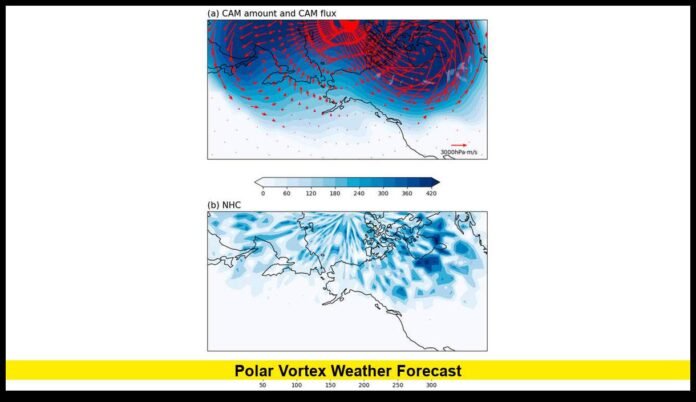

The most recent polar vortex weather forecast points to a noticeable change in atmospheric behavior over the Arctic, and that shift may have meaningful effects across multiple regions of the United States. Current monitoring shows the circulation in the upper atmosphere weakening, which may allow colder air to shift farther south than normal as the United States moves toward late fall and early winter conditions. For many states, this potential pattern change is drawing attention, especially with holiday travel approaching and early-season weather already active.
What Is Changing in the Atmosphere Right Now
The system commonly associated with the world’s coldest upper-air mass is normally stable and compact during the winter months. When it remains strong, the cold air stays near the northern polar region. When weakened, stretched, or disrupted, the colder air has a pathway to move southward into lower latitude regions.
Recent data from atmospheric monitoring shows signs of disturbance forming. The pressure system appears less symmetrical, and temperature changes high in the atmosphere suggest the early stages of a potential shift. These developments do not immediately translate to extreme weather, but in the past, similar behavior has often aligned with colder and more unsettled patterns across northern states.
Another important factor associated with this shift is warming that begins in the stratosphere. When temperatures rise rapidly tens of thousands of feet above the surface, it slows circulation. As the circulation weakens, the system becomes more vulnerable to splitting or displacement, leading to altered winter weather patterns.
Model Trends Show a Noticeable Pattern Shift
Forecast modeling now reflects multiple indicators that may support colder-than-normal trends in some regions. These models do not guarantee a specific outcome, but they help identify atmospheric signals that guide longer-range outlooks.
Key emerging signals include:
- A stronger chance of below-average temperatures across the northern states
- Increased potential for colder outbreaks in early December
- Heightened likelihood of stronger low-pressure systems interacting with colder air
- A more pronounced dip in the jet stream across the central and eastern U.S.
The timing of these signals is meaningful because these shifts are appearing ahead of the winter solstice. An early transition suggests the potential for a more active seasonal start, especially in regions accustomed to early winter storms.
Regional Breakdown: Who May Feel the Change First
Not every part of the United States will experience the same effect. The shift will likely influence each area differently depending on geography, elevation, and typical seasonal patterns.
Northern Plains and Upper Midwest
These areas usually encounter the earliest impacts when colder air travels southward. As the pattern develops, these states may see intermittent cold snaps followed by gradual reinforcement of colder air as the atmosphere continues adjusting. Snowfall events could become more frequent as developing storm systems align with colder air masses.
Travelers and residents in states such as North Dakota, Minnesota, Wisconsin, and parts of Montana, Iowa, and Michigan may experience more winter-like conditions during the earlier part of the season.
Great Lakes and Northeastern U.S.
Areas surrounding the Great Lakes may experience stronger lake-effect events as colder air moves across warm lake water. This mechanism can amplify snowfall intensity and duration. Beyond that, the Northeast, including New England and the Mid-Atlantic, may experience colder stretches, especially if storm tracks combine cold upper-air features with Atlantic moisture.
With several major population centers located in these regions, early winter shifts may also influence commuting patterns, school scheduling, and holiday-related travel.
Rocky Mountains and Interior West
These states may see alternating periods of colder air followed by milder intervals depending on how the jet stream settles. Mountain regions may experience increased snowfall if the pattern amplifies storm energy. The setup could benefit ski regions by enhancing early-season snowpack.
Pacific Northwest
This region may remain more variable, with a mix of maritime mildness and periodic cold surges. Moisture from the Pacific combined with colder air from the north could support notable weather swings.
Southern and South-Central U.S.
These regions usually experience milder fall and winter conditions. However, if the atmospheric setup strengthens and pushes cold air deep into the continent, temperature drops could occur. When colder air interacts with Gulf moisture, the setup may lead to occasional winter precipitation or disruptive temperature swings.
Impact on Weather Behavior and Storm Tracking
Atmospheric instability linked to the weakening system may also influence storm formation. A wavering jet stream often leads to more pronounced pattern differences across the country. Regions to the west may stay warmer while central and eastern regions trend colder.
Storms that form in this setup may become:
- More intense
- Slower moving
- More moisture-rich when influenced by ocean or Gulf air
- More prone to overlapping with colder air masses
These scenarios can lead to snowstorms, mixed-precipitation events, or cold rain events depending on location.
Short-Term and Long-Range Considerations
Short-term patterns show colder regions beginning to develop in the northern tier, with daytime highs gradually trending lower. As the atmosphere continues adjusting, the behavior of the upper-level wind pattern will determine whether the colder air becomes temporary or more consistent.
Long-range considerations focus on the possibility of continued weakening. If the upper-air system remains disrupted, its effects may extend beyond a single cold spell and influence multiple systems throughout the winter months.
What Residents Should Monitor in the Coming Days
To understand how this developing pattern may affect local weather, residents may want to watch the following indicators:
- Maps showing expanding cold anomalies
- Jet stream forecasts showing deeper dips
- Shifts in storm tracks, especially those moving across the Midwest and Northeast
- Temperature trend charts showing below-normal values in northern states
- Reports of strengthening or weakening pressure systems in the Arctic region
Whether conditions become mild, moderately colder, or sharply winter-like will depend on how the atmosphere continues responding over the next one to three weeks.
Conclusion
The evolving atmospheric pattern highlighted in recent monitoring gives the polar vortex weather forecast increased relevance for many regions in the United States. With signs of weakening circulation, warming in upper levels of the atmosphere, and shifting model projections, colder conditions may begin affecting larger portions of the country as the season progresses. While the exact timing and intensity will continue to develop, the coming weeks could bring meaningful changes to weather patterns, travel plans, and seasonal expectations across several states.
If weather where you live has already started shifting or you’re watching conditions closely, share what you’re experiencing and stay connected for updates as the pattern evolves.