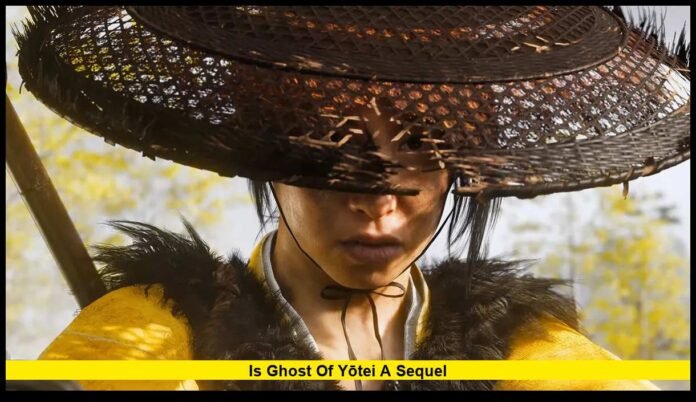

Is Ghost of Yōtei a sequel to Ghost of Tsushima? That’s the burning question that has been dominating gaming discussions since the title was unveiled. With so much anticipation surrounding this PlayStation 5 exclusive, fans want clarity: does it pick up where Ghost of Tsushima left off, or is it something completely different? The truth is, Ghost of Yōtei is best described as a standalone sequel—a continuation of the franchise’s spirit, mechanics, and themes, but not a direct extension of Jin Sakai’s story.
This distinction matters because it shapes expectations. While the game is connected to Ghost of Tsushima through tone, design, and legacy, it forges its own path with new characters, a different historical backdrop, and expanded gameplay systems. Below, we break down what makes Ghost of Yōtei a sequel, how it ties back to its predecessor, and why Sucker Punch chose this unique approach.
Understanding the Term “Standalone Sequel”
The phrase standalone sequel was used by developers and publishers when presenting Ghost of Yōtei. But what does that actually mean?
- It’s not a direct sequel: The story does not continue Jin Sakai’s journey from the original game.
- It’s not a prequel either: The events don’t occur before the Mongol invasion depicted in Ghost of Tsushima.
- It is spiritually connected: The game inherits the ethos, atmosphere, and “Ghost” mantle, but tells a fresh narrative.
In short, Ghost of Yōtei is a sequel because it belongs to the same franchise lineage, but it stands alone because you don’t need to play Ghost of Tsushima to understand it.
Timeline Placement: Centuries Later
One of the most defining aspects is its setting. Ghost of Tsushima took place in 1274 during the first Mongol invasion of Japan. Ghost of Yōtei, by contrast, is set in 1603, more than 300 years later.
This time leap allows the developers to create a completely new world while still maintaining the legendary concept of “the Ghost.” The original Ghost, Jin Sakai, is long gone, but his legacy has transformed into a myth carried forward by new generations.
Atsu: The New Ghost
At the heart of Ghost of Yōtei is its protagonist, Atsu. Unlike Jin Sakai, who was a samurai bound by honor and tradition, Atsu begins the game as a mercenary. Her transformation into the Ghost is shaped not by noble duty but by necessity and vengeance.
This shift in character background allows Sucker Punch to tell a darker, more complex story about survival, justice, and the burden of becoming a symbol. While Jin fought foreign invaders to protect his homeland, Atsu takes on the Yōtei Six—a group of powerful enemies who dominate the snowy northern lands.
By introducing a fresh face, the developers ensure that the franchise doesn’t feel repetitive, even as it remains anchored in the Ghost mythos.
Connection Points Between Tsushima and Yōtei
So, is Ghost of Yōtei a sequel? The answer becomes clearer when we examine the continuity between the two games:
- The Ghost Identity: The concept of wearing a mask and becoming “the Ghost” is a direct link to Jin Sakai’s legacy.
- Stealth and Swordplay: Gameplay mechanics that defined Tsushima—sneaking, parrying, katana duels—are core in Yōtei.
- Themes of Honor vs. Pragmatism: Both games explore the moral struggles of warriors who abandon tradition to protect their people.
- Mythology of the Ghost: In Yōtei, the Ghost is no longer just one man—it’s a legendary figure that survives in stories and inspires future warriors.
While the games share DNA, the generational gap ensures that the narrative doesn’t feel like a simple rehash.
What Sets Ghost of Yōtei Apart
To truly understand the sequel identity, it’s important to highlight how Ghost of Yōtei stands on its own.
1. A Different Setting
The shift from Tsushima Island to the Hokkaido region (near Mount Yōtei) creates an entirely new environment. Instead of lush fields and coastal villages, players explore icy forests, snowy mountains, and northern landscapes filled with wildlife unique to the region.
2. A New Timeline
By leaping forward three centuries, the game introduces new technologies, weapons, and political realities. This evolution creates opportunities for more varied combat and exploration.
3. Expanded Combat
The sequel introduces dual katana fighting styles, grappling hooks for vertical exploration, and weather systems that influence encounters. Combat is faster and more layered than before.
4. Nonlinear Structure
Unlike Tsushima, which had a largely linear arc, Yōtei lets players choose the order in which they take down the Yōtei Six. This gives the story a branching, flexible progression.
5. New Cultural Activities
The game includes side activities like sumi-e painting, snow-based rituals, and hot spring bathing—immersive elements that highlight the cultural richness of northern Japan.
Developer Perspective
Sucker Punch’s decision to make Ghost of Yōtei a sequel in spirit rather than a direct continuation was intentional. Their goals included:
- Preserving Legacy: They wanted the Ghost identity to carry forward without being tied only to Jin Sakai.
- Creative Growth: By shifting to a new era, they had the freedom to redesign combat and world systems.
- Broader Accessibility: New players can enjoy Yōtei without needing to know the full details of Tsushima’s plot.
- Long-Term Vision: Establishing the Ghost as a generational symbol opens doors for future sequels in other eras or regions.
Critical and Fan Reactions
Early previews and community reactions reflect excitement about this approach. Fans of Ghost of Tsushima appreciate the familiarity of the mechanics, while newcomers are drawn to the fresh protagonist and snowy setting.
Critics describe it as “a sequel that honors its roots but refuses to repeat them.” The general consensus is that Ghost of Yōtei provides the perfect balance: a nod to the past with bold steps forward.
Comparing Ghost of Yōtei to Ghost of Tsushima
Here’s a quick comparison to summarize the similarities and differences:
| Feature | Ghost of Tsushima | Ghost of Yōtei |
|---|---|---|
| Timeline | 1274, Mongol invasion | 1603, northern Japan |
| Protagonist | Jin Sakai | Atsu |
| Location | Tsushima Island | Mount Yōtei region |
| Themes | Honor vs. necessity, defending homeland | Vengeance, myth of the Ghost |
| Combat | Katana, stealth, archery | Dual katanas, grappling, weather systems |
| Story Structure | Mostly linear | Nonlinear with branching targets |
| Legacy of the Ghost | Born as a rebellion against samurai code | A legend carried into new generations |
This table shows clearly why the game is seen as a sequel—familiar elements evolve, while enough changes keep it fresh.
Why the Sequel Question Matters
The debate around whether Ghost of Yōtei is a sequel matters for several reasons:
- Expectations: Players want to know if they’ll see Jin Sakai again (they won’t).
- Accessibility: Newcomers wonder if they must play Tsushima first (they don’t).
- Franchise Growth: Defining it as a standalone sequel ensures the Ghost legacy can expand across history.
In other words, calling it a sequel shapes how fans approach it: not as Ghost of Tsushima 2, but as the next chapter in the Ghost saga.
Final Thoughts
So, is Ghost of Yōtei a sequel? The answer is yes—with an important distinction. It is a spiritual and standalone sequel, carrying forward the themes, mechanics, and legendary Ghost identity from Ghost of Tsushima. Yet it introduces a new hero, a new era, and a fresh narrative that stands firmly on its own.
For longtime fans, it’s both a continuation and a reinvention. For newcomers, it’s an accessible entry point into one of PlayStation’s most acclaimed franchises.
How do you feel about Ghost of Yōtei taking the standalone sequel path? Share your thoughts in the comments and join the discussion!