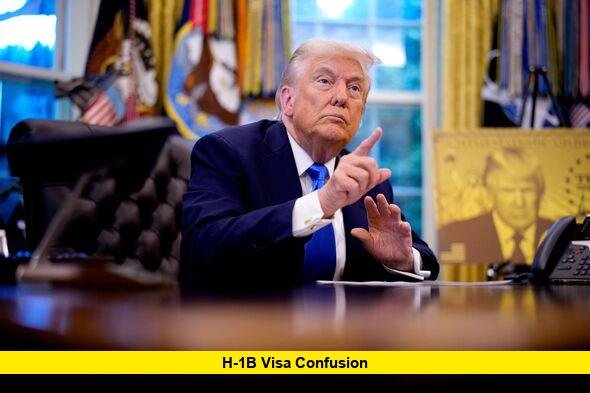

The White House is moving quickly to address the growing H-1B visa confusion that erupted after a sweeping executive order introduced a $100,000 petition fee. The unexpected policy shift sent shockwaves through corporate America, alarming foreign workers and sparking urgent memos across the tech industry. As of today, officials have clarified the rules, but questions remain about how the new measure will affect both companies and skilled international employees.
Why the Confusion Began
The uproar began when the administration announced a new $100,000 fee for H-1B visa petitions. The order, signed on September 19 and taking effect September 21, was presented as a restriction on certain nonimmigrant workers. Early statements suggested that the fee could apply not just to new petitions, but also to renewals, reentries, and even current visa holders already in the United States.
Those initial remarks triggered panic. Many companies issued internal warnings advising H-1B workers not to leave the country. Social media platforms filled with anxious posts from foreign workers worried about being stranded abroad or suddenly facing massive unexpected costs. Businesses dependent on skilled international talent, especially in technology and finance, scrambled to understand how the rules would be enforced.
White House Clarifications
Amid the backlash, the White House sought to calm fears and released several key clarifications:
- The $100,000 fee applies only to new H-1B petitions filed after the rule’s effective date.
- The fee is a one-time cost per petition, not an annual renewal fee.
- Current visa holders are not required to pay the fee to continue working in the U.S.
- Individuals on H-1B visas may travel abroad and reenter without triggering the new fee.
- The order is in place for 12 months, through September 2026, though it may be extended or revised.
These clarifications brought some relief, especially for existing workers who feared being caught in bureaucratic limbo. However, the short notice and lack of immediate precision in official statements left a cloud of uncertainty over employers and employees alike.
Impact on Employers and Workers
The new rule represents one of the most dramatic financial hurdles ever introduced for skilled worker visas. Its effects are being felt across several groups:
- Tech Companies: Major firms that hire large numbers of H-1B workers are now recalculating costs. While established corporations may absorb the fee, startups and mid-sized businesses could struggle to compete.
- Foreign Nationals: Current H-1B holders are temporarily reassured, but many remain cautious about travel and future renewals. For new applicants, the barrier is substantial and may limit opportunities.
- Recruiters and HR Teams: Talent acquisition strategies are being reassessed. Some employers are exploring remote work options rather than sponsoring costly visas.
- Educational Institutions and Nonprofits: Questions remain about whether certain categories of employers, such as universities and hospitals, will face exemptions or reduced fees.
Unanswered Questions
Even with the clarifications, several uncertainties persist:
- How will petitions filed just before the effective date be treated?
- Will exemptions apply to nonprofits, universities, or healthcare systems?
- Could legal challenges delay or overturn the fee implementation?
- What enforcement mechanisms will agencies use to monitor compliance?
Attorneys and policy experts note that lawsuits are likely, as critics argue the executive branch may not have authority to impose such a dramatic financial requirement without congressional approval.
Global Reaction
The announcement has drawn international attention, particularly from countries with large numbers of citizens working in the U.S. under the H-1B program. India, in particular, has raised concerns about the impact on its workers and IT companies. Governments are monitoring the situation closely, wary of disruptions to economic and family stability.
At the same time, multinational corporations are weighing whether to shift operations overseas if access to skilled labor in the U.S. becomes too costly. This uncertainty may influence investment decisions in sectors like cloud computing, engineering, and biotech.
The Bigger Picture
For decades, the H-1B visa has been a cornerstone of U.S. immigration policy for skilled workers, particularly in technology and engineering. Supporters argue it keeps American industries competitive by attracting global talent. Critics counter that it depresses wages and reduces opportunities for domestic workers.
The new fee is seen as part of a broader push to limit foreign labor while encouraging companies to hire U.S. workers. Whether it achieves that goal—or simply drives businesses and talent abroad—remains to be seen.
What Workers and Employers Should Do Now
For those navigating this uncertain environment, experts recommend a cautious but proactive approach:
- Employers should reassess hiring plans, budget for higher petition costs, and consider remote or offshore alternatives.
- Workers already on H-1B visas should keep documentation current, monitor official updates, and consult legal advisors before traveling.
- Prospective applicants may want to explore alternative visa categories, such as the O-1 for extraordinary ability or the L-1 for intracompany transfers.
The coming weeks will be critical as agencies release detailed guidance and courts consider potential challenges.
Read Also-Trump Executive Order Gold Card: Full Breakdown of the New Visa Path
Conclusion
The storm of H-1B visa confusion has underscored just how disruptive sudden immigration changes can be. Although the White House has clarified that the new $100,000 fee applies only to new petitions, the initial miscommunication left lasting unease. Businesses are recalculating their strategies, foreign workers are seeking legal reassurance, and policymakers are bracing for continued debate.
As the new rules take effect, the immigration landscape is shifting quickly. Staying informed will be the key for anyone affected by these changes. What’s your perspective on the new H-1B policy—does it strengthen the U.S. workforce, or does it risk driving talent elsewhere? Share your thoughts below.