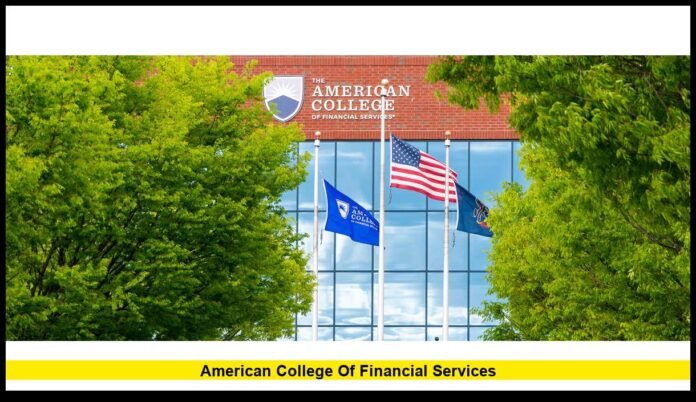

The American College of Financial Services has become one of the most respected names in financial education, shaping how advisors, planners, and industry leaders serve their clients. In 2025, the institution continues to grow in influence, offering new programs, hosting specialized symposiums, and reinforcing its position as a hub for advanced financial knowledge. For professionals looking to stay ahead in a rapidly evolving industry, the College’s latest updates represent more than just coursework—they mark a path toward greater expertise, credibility, and client trust.
The Mission and Vision of the American College of Financial Services
The American College of Financial Services was founded with a mission to raise the professional standards of financial advisors. Unlike traditional universities, the College focuses solely on disciplines tied directly to financial services, such as:
- Retirement planning
- Estate and tax strategies
- Wealth management
- Insurance and risk management
- Special needs planning
- Behavioral finance
This laser-sharp focus allows the institution to design programs that meet the real-world demands of the industry. In 2025, the College emphasizes accessibility, inclusivity, and adaptability—three traits that resonate strongly with today’s financial professionals and clients alike.
2025 Spotlight: Advanced Special Needs Planning Symposium
One of the most notable initiatives this year is the Virtual Advanced Special Needs Planning Symposium. The College has long recognized that families with special needs face financial challenges that go beyond typical estate or retirement planning. To address this, it has created a dedicated center for special needs education and now launched a two-part symposium designed to elevate advisor knowledge in this area.
What Makes This Symposium Unique?
- Comprehensive Coverage: The program goes beyond basic planning, diving into trust structures, government benefit coordination, tax implications, and long-term care strategies.
- Expert Speakers: Practitioners, attorneys, and certified financial planners share case studies and practical approaches.
- Virtual Format: By hosting the event online, the College ensures participation from advisors across the country, making it more accessible than traditional in-person conferences.
- Client-Centered Focus: The symposium emphasizes empathy, cultural sensitivity, and advocacy for individuals with disabilities—ensuring professionals not only understand the technical side but also the human side of planning.
This initiative highlights the College’s ability to identify underserved niches in financial planning and provide structured, impactful education around them.
Expanded Certificate Programs in 2025
Beyond symposiums, the American College of Financial Services has refined and expanded its certificate programs, making it easier for advisors to specialize without committing to a full degree.
Advanced Retirement Planning Certificate
The Advanced Retirement Planning Certificate has been one of the flagship offerings in 2025. Its popularity stems from the growing demand among aging populations for expert retirement advice. Key program highlights include:
- Delivered 100% online with weekly live sessions.
- Courses stack toward the Master of Science in Financial Planning degree.
- Tuition structured per course, with new enrollment incentives introduced this fall.
- Focus on Social Security optimization, tax-efficient withdrawals, healthcare planning, and evolving retirement legislation.
Other Certificate Tracks
In addition to retirement planning, the College continues to promote certificate programs in:
- Wealth Management – covering investment strategies, portfolio design, and risk alignment.
- Financial Planning for Women and Diverse Communities – addressing unique challenges and opportunities in underrepresented markets.
- Ethics and Leadership in Finance – designed for professionals in management roles who need to lead with integrity.
The flexibility of these certificate options reflects the College’s philosophy that education should adapt to professionals’ career stages and client bases.
Why Designations Remain Central
While certificates are growing in popularity, designations remain the cornerstone of the College’s reputation. Credentials such as CFP®, ChFC®, CLU®, and RICP® have long been associated with higher client confidence and professional excellence.
Benefits of Designations from the American College of Financial Services
- Enhanced Client Trust – Advisors with designations are perceived as more credible and skilled.
- Broader Service Offerings – Designated professionals often expand into areas like estate planning, tax minimization, and advanced retirement solutions.
- Career Mobility – Certifications open doors to higher-level roles within financial firms and institutions.
- Peer Recognition – The College’s designations signal dedication to continuous learning and industry leadership.
In surveys conducted among alumni, advisors report stronger client retention rates and greater business growth once they earn specialized designations.
Accreditation: Safeguarding Standards
Accreditation is the backbone of any educational institution’s credibility. The American College of Financial Services maintains its status through rigorous evaluation by higher education authorities.
In 2025, accreditation reviews focus on:
- Enrollment Projections – ensuring programs remain viable and sustainable.
- Resource Planning – guaranteeing that faculty and infrastructure meet student needs.
- Academic Rigor – aligning curriculum with professional and ethical standards.
The College’s compliance and forward-looking reports reassure students and industry leaders that their investment in education remains backed by solid institutional integrity.
Events and Engagement Beyond the Classroom
The American College of Financial Services is not just an academic hub; it also serves as a community for alumni, students, and industry partners. In 2025, several events demonstrate its role in thought leadership:
- Rethinking Strategic Support Webcast: A deep dive into Gen Z workforce expectations and how firms can align with new cultural values.
- Future & Foundation Virtual Gathering: A chance for alumni and friends of the College to reflect on achievements and discuss future directions.
- Special Needs Planning Series (October 2025): A continuation of September’s symposium, offering both introductory and advanced sessions.
These engagements keep professionals connected and ensure the College remains at the forefront of financial education trends.
Industry Trends Reflected in the College’s Work
The American College of Financial Services does not operate in isolation—it adapts to wider industry shifts. Its 2025 initiatives mirror three important trends:
- Growing Client Complexity: Clients face multi-layered financial challenges that require advanced, specialized advice.
- Digital Transformation of Education: Virtual classrooms, webcasts, and self-paced online programs dominate professional learning.
- Focus on Diversity and Inclusion: Advisors are expected to serve clients from all walks of life, requiring cultural competence and empathy.
By aligning its offerings with these trends, the College ensures its graduates remain industry leaders.
Why the American College of Financial Services Matters for Advisors
For financial professionals, enrolling in programs at the American College of Financial Services is more than a career move—it’s a commitment to excellence.
Professional Benefits
- Expanded credibility with clients.
- Ability to charge higher fees due to proven expertise.
- Access to specialized niches like special needs planning.
- Career resilience in an increasingly competitive market.
Client Benefits
- Access to advisors with in-depth knowledge.
- Confidence that advice is rooted in both technical skill and ethical standards.
- More holistic financial plans that address unique needs.
The dual benefit—supporting both the professional and the client—reinforces why the College continues to be highly relevant in 2025.
Looking Ahead: The Future of the American College of Financial Services
While 2025 has already brought significant developments, the coming years are expected to see even greater expansion. Areas to watch include:
- Integration of AI in Financial Education: Courses may begin incorporating advanced analytics and AI-driven financial planning tools.
- Global Reach: The College may expand partnerships to serve international advisors.
- Micro-Certifications: Shorter, highly targeted courses could emerge for specific skills like ESG investing or behavioral coaching.
The College’s ability to adapt will be critical in maintaining its position as the gold standard in financial education.
Conclusion
The American College of Financial Services has demonstrated once again in 2025 that it is more than an academic institution—it is a driver of professional growth and industry standards. From its innovative symposiums on special needs planning to its expanding certificate and designation programs, the College equips advisors with the tools to thrive in an increasingly complex financial world.
As the financial services industry evolves, one thing remains clear: the American College of Financial Services will continue to set the bar for what it means to be an educated, ethical, and effective financial professional.
What are your thoughts on the College’s latest initiatives? Do you believe specialized education is the future of financial advising? Share your perspective in the comments and join the conversation.
Frequently Asked Questions
Q1: What new programs did the American College of Financial Services launch in 2025?
The College introduced a Virtual Advanced Special Needs Planning Symposium and expanded its online certificate programs, particularly in retirement planning.
Q2: Why are the College’s designations considered valuable for advisors?
Designations signal advanced expertise, boost client confidence, and often lead to stronger client retention and career growth.
Q3: Is the American College of Financial Services accredited?
Yes. The College continues to hold recognized accreditation, ensuring that its programs meet rigorous academic and professional standards.
DISCLAIMER: This article reflects updates related to the American College of Financial Services as of September 21, 2025. While details are accurate at the time of writing, programs, tuition, and events are subject to change. Readers are encouraged to verify information directly with the College before making enrollment decisions.