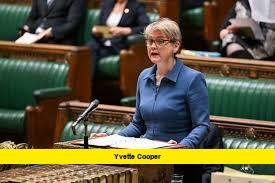

The escalating conflict in the Middle East has exposed new tensions between Washington and London, and Yvette Cooper has made it clear that Britain will not automatically follow every position taken by the United States.
In recent remarks during the ongoing Iran crisis, Yvette Cooper stressed that the United Kingdom continues to work with its allies but does not share the same stance as former U.S. President Donald Trump on every issue related to the conflict. Her comments come at a time when diplomatic disagreements between the two governments have intensified over military involvement and strategy in the region.
The statement reflects a broader debate about how closely traditional allies should align during international conflicts.
Stay with us for the latest developments shaping global security and the future of U.S.–UK relations.
A Growing Rift Over the Iran Conflict
The disagreement emerged amid rising tensions surrounding the ongoing war involving Iran. The United States has taken a more aggressive military approach, while the British government has signaled a more cautious position.
British Prime Minister Keir Starmer confirmed earlier that the United Kingdom would not join initial U.S. and Israeli strikes on Iran. Instead, London opted to focus on defensive measures and diplomatic engagement. That decision triggered criticism from Donald Trump, who publicly questioned the United Kingdom’s level of support during the conflict.
Trump argued that the United States could win the war without Britain’s help and expressed frustration with what he described as delayed support from the UK.
Cooper responded by emphasizing that the British government prioritizes careful decision-making based on national interests rather than reacting to political pressure or social media commentary.
What Yvette Cooper Actually Said
During interviews about the crisis, Yvette Cooper explained that cooperation with the United States remains important but does not mean the UK must mirror every policy decision.
She noted that the two nations share a long-standing security partnership and continue to coordinate on intelligence and defense matters. However, she also made clear that differences in strategy are sometimes inevitable.
Cooper emphasized that the British government is focused on practical actions and international stability rather than political messaging.
Her remarks underline a key point in Britain’s approach: maintaining the alliance with Washington while still asserting independent foreign policy decisions.
UK Military Position in the Middle East
Although the United Kingdom has not joined the initial offensive operations against Iran, the country has taken several steps to strengthen regional security.
British authorities have allowed limited use of certain UK military bases by U.S. forces for defensive purposes. Military assets have also been repositioned in the region as a precautionary measure.
Officials say these moves are designed to protect British personnel, support allied operations where appropriate, and prevent further escalation.
At the same time, the UK government continues to emphasize diplomacy and de-escalation as the preferred path forward.
Political Pressure at Home
The Iran conflict has also sparked political debate within Britain itself.
Some political figures have argued that the United Kingdom should have supported the United States more strongly from the beginning. Others believe the government made the correct decision by avoiding direct involvement in offensive military operations.
The disagreement highlights the broader challenge facing many Western governments: balancing security partnerships with domestic political considerations and international legal concerns.
For Starmer’s administration, the goal has been to support allies while preventing the conflict from widening.
Why the Alliance Still Matters
Despite the public disagreements, analysts say the United States and the United Kingdom remain among the closest strategic partners in the world.
The two countries cooperate extensively on intelligence sharing, military operations, and diplomatic initiatives. Their relationship—often referred to as the “special relationship”—has played a central role in global security for decades.
Even during periods of political disagreement, both governments typically maintain strong institutional ties across defense and intelligence agencies.
Cooper’s remarks reflect that reality: cooperation continues, but policy alignment is not automatic.
What Comes Next
The situation in the Middle East remains fluid, and decisions by major powers could significantly influence the direction of the conflict.
For the United Kingdom, the current strategy focuses on protecting national interests, supporting allies where appropriate, and encouraging diplomatic solutions whenever possible.
As the war continues to develop, statements from senior officials like Yvette Cooper signal that Britain intends to keep working with international partners while maintaining independent judgment on major security decisions.
Global attention now turns to whether tensions between allies will ease or deepen as the conflict unfolds.
If you have thoughts on the UK’s approach to the crisis or the evolving U.S.–UK relationship, share your perspective and stay tuned for more updates.
What do you think about the UK’s stance in the Iran conflict? Join the conversation below and follow along as this global story continues to unfold.