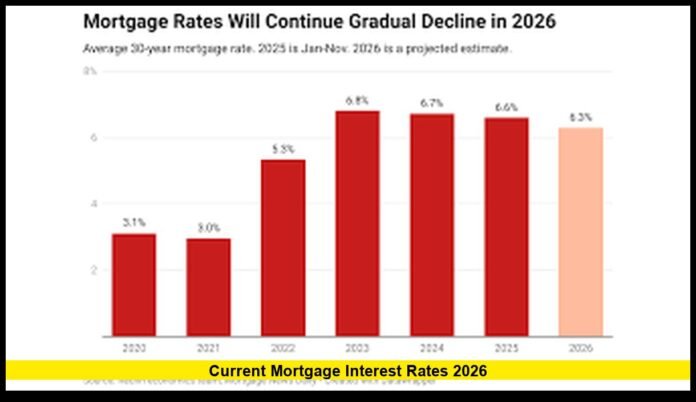

Current mortgage interest rates remain a key topic for homebuyers and homeowners across the United States as borrowing costs continue to shape the housing market in 2026. As of early March 2026, the average 30-year fixed mortgage rate generally sits in the mid-6% range, while 15-year fixed mortgage rates are typically in the low-to-mid-6% range, depending on lender pricing, borrower qualifications, and loan conditions.
Mortgage rates influence the affordability of homes and the overall pace of the real estate market. When interest rates rise, monthly mortgage payments increase and borrowing becomes more expensive. When rates decline, buyers gain more purchasing power and refinancing activity often increases.
This article explores the latest mortgage rate averages in the United States, the economic forces that affect lending rates, and what borrowers should understand when applying for a home loan today.
Latest Average Mortgage Rates in the United States
Although rates vary among lenders, national averages provide a general view of the housing finance environment.
Average U.S. Mortgage Rates (March 2026)
| Mortgage Type | Typical Average Rate |
|---|---|
| 30-Year Fixed Mortgage | Mid-6% range |
| 15-Year Fixed Mortgage | Low-to-mid-6% range |
| 5/1 Adjustable-Rate Mortgage | Mid-5% to low-6% range |
Borrowers rarely receive identical rates because each lender evaluates risk differently.
Several personal financial factors influence the interest rate offered.
Key factors include:
- Credit score
- Down payment amount
- Loan size
- Debt-to-income ratio
- Property location and type
Because these elements vary for every borrower, mortgage quotes often differ from advertised averages.
Why Mortgage Interest Rates Matter
Mortgage rates determine how much interest borrowers pay over the life of a home loan.
A higher interest rate increases both the monthly payment and the total cost of borrowing.
A lower interest rate reduces monthly expenses and can make homeownership more affordable.
For many buyers, interest rates directly influence the size of the home loan they can afford.
Even a small difference in rates can have a major financial impact.
For example, a borrower with a lower interest rate may save thousands of dollars in interest payments over a 30-year mortgage term.
Because of this effect, homebuyers frequently monitor rate changes before locking in a mortgage.
Mortgage Rate Changes in Recent Years
Mortgage interest rates have shifted significantly during the past several years.
During the early 2020s, rates reached historically low levels.
Later increases in inflation pushed borrowing costs higher.
Mortgage Rate Trends
| Year | Average 30-Year Mortgage Rate |
|---|---|
| 2021 | Around 3% |
| 2022 | Roughly 5%–7% |
| 2023 | Frequently above 7% |
| 2024 | Mostly mid-6% to near 7% |
| 2025–2026 | Generally mid-6% range |
The sharp increase from the record lows of 2021 changed the housing market.
Many buyers faced higher monthly payments and reduced affordability.
Some homeowners chose to delay selling their homes because their existing mortgage rates remained lower than current market rates.
How Mortgage Rates Are Determined
Mortgage rates reflect broader economic conditions.
Financial markets influence the cost of borrowing through several mechanisms.
Important factors that affect mortgage rates include:
- Inflation levels
- Federal Reserve monetary policy
- Treasury bond yields
- Investor demand for mortgage-backed securities
- Overall economic growth
Mortgage lenders closely watch the 10-year U.S. Treasury yield.
This government bond often moves in the same direction as mortgage interest rates.
When Treasury yields increase, mortgage rates usually rise.
When bond yields fall, mortgage rates often decline.
Federal Reserve Policy and Mortgage Rates
The Federal Reserve plays a major role in shaping the interest rate environment.
Although the central bank does not set mortgage rates directly, its decisions influence financial markets.
The Fed adjusts the federal funds rate, which is the benchmark rate for short-term lending between banks.
Higher benchmark rates generally lead to higher borrowing costs across the economy.
Lower benchmark rates can encourage cheaper borrowing.
During periods of elevated inflation, the Federal Reserve may maintain higher interest rates to slow economic growth and control price increases.
Mortgage lenders respond to these financial conditions when pricing home loans.
The Role of Inflation in Mortgage Rates
Inflation remains one of the most important drivers of mortgage rate movements.
When inflation rises, lenders require higher interest rates to protect the value of future loan payments.
Higher inflation often leads to higher mortgage rates.
Lower inflation can allow rates to stabilize or decline.
Financial markets respond quickly to inflation reports.
As a result, mortgage rates may change soon after new economic data becomes available.
Monthly Payment Impact of Mortgage Rates
Mortgage interest rates have a direct impact on monthly housing costs.
Small changes in rates can significantly alter a borrower’s monthly payment.
Monthly Payment Example for a $400,000 Mortgage
| Interest Rate | Estimated Monthly Payment |
|---|---|
| 3% | About $1,686 |
| 5% | About $2,147 |
| 6.5% | About $2,528 |
| 7% | About $2,661 |
These examples illustrate how rising interest rates increase the cost of homeownership.
Higher monthly payments may limit the price range buyers can afford.
Types of Mortgage Interest Rates
Borrowers can choose between different types of mortgages.
Each option offers different financial advantages.
Fixed-Rate Mortgages
A fixed-rate mortgage keeps the same interest rate for the entire loan term.
Common options include:
- 30-year fixed mortgage
- 15-year fixed mortgage
These loans provide predictable monthly payments and long-term financial stability.
Most homeowners in the United States choose fixed-rate mortgages.
Adjustable-Rate Mortgages
Adjustable-rate mortgages start with a lower introductory interest rate.
After the initial period ends, the interest rate adjusts periodically.
Examples include:
- 5/1 ARM
- 7/1 ARM
These loans may appeal to buyers who expect to sell or refinance within several years.
However, monthly payments may increase if interest rates rise.
Factors That Affect Individual Mortgage Rates
Borrowers rarely receive the same interest rate listed in national averages.
Personal financial factors strongly influence the final rate offered by lenders.
Credit Score
Credit scores help lenders measure borrower reliability.
Higher scores usually result in lower interest rates.
Borrowers with scores above 740 often receive the most competitive loan terms.
Down Payment
Larger down payments reduce lender risk.
Buyers who provide 20% down payments often qualify for better mortgage rates.
Debt-to-Income Ratio
Lenders evaluate how much income borrowers spend on existing debt.
Lower debt ratios improve approval chances and may lead to lower interest rates.
Loan Size and Property Type
Loan amounts and property characteristics can also affect interest rates.
Loans for primary residences may have different rates than those for investment properties.
Popular Mortgage Programs in the United States
Several loan programs help Americans finance home purchases.
Each program serves different borrower groups.
Major Loan Options
| Loan Program | Description |
|---|---|
| Conventional Loans | Standard mortgages offered by private lenders |
| FHA Loans | Government-insured loans for buyers with lower credit scores |
| VA Loans | Available for eligible military service members and veterans |
| USDA Loans | Loans designed for rural homebuyers who meet income requirements |
These programs expand access to homeownership for many Americans.
Refinancing and Mortgage Rate Changes
Many homeowners refinance their mortgages when interest rates fall.
Refinancing replaces an existing mortgage with a new loan.
Homeowners refinance for several reasons:
- Lower monthly payments
- Reduced interest costs
- Changing loan terms
- Accessing home equity
When mortgage rates drop significantly, refinancing activity usually increases.
Homeowners who secure lower rates can save substantial money over the life of their loans.
Housing Market Effects of Mortgage Rates
Mortgage rates play a major role in shaping housing market conditions.
Higher interest rates reduce purchasing power and can slow home sales.
Lower interest rates often encourage more buyers to enter the market.
Housing indicators affected by mortgage rates include:
- Home purchase activity
- Housing inventory levels
- Home price growth
- Mortgage application volume
Housing affordability remains one of the biggest concerns for many American buyers.
Interest rate levels strongly influence whether buyers can afford homes.
Strategies to Secure a Lower Mortgage Rate
Borrowers can improve their chances of receiving favorable loan terms.
Preparation before applying for a mortgage is important.
Helpful strategies include:
- Improving credit scores
- Reducing outstanding debt
- Saving for a larger down payment
- Comparing multiple lenders
- Locking interest rates during favorable market conditions
Mortgage rate locks allow borrowers to secure a specific rate for a limited period while completing the loan process.
This protects buyers if rates rise before closing.
Economic Indicators That Influence Future Mortgage Rates
Mortgage rates often respond to economic conditions.
Several indicators influence future interest rate trends.
Key indicators include:
- Inflation data
- Federal Reserve policy decisions
- Employment reports
- Treasury bond yields
If inflation slows, mortgage rates could gradually decline.
If inflation remains elevated, borrowing costs may stay higher for longer.
Buyers and homeowners frequently monitor these economic signals.
Housing Market Conditions in 2026
The U.S. housing market continues adapting to higher borrowing costs.
Although mortgage rates remain above the historic lows seen earlier in the decade, demand for housing remains strong in many regions.
Limited housing inventory in several cities continues supporting home prices.
Buyers must carefully evaluate affordability when purchasing homes in the current market.
Monitoring current mortgage interest rates remains an essential step for anyone planning to buy or refinance a home.
Are you planning to buy a home or refinance your mortgage this year? Share your thoughts and experiences with today’s mortgage rates.