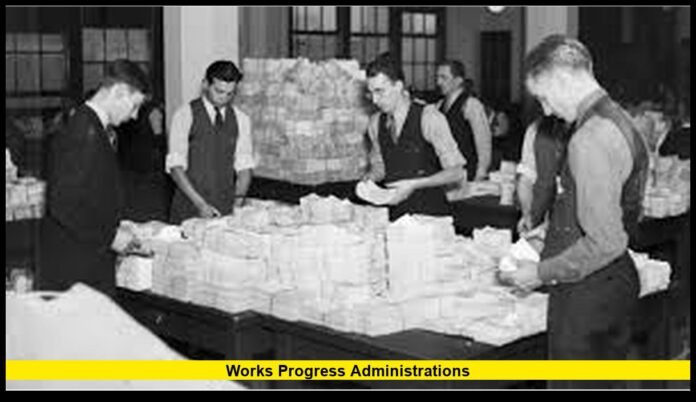

The Works Progress Administration remains one of the most influential government job programs in American history, shaping infrastructure, employment policy, and public culture across the United States. Created during the Great Depression, the agency employed millions of Americans while building roads, bridges, schools, parks, and cultural institutions that still serve communities today.
Although the program ended in 1943, its legacy continues to influence discussions about economic recovery, government investment, and national infrastructure. Many public buildings, highways, and parks constructed during the program’s operation remain in daily use across the country. The scale of the initiative also continues to attract attention from economists and policymakers studying how large public employment programs can respond to economic crises.
Understanding the history and impact of this federal program provides insight into how the United States addressed widespread unemployment during one of the most difficult economic periods in its history.
The Economic Crisis That Led to the Program
The Great Depression began after the stock market crash of 1929 and quickly triggered a severe economic downturn across the United States. Businesses closed, banks failed, and millions of Americans lost their jobs.
By the early 1930s, unemployment had reached extremely high levels. Many families struggled to afford basic necessities such as food and housing. Local governments lacked resources to support the growing number of unemployed workers.
Franklin D. Roosevelt entered the presidency in 1933 and introduced a series of economic reforms known as the New Deal. These initiatives aimed to stabilize the banking system, restore economic activity, and create employment opportunities.
Public job programs became a central part of that strategy. The federal government decided to fund large construction projects that could employ large numbers of workers quickly.
Creation of the Works Progress Administration
In 1935, Congress passed legislation that funded one of the largest employment initiatives ever launched in the United States. This program became known as the Works Progress Administration.
The program’s main mission focused on providing paid jobs to unemployed Americans. Instead of distributing direct financial relief, the government created employment through construction projects and public services.
Workers received wages for completing projects that improved local communities. The approach allowed millions of Americans to support their families while contributing to national development.
Leadership of the program fell under Harry Hopkins, a key advisor to President Roosevelt who played a major role in designing New Deal relief efforts.
The program quickly grew into one of the most ambitious federal initiatives of the twentieth century.
Massive Employment Across the Country
The scale of employment created by the program was unprecedented for the time. Over eight years of operation, millions of Americans found work through federally funded projects.
At its peak in the late 1930s, several million workers participated in projects across the nation.
Key employment statistics include:
| Category | Estimated Numbers |
|---|---|
| Total workers employed | More than 8.5 million |
| Peak workforce | Over 3 million workers |
| Program years | 1935–1943 |
| Federal spending | About $11 billion during the period |
These jobs helped stabilize communities suffering from severe unemployment. Workers received steady income, which also stimulated local economies.
The program reached both urban centers and rural communities, ensuring that relief efforts extended across the entire country.
Infrastructure That Still Serves Americans
Construction projects formed the backbone of the program. Workers built or improved critical infrastructure that communities depended on for transportation, education, and public services.
Projects completed during the initiative included:
- Roads and highways connecting cities and rural areas
- Bridges improving transportation routes
- Schools and educational facilities
- Airports and airfields
- Public parks and recreation centers
- Libraries and civic buildings
Many of these structures remain active today. Some schools built during the 1930s continue serving students, while roads and bridges constructed during that time remain part of modern transportation networks.
Infrastructure projects also helped modernize communities that previously lacked reliable public facilities.
Road Construction and Transportation Improvements
Transportation infrastructure represented one of the largest project categories within the program. Workers built hundreds of thousands of miles of roads across the country.
Improved road networks helped connect small towns to larger cities. This allowed businesses to transport goods more efficiently and improved access to essential services.
Major accomplishments included:
- Construction or improvement of more than 650,000 miles of roads
- Development of thousands of bridges
- Airport runway construction in multiple states
These transportation projects played an important role in the country’s economic recovery. They also laid the foundation for later highway expansion during the mid-twentieth century.
Public Buildings and Community Facilities
Communities across the United States benefited from new public buildings constructed during the program.
Workers built thousands of facilities designed to improve local services. Many towns gained new schools, libraries, and government buildings during this period.
Notable categories of construction included:
- Public schools
- Courthouses and municipal buildings
- Community centers
- Fire stations and police facilities
- Hospitals and health clinics
These projects addressed urgent community needs while providing steady employment for workers with construction skills.
Public recreation spaces also became an important part of the program’s legacy. Parks, swimming pools, and playgrounds built during the era provided affordable recreation for families during difficult economic times.
Support for Arts and Culture
The program did more than create construction jobs. It also supported artists, writers, musicians, and performers who struggled to find work during the Depression.
Several federal cultural initiatives formed part of the program’s broader mission.
Art Programs
Artists painted murals and created sculptures for public buildings. Many of these artworks still decorate post offices, schools, and libraries.
Writers and Historical Projects
Writers documented American life, recording local histories and collecting oral accounts from communities across the country.
Theatre and Music Initiatives
Actors, directors, and musicians participated in productions and concerts organized for public audiences.
These cultural efforts made art and entertainment accessible to people who could not afford it during the economic crisis.
Impact on Local Economies
The program played a major role in stabilizing local economies during the Great Depression. Wages paid to workers allowed families to purchase food, clothing, and household necessities.
As spending increased, businesses began to see improved sales. This helped support stores, farms, and service providers in communities across the country.
The ripple effect of employment extended beyond the workers themselves. Families benefited from stable income, while communities gained valuable infrastructure.
Rural regions experienced particularly strong improvements because many lacked modern roads, schools, or public buildings before the program began.
Challenges and Political Debate
Large federal programs often spark debate, and this initiative was no exception.
Some critics argued that the federal government was spending too much money on relief programs. Others believed local governments should handle employment assistance rather than federal agencies.
Supporters pointed out that millions of Americans needed work during the economic crisis. They also emphasized that the program produced valuable infrastructure rather than temporary aid.
Political discussions about government-funded job programs continue in modern policy debates, particularly when the country faces economic slowdowns.
End of the Program During World War II
As the United States entered World War II, economic conditions changed dramatically. Military production created millions of jobs in factories, shipyards, and defense industries.
Unemployment declined as workers joined the armed forces or accepted positions supporting wartime manufacturing.
With job opportunities increasing, the federal government gradually reduced funding for relief programs.
By 1943, the Works Progress Administration ended operations as the wartime economy replaced the need for large federal employment initiatives.
Lasting Influence on U.S. Infrastructure
The long-term impact of the program remains visible across the United States. Infrastructure built during the 1930s continues serving communities in many states.
Examples include:
- Historic bridges still carrying local traffic
- Public parks used for recreation
- Schools and libraries that remain active
- Government buildings still used for municipal services
These structures demonstrate how large infrastructure programs can shape national development for decades.
Historic preservation groups often identify buildings from the 1930s because of their architectural and historical value.
Why the Program Remains Relevant Today
Economic historians frequently study the program when analyzing responses to major economic crises. Its scale and reach offer insight into how government investment can address widespread unemployment.
Infrastructure spending remains a key policy topic in the United States. Modern legislation focused on transportation, energy, and public facilities often sparks comparisons with earlier national initiatives.
The history of the Works Progress Administration illustrates how public investment can produce both short-term employment and long-lasting national assets.
The program demonstrated that large public works initiatives can reshape communities while helping workers recover during difficult economic periods.
What do you think about the lasting impact of this historic New Deal program on America’s infrastructure and economy? Share your thoughts in the comments and stay updated for more U.S. history coverage.