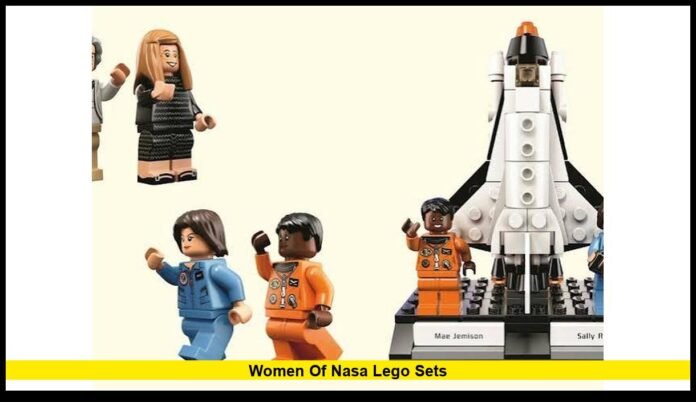

The women of NASA LEGO set continues to attract attention from LEGO collectors, space enthusiasts and STEM fans despite being retired from regular retail sales. LEGO Ideas set 21312 brought together four influential women connected to American space exploration and transformed their achievements into a compact display model that remains recognizable among retired LEGO products.
A LEGO Ideas Set With a Different Mission
Released in 2017, LEGO Ideas 21312 was created to celebrate women whose scientific, engineering and spaceflight accomplishments helped shape NASA history.
The 231-piece set was designed around four figures: Nancy Grace Roman, Margaret Hamilton, Sally Ride and Mae Jemison. Rather than building one large spacecraft, LEGO divided the set into several smaller scenes representing different areas of achievement.
The original U.S. retail price was $24.99.
The project originated as a fan-designed LEGO Ideas concept created by science writer Maia Weinstock. It gained the community support required to enter LEGO’s review process before becoming an official product.
Four Women at the Center of the Set
Nancy Grace Roman, Margaret Hamilton, Sally Ride and Mae Jemison each represent a different chapter in the development of American space exploration.
Roman’s minifigure is displayed with a miniature Hubble Space Telescope. Her career at NASA included a major role in developing the agency’s astronomy program, and she became closely associated with the development of the Hubble project.
Hamilton’s display takes a different approach. LEGO used stacks of books to represent the software code associated with the Apollo Guidance Computer. Her work in software development became an important part of the Apollo program and the broader history of software engineering.
Ride represents America’s Space Shuttle era. She became the first American woman in space when she flew aboard Challenger in 1983.
Jemison represents another historic milestone. She became the first African American woman in space after joining the crew of Endeavour in 1992.
The Models Tell Four Different Stories
The set’s appeal comes partly from the way each display connects a physical LEGO model with a real accomplishment.
Roman’s Hubble telescope provides the astronomy connection. Hamilton’s software display highlights the importance of computer programming during the Apollo era. Ride and Jemison share the shuttle-themed portion of the set.
The shuttle section includes a launchpad and removable rocket stages, creating a small-scale representation of a Space Shuttle launch.
This approach makes the product different from conventional LEGO space sets, where the spacecraft itself is usually the central attraction.
Why the Set Became a Collector Favorite
Several factors have helped maintain interest in 21312.
The subject matter is based on real history, the product belongs to the LEGO Ideas line, and the four minifigures represent notable individuals rather than fictional characters.
The set also has educational appeal. Parents, teachers and STEM enthusiasts can use the models as an introduction to astronomy, programming, engineering and human spaceflight.
Its relatively small size is another advantage for collectors who want a historical LEGO display without dedicating substantial shelf space to a large spacecraft or space station model.
The Katherine Johnson Detail
There is an important distinction between the original fan concept and the final retail product.
Katherine Johnson was part of the original proposal but does not appear in the finished commercial set. Johnson’s mathematical work at NASA played a significant role in the agency’s early human spaceflight efforts.
The final LEGO product contains four minifigures: Roman, Hamilton, Ride and Jemison.
This distinction matters to collectors because images associated with the original project can show a lineup that differs from the product eventually sold by LEGO.
A Retired Product in 2026
LEGO 21312 is no longer an active retail product.
The set was discontinued after its original production period, making it a secondary-market item for collectors seeking a complete copy today.
Availability can vary considerably. Some copies may be sold as complete used sets, while others may remain sealed in their original packaging. Prices can also differ depending on the condition of the box, completeness of the parts, the presence of all four minifigures and whether the original instructions are included.
Collectors should carefully inspect listings before purchasing because a lower price may reflect missing pieces or figures.
Building Instructions Remain Useful
Although the physical set is retired, its building instructions remain an important resource for owners.
Someone buying a used copy without instructions can use the official instructions to reconstruct the three main displays. They can also help collectors determine whether a partially assembled set is complete.
For longtime LEGO owners, replacement instructions can be particularly valuable because smaller pieces from older sets are sometimes misplaced during storage.
A Set With Lasting STEM Appeal
The significance of 21312 extends beyond LEGO collecting.
Its four featured women represent different professional paths connected to space exploration. Their stories demonstrate that NASA’s achievements depended on more than astronauts alone.
Scientists, mathematicians, programmers, engineers and researchers all played important roles in the development of America’s space program.
That message helped distinguish the product from traditional space-themed toys and gave it a clear educational purpose.
What Buyers Should Look For Today
Anyone searching for the original product should confirm the set number before purchasing.
The correct product is LEGO Ideas 21312, containing 231 pieces and four minifigures.
A complete copy should include the components needed to build the Hubble telescope, Apollo software display and shuttle launch scene. Buyers interested in collector value may also want the original packaging and instruction booklet.
The condition of the minifigures deserves particular attention. Because the four figures are central to the set’s identity, missing or damaged minifigures can significantly change the appeal of a secondhand copy.
Why 21312 Still Matters
The women of NASA LEGO set occupies a distinctive place in LEGO’s history because it combines fan-designed creativity with real-world science and space exploration.
Its four featured women represent milestones in astronomy, software engineering and human spaceflight. The models are small, but the historical subjects behind them are significant.
Even after leaving regular retail shelves, the set continues to appeal to collectors who value LEGO products with an educational and historical dimension.
For buyers in 2026, its retired status is the most important consideration. The original retail price was $24.99, but today’s secondary-market prices depend on availability and condition.
The set’s enduring appeal ultimately comes from its combination of LEGO design and real NASA history. For collectors looking for a compact space-themed display with a strong STEM connection, 21312 remains one of the more distinctive LEGO Ideas releases from the late 2010s.