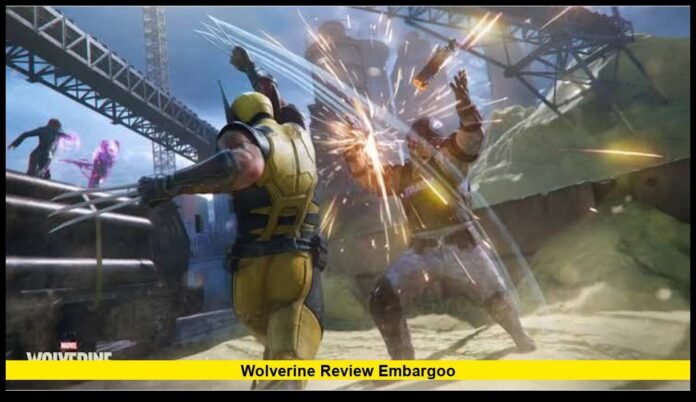

The wolverine review embargo has lifted, giving PlayStation 5 players their first opportunity to see the full critical response to Insomniac Games’ highly anticipated Marvel adventure. Reviews began appearing on September 10, five days before Marvel’s Wolverine officially launches, and the early verdict is more mixed than the enormous anticipation surrounding the game might have suggested.
Insomniac’s first major project after its hugely successful Marvel’s Spider-Man series has attracted enormous attention because it puts one of Marvel’s most recognizable characters at the center of a mature, violent single-player adventure. Rather than giving players another open-world superhero game, the studio has chosen a more focused structure built around Logan’s personality, brutal close-quarters combat, cinematic storytelling and his complicated history with the mutant world.
With reviews now public, the biggest questions involve whether the combat remains entertaining throughout the campaign, whether Logan’s story delivers the emotional impact fans expected, and whether Insomniac has successfully created a Wolverine experience that can stand independently from its Spider-Man games.
When Did the Wolverine Reviews Go Live?
That placed the review window five days ahead of the game’s September 15 release. Critics had received review copies ahead of the deadline, allowing publications enough time to complete the campaign and publish full assessments before launch.
For U.S. readers, the timing was straightforward:
- Pacific Time: 8:00 a.m.
- Mountain Time: 9:00 a.m.
- Central Time: 10:00 a.m.
- Eastern Time: 11:00 a.m.
International audiences received the reviews later in the day or during the early hours of September 11, depending on their location.
The five-day gap is significant because it gives potential buyers several days to examine scores, spoiler-free verdicts and longer reviews before spending money on the game.
Why the Review Timing Attracted Attention
The timing of a review embargo often becomes part of the conversation surrounding a major release.
Publishers can choose to allow reviews weeks ahead of launch, a few days before launch, or sometimes only shortly before the game becomes available. None of those approaches automatically determines whether a game is good or bad, but an early review window generally gives critics enough time to complete the product and gives consumers more information before release.
In this case, the September 10 deadline created considerable interest because Marvel’s Wolverine launches on September 15.
Insomniac and Sony therefore allowed the critical conversation to begin before the game reached players worldwide. That means the launch arrives with a substantial body of professional opinion already available.
For a high-profile PlayStation exclusive, that is particularly important. Insomniac has built enormous expectations through its previous Marvel projects, so fans have been watching closely to see whether Wolverine can reach the same level.
What Are Critics Saying About Marvel’s Wolverine?
The early critical response is broadly positive in some areas but noticeably divided in others.
The strongest praise is directed toward the portrayal of Logan, the visual presentation, the game’s violence and the sense of physical power created by Wolverine’s abilities.
The largest criticisms concern repetitive combat, restricted exploration and a game structure that can feel conventional compared with some of the more ambitious action-adventure titles released in recent years.
One important point is that the game is intentionally different from Marvel’s Spider-Man. It is not designed as another enormous city-based open-world experience. Instead, Insomniac has created a predominantly linear adventure that moves Logan through a series of locations and story situations.
That decision has produced two very different reactions.
Some critics appreciate the tighter pacing and focused campaign. Others believe the restricted environments prevent the game from reaching the same sense of freedom associated with Insomniac’s Spider-Man titles.
Wolverine’s Combat Is the Biggest Talking Point
Combat is at the center of almost every discussion about Marvel’s Wolverine.
Logan fights primarily with his claws, physical strength and mutant abilities. The game is designed to make each encounter feel aggressive and close-range, emphasizing the character’s willingness to absorb damage and continue fighting.
A major part of the combat system is Wolverine’s rage mechanic. Taking part in intense battles allows Logan to build up his rage, creating opportunities to increase his offensive capabilities and reinforce the fantasy of an increasingly dangerous Wolverine.
The system makes sense thematically.
Wolverine is famous for being extremely difficult to stop. He can take enormous punishment, recover from injuries and continue charging toward his enemies. Turning that characteristic into a gameplay mechanic gives the combat a direct connection to the character rather than treating his healing factor as something that only exists in cutscenes.
Critics generally agree that the combat feels physical and violent.
The problem is whether that basic loop remains sufficiently varied over a complete campaign.
Some reviews argue that the fighting can become repetitive because many encounters rely on similar combinations of attacks, counters and finishers. The game delivers the immediate sensation of controlling Wolverine, but not every critic believes it develops into a deep action system.
That distinction could become important for players who expect a combat experience comparable with dedicated character-action games.
A More Violent Wolverine
Insomniac has clearly embraced the darker side of the character.
The game includes significant blood, dismemberment and brutal finishing moves. Wolverine’s claws are not treated like ordinary superhero weapons. They are sharp, dangerous and capable of producing the kind of damage audiences would expect from the character.
The developers have also included options that allow players to adjust certain violence and language elements.
This approach separates the game from the more family-friendly image associated with some of Marvel’s other major gaming properties.
It also fits the character’s history. Logan has always occupied a different space from many traditional superheroes, and his stories frequently explore violence, trauma, survival and the consequences of his powers.
Logan Is the Heart of the Game
While gameplay remains a major focus of the reviews, Logan himself is arguably the game’s most important success.
The story explores Wolverine before the familiar X-Men era is fully established. Logan is not presented as a polished superhero who already understands his place in the world. Instead, he is dealing with his violent instincts, memories, relationships and uncertainty about where he belongs.
That gives Insomniac considerable room to explore aspects of the character that cannot easily be examined in a conventional superhero action game.
Liam McIntyre voices Logan, and his performance has received praise from critics who feel that the character has enough emotional weight to support the darker narrative.
The story is not simply about Wolverine defeating increasingly powerful enemies. It also examines the person behind the claws.
That distinction appears to be one of the game’s strongest qualities.
The Marvel Universe Is a Major Part of the Adventure
Wolverine does not exist in isolation.
The story brings Logan into contact with recognizable figures and elements from Marvel’s mutant mythology. Characters such as Sabretooth and Mystique play important roles, while the wider conflict involves mutants and the forces attempting to control or eliminate them.
The game also moves between several distinctive locations, including parts of Canada, Japan and Madripoor.
That geographical variety gives the campaign a broader scope while still maintaining its focused structure.
The presence of established Marvel characters is also likely to make the game especially attractive to longtime X-Men fans.
At the same time, reviewers have noted that some narrative elements feel familiar. The game occasionally relies on recognizable superhero storytelling conventions, meaning not every plot development carries the same surprise as its strongest character moments.
Wolverine Is Not an Open-World Game
One of the most important details prospective buyers need to understand is that Marvel’s Wolverine is not an open-world title.
That represents a major structural difference from Marvel’s Spider-Man.
Players will not spend the campaign freely traversing a giant city, completing an enormous list of side activities and constantly moving between optional objectives. Instead, Insomniac has chosen a more traditional action-adventure format.
The decision allows the developers to control pacing more carefully.
Story sequences can transition directly into combat, cinematic moments can occur without requiring players to travel across a massive map, and the campaign can move between locations without the expectation of providing dozens of hours of optional activities.
Some critics have welcomed this approach.
Others believe the limited exploration makes parts of the world feel less interactive than they could have been.
Ultimately, this may be one of the biggest dividing lines among players. Those looking for another Spider-Man-style open-world experience may be disappointed, while people who prefer focused single-player adventures may find the structure refreshing.
How Long Is Marvel’s Wolverine?
Early reviews suggest that Marvel’s Wolverine is a relatively focused experience rather than a huge 50-hour-plus open-world game.
The tighter structure means the campaign can concentrate on its primary story and combat without filling the map with large amounts of optional content.
One review estimated a campaign length of roughly 13 hours, although actual completion time can vary depending on difficulty, exploration and optional activities.
The shorter format could ultimately work in the game’s favor.
A focused superhero story does not necessarily need to be enormous. If the pacing remains strong, a shorter campaign can avoid the filler that sometimes affects large open-world productions.
However, repetitive combat becomes more noticeable when the same gameplay loop appears frequently, so the success of the shorter structure will depend heavily on how well Insomniac varies encounters.
Marvel’s Wolverine Review Scores
The first review scores are now appearing across gaming publications and aggregate platforms.
Early aggregation indicates a mid-70s Metacritic score, although the number can change as additional reviews are added and verified.
That is an important development because pre-release expectations surrounding the game were extremely high.
Some individual reviews have been substantially more enthusiastic, while others have highlighted weaknesses in the combat and exploration.
The range demonstrates why consumers should not judge the game exclusively by one aggregate number.
A reviewer who prioritizes story, presentation and character development may have a significantly different reaction from someone who places greater importance on deep combat mechanics and open-world exploration.
As more reviews are counted, the aggregate score should become more representative of the broader critical consensus.
Visual Presentation and Technical Quality
Insomniac has a strong reputation for technical presentation, and Marvel’s Wolverine continues that tradition.
The game has been built specifically for PlayStation 5, allowing the developers to focus on current-generation hardware rather than supporting the PlayStation 4.
The result is a visually ambitious production featuring detailed character models, cinematic environments, fluid animations and large-scale action sequences.
Wolverine’s movement is especially important.
His combat style needs to feel fundamentally different from Spider-Man’s acrobatic movement, and Insomniac has designed his animations around weight, aggression and physical impact.
That difference helps establish Logan’s identity.
Rather than making Wolverine feel like Spider-Man with claws, the game emphasizes direct confrontation and close-range attacks.
Accessibility Features Add More Options
Insomniac has also incorporated a substantial selection of accessibility features.
The game includes more than 100 new, returning and improved accessibility options, covering areas such as visual presentation, audio assistance, motor controls and gameplay adjustments.
Options include high-contrast visuals, audio description, global game speed adjustments and stronger haptic signals.
There are also settings related specifically to violence and language.
These additions give players more control over how they experience the game and continue Insomniac’s broader approach to accessibility across its modern titles.
Release Date and Editions
Marvel’s Wolverine is scheduled to launch on September 15, 2026, exclusively for PlayStation 5.
The Standard Edition is priced at $69.99 in the United States, while the Digital Deluxe Edition costs more and includes additional digital bonuses.
Pre-order incentives include early access to cosmetic items such as Wolverine’s classic brown suit and reflective claws, along with additional in-game bonuses.
The game does not have a PlayStation 4 version, reinforcing its status as a current-generation-only release.
What the Reviews Mean for PS5 Players
The critical response makes one thing clear: Marvel’s Wolverine is not attempting to be Spider-Man 3 with another Marvel hero.
Its identity comes from Logan.
The slower, heavier combat, brutal finishers, rage mechanics and more concentrated story all support a different style of superhero game.
That decision is both the game’s greatest opportunity and one of its biggest risks.
Players who want a focused Wolverine adventure may find exactly what they have been waiting for. Fans expecting an enormous open world with endless side content may have to adjust their expectations.
The early reviews also suggest that the story and character work may be stronger than some of the underlying gameplay systems.
For many Marvel fans, that could be enough.
For players primarily interested in advanced combat mechanics, however, the criticisms about repetition deserve attention.
What to Know Before Buying
Anyone considering the game should keep several points in mind:
It is a single-player adventure. There is no need to expect a multiplayer or live-service structure.
It is not open world. The campaign follows a more controlled and linear format.
Combat is deliberately brutal. Wolverine’s claws, healing abilities and rage mechanics are central to the experience.
The story is character-focused. Logan’s relationships and personal struggles are as important as the action.
It is PS5 exclusive. There is no PlayStation 4 edition.
Reviews are mixed in specific areas. The strongest praise concerns Logan, presentation and action, while criticism frequently focuses on combat repetition and limited exploration.
Final Verdict on the Wolverine Review Cycle
The wolverine review embargo has provided the first comprehensive look at how critics view Insomniac’s ambitious take on one of Marvel’s most recognizable characters.
The resulting picture is neither a universal masterpiece nor a major disappointment.
Instead, Marvel’s Wolverine appears to be a polished, violent and focused action adventure that succeeds particularly well when it puts players directly into Logan’s shoes. The character work, performances, visual quality and brutal combat fantasy are major strengths.
The biggest questions involve longevity.
Combat that feels spectacular during the first few hours must continue to offer enough variety throughout the campaign. Likewise, the decision to avoid an open world works when the pacing remains strong but can feel restrictive when players want greater freedom.
For Wolverine fans, however, the most important achievement may be that Insomniac has created a game with its own identity.
The studio did not simply reproduce the formula that made Spider-Man successful. It built an experience around Wolverine’s personality, violence and mutant abilities.
With the September 15 launch approaching, players now have enough critical information to decide whether this darker Marvel adventure deserves a place in their PS5 library.