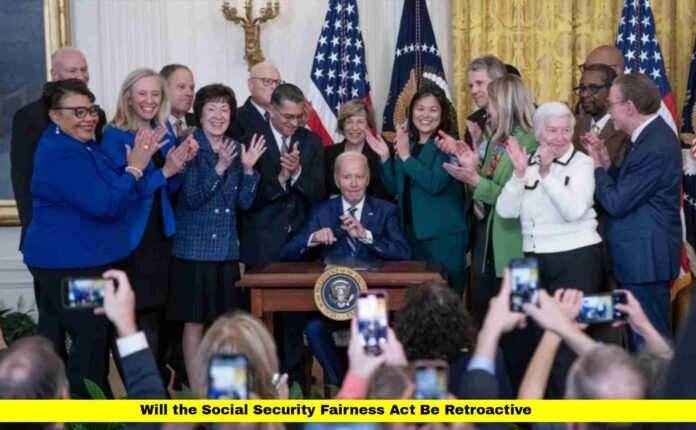

When asking will the Social Security Fairness Act be retroactive, the short answer is yes. The Act applies to benefits payable for months after December 2023, meaning many retired and current beneficiaries affected by the Windfall Elimination Provision (WEP) and Government Pension Offset (GPO) will receive both increased payments and back pay beginning in 2024.
What the Social Security Fairness Act Means in 2025
The Social Security Fairness Act (SSFA) marks a major reform in the Social Security system. It removes two controversial provisions — WEP and GPO — that reduced benefits for millions of public servants who also earned pensions from non-Social Security-covered jobs.
Before this Act, individuals such as teachers, firefighters, and police officers often received significantly reduced retirement benefits. The repeal of these provisions ensures that retirees now receive the full Social Security benefits they earned throughout their working years.
As of 2025, this Act ensures that all qualified individuals will see adjustments to their benefits, making the Social Security system fairer and more equitable across professions.
Key Points Summary
- The Social Security Fairness Act is retroactive, covering benefits from January 2024 onward.
- Beneficiaries affected by WEP or GPO will receive a one-time back payment for missed benefits.
- Regular Social Security payments increased starting April 2025.
- Most recipients will not need to file new applications; the Social Security Administration (SSA) is adjusting benefits automatically.
- The Act is designed to restore fairness to millions of retirees who worked in both public and private sectors.
Why the Law Was Needed
The WEP and GPO, established in the early 1980s, were designed to prevent “double-dipping,” where individuals could collect both a government pension and full Social Security benefits. However, over the decades, these provisions penalized workers who had legitimately earned benefits in both systems.
For example, a public-school teacher who spent part of their career in private industry often saw their Social Security check reduced by hundreds of dollars each month due to the WEP. Similarly, widows or widowers under GPO rules sometimes lost their entire spousal benefit.
The Social Security Fairness Act’s repeal corrects this long-standing inequity. Lawmakers emphasized that these rules unfairly punished middle-income public employees, many of whom depended on both income streams during retirement.
When the Retroactive Payments Begin
The most important detail for beneficiaries is the timeline.
- The law officially took effect January 5, 2025.
- Its retroactive coverage applies to benefits payable for months after December 2023 — essentially starting January 2024.
- Many retirees began receiving their back pay in March 2025.
- The higher recalculated monthly benefit was included in the April 2025 payment (for the March 2025 benefit month).
This means that the retroactivity period covers over a year of benefits for those eligible. For example, retirees affected by WEP or GPO will receive a lump sum representing the amount lost from January 2024 through March 2025.
How Much Will Beneficiaries Receive?
The Social Security Administration estimates that over 1.1 million individuals are affected by this change. The average retroactive payment varies based on individual work history and how severely WEP or GPO reduced their benefits.
Some retirees could receive several thousand dollars in back pay, while others may receive smaller adjustments. On average, most payments are expected to range from $5,000 to $7,000, depending on eligibility and prior reductions.
Monthly benefits are also expected to rise by $200 to $400 for many recipients, restoring what they would have earned had the reductions not applied.
Who Qualifies for Retroactive Benefits
Not everyone qualifies for the Social Security Fairness Act adjustments. The main groups who benefit are:
- Public employees (teachers, firefighters, law enforcement officers, and certain federal workers) who were affected by the WEP or GPO.
- Spouses and survivors whose benefits were reduced under the GPO.
- Retirees who previously received a lower benefit due to having both a government pension and Social Security work history.
Those who never applied for Social Security because they expected little or no payment under the old rules can now apply and potentially receive both back pay and new benefits.
How Retroactive Benefits Work
Retroactive benefits are calculated from January 2024, not before. SSA will automatically adjust accounts for beneficiaries already receiving Social Security payments.
- Affected individuals will receive a single lump-sum payment representing the difference between what they were paid and what they should have received since January 2024.
- Future benefits will reflect the full amount without WEP or GPO deductions.
- Beneficiaries can verify their new benefit amount through their My Social Security account online or by reviewing official SSA correspondence.
Steps to Ensure You Receive the Correct Payment
- Check your benefit statement to ensure the new recalculated amount appears.
- Confirm your direct deposit details are up to date with SSA to prevent delays.
- Monitor your SSA notifications for any updates regarding lump-sum payments or adjustments.
- Contact SSA if you believe you qualify but have not seen changes by mid-2025.
For those who have never applied due to previous disqualification under WEP or GPO, submitting a new claim could make them eligible for both retroactive and ongoing benefits.
Financial Impact of the Act
The repeal of WEP and GPO under the Social Security Fairness Act has a substantial financial impact — not only on individuals but also on the federal budget.
- More than 1 million retirees stand to gain increased benefits.
- The SSA estimates a cost of $185 billion over the next decade.
- Despite the cost, proponents argue that restoring fairness to retirees outweighs the expense.
This act especially benefits retired teachers, police officers, and municipal employees, many of whom faced benefit cuts of up to 50% under the prior system.
Public Reaction and Political Support
The passage of the Social Security Fairness Act received bipartisan support in Congress, reflecting widespread acknowledgment that the WEP and GPO rules had unfairly penalized working Americans.
Organizations such as the National Active and Retired Federal Employees Association (NARFE) and the National Education Association (NEA) celebrated the decision, calling it a “long-overdue victory for fairness.”
Public reaction has been overwhelmingly positive. Thousands of retirees have expressed relief that their years of service will now be recognized equally, regardless of whether they worked in the public or private sector.
Future Implications for Social Security
The retroactive feature of the Act raises broader questions about Social Security’s long-term stability. While it corrects inequities, it also increases annual outlays. Policymakers are exploring ways to offset the additional costs through payroll tax adjustments or general funding reallocations.
For now, the SSA assures beneficiaries that existing trust funds can cover these changes without immediate risk to solvency. Future reforms may, however, be needed to maintain the program’s sustainability beyond 2035.
Why Retroactivity Matters
Retroactive application ensures that beneficiaries are compensated for months when they were underpaid due to outdated laws. Without this feature, those retiring or receiving payments in early 2024 would have lost out entirely.
It also sends a powerful message of fairness — that workers who contributed to both public and private sectors deserve equal recognition. Retroactive benefits not only restore income but also rebuild trust in the Social Security system.
Summary
To summarize, the Social Security Fairness Act is retroactive, applying to benefits payable after December 2023. The key effects include:
- Removal of WEP and GPO reductions.
- Retroactive payments beginning January 2024.
- Increased monthly benefits starting April 2025.
- Automatic recalculation for most current beneficiaries.
This landmark legislation restores fairness to over a million Americans and ensures their years of service — in both public and private roles — are fully valued.
FAQs
Q1: Does the Social Security Fairness Act apply retroactively to all years before 2024?
No. The Act only applies to benefits payable for months after December 2023. Any benefits before January 2024 remain under previous rules.
Q2: When will I receive my back payment?
Most eligible retirees received back pay between February and March 2025, though some complex cases may take longer to process.
Q3: Do I need to reapply for Social Security benefits?
If you already receive benefits, SSA will adjust them automatically. Those who never applied due to WEP or GPO restrictions should file a new claim to benefit from the repeal.
Disclaimer:
This article is for informational purposes only and does not provide financial, tax, or legal advice. Benefit eligibility and amounts depend on personal employment history and SSA regulations. Always confirm your status directly with the Social Security Administration or a qualified financial advisor.