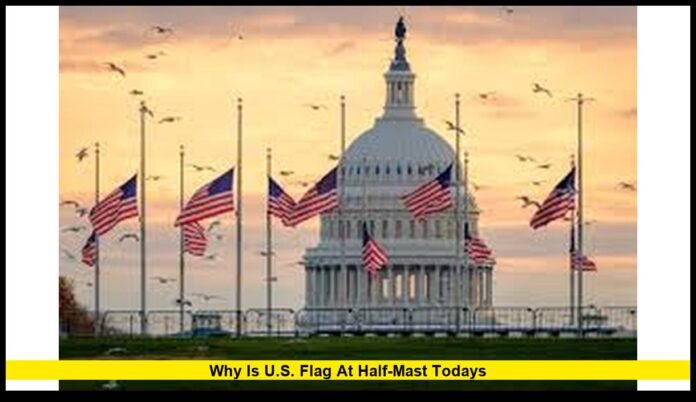

Millions of Americans searching for why is u.s. flag at half-mast today are noticing lowered flags at federal buildings, schools, courthouses, police stations, memorials, and government facilities across the country on May 15. The nationwide observance marks Peace Officers Memorial Day, an annual tribute dedicated to law enforcement officers who lost their lives while serving and protecting communities throughout the United States.
The observance takes place during National Police Week, a period that honors fallen officers, recognizes the sacrifices made by first responders, and brings together families, law enforcement agencies, and public officials for remembrance events nationwide. Federal and state leaders ordered flags lowered from sunrise to sunset as Americans pause to recognize officers who died in the line of duty.
Across cities large and small, memorial ceremonies, candlelight vigils, church services, and public gatherings are taking place to honor those remembered today. Families of fallen officers continue to gather with police departments and communities in emotional ceremonies that highlight the dangers faced daily by law enforcement personnel.
Readers following national observances and breaking U.S. updates can stay informed as additional memorial events and state proclamations continue throughout the day.
Why the U.S. Flag Is Lowered on May 15
Peace Officers Memorial Day is recognized annually on May 15 under federal law. The observance honors federal, state, local, tribal, and territorial law enforcement officers who died or became disabled while serving in the line of duty.
The tradition dates back more than six decades. In 1962, President John F. Kennedy signed legislation establishing Peace Officers Memorial Day and National Police Week. Since then, May 15 has become one of the nation’s most widely recognized law enforcement memorial observances.
Every year, presidents issue proclamations directing flags to fly at half-staff across federal properties. Governors across the United States typically issue similar orders covering state facilities and encouraging residents to participate voluntarily.
For many Americans, the lowered flag serves as an immediate symbol of national mourning, remembrance, and appreciation for those who served in dangerous public safety roles.
What Half-Mast and Half-Staff Really Mean
Many people use the terms “half-mast” and “half-staff” interchangeably. While both describe the same visual display, there is a technical difference.
“Half-staff” is the official term used for flags displayed on land. “Half-mast” traditionally refers to flags displayed on ships or naval installations. Despite the distinction, Americans commonly use “half-mast” in everyday conversation when discussing lowered flags.
The practice carries deep symbolic meaning. Lowering the flag below the top of the pole represents grief, mourning, honor, and national respect. The tradition has been used for generations during periods of remembrance following tragedies, military losses, deaths of public officials, and national memorial observances.
Today’s observance specifically honors fallen law enforcement officers across the country.
National Police Week Draws Thousands to Washington
National Police Week remains one of the largest annual gatherings focused on law enforcement remembrance in the United States. Thousands of officers, family members, survivors, and supporters travel to Washington, D.C., every year to attend memorial events and ceremonies.
This year’s schedule includes:
- Memorial services
- Honor guard processions
- Candlelight vigils
- Wreath-laying ceremonies
- Survivor support gatherings
- Educational programs
- Public remembrance tributes
One of the central locations for these observances is the National Law Enforcement Officers Memorial, where engraved names honor officers who died in the line of duty throughout U.S. history.
Families often travel from every region of the country to witness new names being added during annual ceremonies. For many relatives, the memorial serves as a permanent recognition of loved ones who sacrificed their lives while protecting others.
Communities Across America Hold Local Memorial Events
While Washington hosts national ceremonies, communities across the United States also organize local observances on May 15.
Police departments, sheriff’s offices, and municipal governments are holding remembrance events that include moments of silence, memorial walks, church services, bell tributes, and community gatherings.
Some cities are illuminating buildings with blue lights in honor of fallen officers. Others are organizing memorial runs, flag ceremonies, and public safety tributes involving police, firefighters, emergency medical workers, and military veterans.
Schools and civic organizations are also participating in educational activities that explain the meaning behind the lowered American flag.
Why Americans Continue to Observe Peace Officers Memorial Day
Law enforcement remains one of the most dangerous public service professions in the country. Officers routinely respond to violent crimes, domestic disputes, emergencies, accidents, rescues, and public threats under unpredictable circumstances.
Communities recognize Peace Officers Memorial Day not only to remember officers who died but also to acknowledge the challenges and risks associated with public safety service.
For surviving families, the day carries enormous emotional significance. Many relatives spend years participating in remembrance ceremonies and advocacy efforts tied to officer safety and survivor support.
The observance also highlights the broader role law enforcement officers play in maintaining public order, responding to crises, and protecting neighborhoods nationwide.
The History Behind Peace Officers Memorial Day
The creation of Peace Officers Memorial Day reflected a growing national effort during the 20th century to formally recognize fallen law enforcement officers.
President Kennedy’s 1962 proclamation established May 15 as the official memorial day and designated the calendar week in which it falls as National Police Week.
Over time, the observance expanded significantly. Modern ceremonies now include national broadcasts, memorial foundations, survivor organizations, educational campaigns, and large-scale public events.
The annual observance has become deeply rooted in American civic tradition, similar to other national remembrance days honoring military personnel and first responders.
Flag Protocols Follow Strict Traditions
The U.S. Flag Code outlines specific customs for displaying the American flag at half-staff.
The process traditionally follows these steps:
- The flag is first raised quickly to the top of the pole.
- It is then lowered slowly to the halfway point.
- At sunset, the flag is raised fully again before being lowered completely for the day.
The half-staff position symbolizes mourning while still preserving the dignity and prominence of the flag itself.
Federal agencies, military installations, schools, and government offices usually follow official proclamations precisely. Many private businesses and homeowners also participate voluntarily.
Why Searches About Half-Mast Flags Increase So Quickly
Searches related to lowered American flags often spike whenever people notice half-staff displays unexpectedly.
Travelers frequently see flags lowered at airports, post offices, schools, and government buildings before hearing official explanations. Because multiple observances throughout the year involve flag-lowering orders, many Americans immediately search online for answers.
Today’s nationwide observance is specifically connected to Peace Officers Memorial Day and National Police Week.
Other occasions that commonly involve lowered flags include:
- Memorial Day
- Patriot Day
- Pearl Harbor Remembrance Day
- National mourning after tragedies
- Deaths of presidents or major public officials
- Major national emergencies
The visibility of the American flag makes half-staff observances one of the country’s most recognizable public traditions.
States Issued Their Own Flag Orders
In addition to federal directives, governors in multiple states issued their own proclamations ordering flags lowered at state properties.
These orders generally apply to:
- State capitols
- Courthouses
- Schools
- Police stations
- Fire departments
- Public universities
- Municipal buildings
- Transportation facilities
Several governors also released public statements praising the dedication and courage of law enforcement personnel serving local communities.
In some states, special ceremonies were held at police academies or law enforcement training centers to honor fallen officers.
How Families of Fallen Officers Are Remembered
Survivor support remains one of the central focuses of National Police Week observances.
Organizations connected to law enforcement memorial events continue to provide assistance programs for spouses, children, parents, and relatives affected by line-of-duty deaths.
Support services often include:
- Counseling programs
- Educational scholarships
- Financial assistance
- Peer support groups
- Annual remembrance events
- Travel assistance for memorial ceremonies
For many families, returning each year to memorial events helps preserve the memory and legacy of loved ones who died while serving their communities.
Public ceremonies frequently include emotional moments such as folded flag presentations, reading of names, and candlelight tributes.
The National Law Enforcement Officers Memorial Continues to Grow
The National Law Enforcement Officers Memorial remains one of the most visited public safety memorial sites in the country.
Located in Washington, D.C., the memorial contains thousands of engraved names representing officers from agencies across all 50 states, U.S. territories, and federal departments.
Every year, additional names are added after review and verification processes identify officers who died in the line of duty or whose cases later qualified for inclusion.
The annual memorial ceremonies often draw national attention because they highlight the continuing sacrifices made by officers and their families.
The Difference Between Memorial Day and Today’s Observance
Although many Americans associate lowered flags with Memorial Day, Peace Officers Memorial Day serves a different purpose.
Memorial Day honors U.S. military personnel who died during military service. Peace Officers Memorial Day specifically recognizes law enforcement officers who lost their lives while serving the public.
The observances also differ in timing and flag protocol:
- Memorial Day flags remain at half-staff until noon before returning to full staff.
- Peace Officers Memorial Day generally keeps flags lowered from sunrise until sunset.
Both observances emphasize remembrance, national gratitude, and public respect for service and sacrifice.
How Schools and Communities Teach the Meaning of the Day
Educational programs tied to Peace Officers Memorial Day help younger generations understand the significance of the observance.
Teachers and community leaders often explain:
- Why flags are lowered
- The role of law enforcement officers
- The history of National Police Week
- The symbolism of the American flag
- Public service and civic responsibility
In some communities, students participate in essay contests, memorial projects, or classroom discussions focused on public safety and remembrance.
Why the American Flag Remains a Powerful National Symbol
The American flag continues to hold deep emotional and historical meaning for millions of people nationwide.
When the flag flies at half-staff, it often captures immediate public attention because it represents a shared national response to loss or remembrance.
Today’s observance reminds Americans that symbols still play an important role in national unity, public mourning, and collective respect.
Whether displayed at a small-town courthouse or a major federal building, the lowered flag serves as a visible acknowledgment of sacrifice and service.
As memorial ceremonies continue across the country, communities are once again reflecting on the risks faced daily by law enforcement officers and the families who stand beside them.
What Americans May Notice Throughout the Day
People traveling today may continue to see lowered flags at:
- Airports
- Schools
- Government offices
- Police departments
- Veterans memorials
- Fire stations
- Universities
- Military facilities
- Public libraries
- Transportation centers
Many law enforcement agencies are also displaying mourning bands, memorial ribbons, or patrol car tributes as part of today’s observance.
The widespread visibility of these displays helps reinforce the national scope of Peace Officers Memorial Day.
Why Is U.S. Flag at Half-Mast Today? The Answer Reflects a National Tradition of Remembrance
For Americans asking again later in the day why is u.s. flag at half-mast today, the answer remains tied to one of the nation’s longest-standing public safety memorial observances.
The lowered flags seen across the United States honor fallen law enforcement officers whose service ended in the line of duty. Through ceremonies, vigils, memorials, and public gatherings, communities nationwide continue recognizing their sacrifice and supporting the families left behind.
The observance also serves as a reminder of the responsibilities carried by officers and first responders who continue serving communities every day under difficult and often dangerous conditions.
As the sun sets and flags return to full staff, today’s nationwide tribute will remain part of America’s enduring tradition of remembrance and public honor.