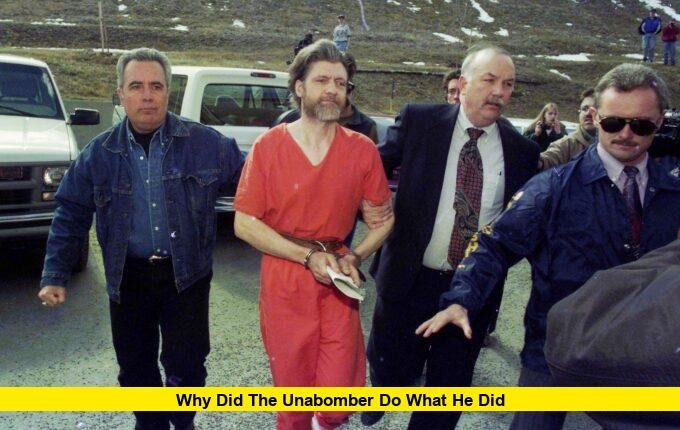

The question “why did the Unabomber do what he did” has remained one of the most discussed aspects of the case of Theodore “Ted” Kaczynski. Known as the Unabomber, Kaczynski carried out a nearly 20-year bombing campaign against universities, airlines, and individuals connected to modern technology and industry. His attacks killed three people and injured many others before his arrest in 1996.
Kaczynski said his actions were driven by his opposition to modern industrial society and technological growth. However, investigators and prosecutors also examined personal grievances, isolation, and his own writings to understand the motivations behind his crimes.
Who Was the Unabomber?
The Unabomber was Theodore John Kaczynski, a former mathematics professor who became one of the most notorious domestic terrorists in U.S. history. He was highly educated, earning a doctorate in mathematics from the University of Michigan and briefly teaching at the University of California, Berkeley.
After leaving academia, Kaczynski moved to a remote cabin near Lincoln, Montana, where he lived a secluded lifestyle. Beginning in 1978, he started sending and placing homemade bombs that targeted people connected to universities, technology companies, and airlines. The FBI investigation was known as the UNABOM case, a name based on “University and Airline Bomber.”
What Was the Main Reason the Unabomber Carried Out His Attacks?
Kaczynski’s stated reason for the bombings was his belief that modern technology and industrial society were damaging human freedom and nature. He expressed these views most clearly in his 1995 essay, “Industrial Society and Its Future,” which became known as the Unabomber Manifesto.
In the manifesto, Kaczynski argued that technological advancement created systems that controlled human behavior and reduced individual independence. He believed society was becoming increasingly dependent on machines, institutions, and large-scale industrial systems.
His writings focused heavily on themes such as:
- Opposition to rapid technological development
- Concerns about industrial society’s impact on human freedom
- Belief that modern systems weakened individual control over life
- A desire to force public discussion about his ideas
The FBI reported that Kaczynski sent a 35,000-word manifesto explaining his views and motivations, which later became a key part of the investigation that led to his identification.
Did the Unabomber Believe He Was Fighting for a Cause?
Kaczynski presented his actions as part of a larger ideological struggle against technology and industrial society. He claimed that violence was necessary to draw attention to his beliefs.
However, the interpretation of his motives has been debated. While his manifesto focused on philosophical arguments about technology, prosecutors also pointed to personal anger, resentment, and revenge as factors behind his actions.
Investigators found that his personal writings contained evidence of deep frustration and hostility. These documents provided insight into both his ideological beliefs and his personal motivations.
Why Did He Target Scientists, Universities, and Technology-Related People?
Many of Kaczynski’s targets were connected to universities, scientific research, technology companies, and industries that he associated with technological development.
The FBI said his victims were often selected through research and were not necessarily people who had personally harmed him. His attacks were designed to create fear and gain attention for his message.
Among his targets were:
- University professors
- Computer industry figures
- Researchers
- Business executives
- Individuals connected to technology-related organizations
How Did His Manifesto Lead to His Capture?
For years, investigators struggled to identify the Unabomber because he carefully avoided leaving evidence that could reveal his identity.
The major breakthrough came when Kaczynski demanded that his manifesto be published. After it appeared publicly, his brother David Kaczynski and others recognized similarities between the writing and Ted Kaczynski’s earlier documents. The FBI used linguistic analysis and other evidence to connect him to the crimes.
Kaczynski was arrested at his Montana cabin on April 3, 1996. Investigators found bomb-making materials, writings, and evidence connected to his bombing campaign.
What Happened to Ted Kaczynski After His Arrest?
In 1998, Kaczynski pleaded guilty to multiple charges related to the bombings. He received a sentence of life imprisonment without the possibility of parole.
He remained in federal custody until his death in 2023 while serving his sentence. His case continues to be studied because it combined criminal behavior, extremist ideology, and a long investigation involving forensic and linguistic analysis.
Why Does the Unabomber Case Still Attract Attention Today?
The Unabomber case remains widely discussed because it raises questions about technology, social change, personal radicalization, and the ways individuals can turn extreme beliefs into violence.
While Kaczynski’s writings focused on criticism of technology and industrial society, his bombing campaign caused real harm to victims and their families. Understanding his stated beliefs and the broader factors involved helps explain the complexity of one of America’s most unusual criminal cases.
The Unabomber case continues to raise questions about ideology, technology, and human behavior — share your thoughts in the comments and stay updated for more historical crime stories.