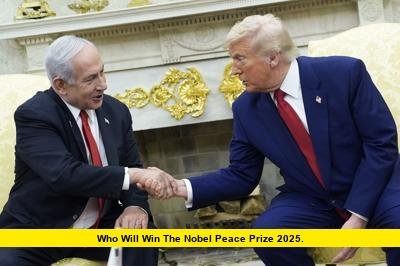

As the world watches, the Nobel Peace Prize 2025 is set to be announced on October 10, fueling widespread speculation across global media and U.S. political circles. The key phrase Nobel Peace Prize 2025 already dominates headlines and social media discussions. While the winner remains unconfirmed, the latest developments hint at likely contenders, notable nominations, and how American observers are reacting.
Countdown to Announcement
The Norwegian Nobel Committee will reveal the laureate(s) at 11:00 a.m. CEST on Friday, October 10, during a press conference at the Norwegian Nobel Institute in Oslo. The chair of the committee, Jørgen Watne Frydnes, will deliver the announcement in front of accredited global media.
The prize will then be formally awarded on December 10, following the tradition established by Alfred Nobel’s will.
The Nobel Institute received 338 valid nominations this year—244 individuals and 94 organizations—up from 286 the previous year.
The identity of nominators and nominees will remain sealed for 50 years.
The deadline for nominations was January 31, and committee members submit their internal proposals by their first February meeting.
Top Contenders and Nomination Trends
While the Nobel Peace Prize 2025 remains a secret until October, scholarship, expert forecasts, and nominations offer insight into frontrunners. Below is a snapshot of serious contenders this year:
- Sudan’s Emergency Response Rooms (ERR): Frequently topping prediction lists, this grassroots network of volunteers has provided essential services in war-torn Sudan. The director of the Peace Research Institute Oslo named ERR his top pick.
- Committee to Protect Journalists (CPJ): With press freedom under pressure globally, this U.S.-based organization is often cited as a meaningful candidate.
- International Court of Justice and International Criminal Court: Some observers believe awarding one of these legal institutions would highlight the importance of accountability and international law in peacebuilding.
- Women’s International League for Peace and Freedom (WILPF): An historically significant organization promoting disarmament and women’s participation in peace processes, WILPF has been mentioned in recent lists.
- Other names floated include medical and environmental organizations, rights advocates, and peace activists.
In U.S. circles, President Donald Trump has drawn attention for lobbying publicly and promoting his foreign policy achievements as Nobel-worthy. He has been nominated multiple times—by U.S. lawmakers and foreign leaders alike—but analysts widely assess his chances as slim, citing concerns over consistency and alignment with Nobel’s criteria.
U.S. Reaction and Political Underpinnings
In the United States, the 2025 Nobel Peace Prize has attracted particular interest among political factions. Trump, having publicly expressed his expectation to win, is campaigning for the honor—some view this as aggressive self-promotion rather than meritorious candidacy. Many observers argue that the Nobel Committee resists such overt pressure.
Some Israeli relatives of hostages have petitioned the Norwegian committee to award Trump, crediting him for diplomatic involvement in hostage exchanges and cease-fire negotiations.
Others caution that high-profile nominations could backfire. The Nobel Committee traditionally rewards sustained contributions to peace, diplomacy, or humanitarian work—often carried out quietly or by institutions rather than individuals flaunting their ambitions.
Analysts stress that factors like multilateral diplomacy, reconciliation, disarmament, and long-term peace frameworks traditionally carry more weight than short-term maneuvers.
What the Nobel Committee Might Consider
To understand how the 2025 Nobel Peace Prize may be judged, it helps to look at guiding principles and current global challenges.
Core Criteria
Alfred Nobel’s will specifies that the Peace Prize should go to the person (or group) who “shall have done the most or the best to promote fraternity between nations … and the abolition or reduction of standing armies … and the holding and promotion of peace congresses.”
The committee’s deliberations tend to emphasize:
- Lasting impact rather than temporary gains
- Institutional or structural contributions to conflict resolution
- Collaboration across borders and inclusive peace-building
- Quiet diplomacy or moral leadership over grandstanding
Contextual Factors in 2025
In 2025, the following issues heighten relevance:
- The conflict in Sudan and the response of local communities
- The fragility of press freedoms worldwide
- The pushback against international courts and mechanisms
- Broader challenges like climate-driven instability, migration, and weak institutions
The committee may weigh whether a nominee addresses entrenched root causes, supports marginalized voices, or creates frameworks for lasting peace.
What to Watch on October 10
As the day of reckoning nears, here’s what U.S. audiences and watchers should look for:
- Which organization or individual is named
- Whether the winner is U.S.-based or connected to American causes
- The tone of the Nobel Committee’s citation, hinting at what they prioritized
- How U.S. media and political figures respond—congratulation, critique, or spin
- What expectations arise for the laureate’s role in future diplomacy
The Nobel Peace Prize 2025 announcement is not just a symbolic moment—it often influences diplomatic focus, funding priorities, and global attention toward crises.
In closing, with just days until the Nobel Peace Prize 2025 announcement, speculation is alive—and Americans are watching closely. Let me know your thoughts on who you think should win or why, and stay tuned as the world awaits history being made.