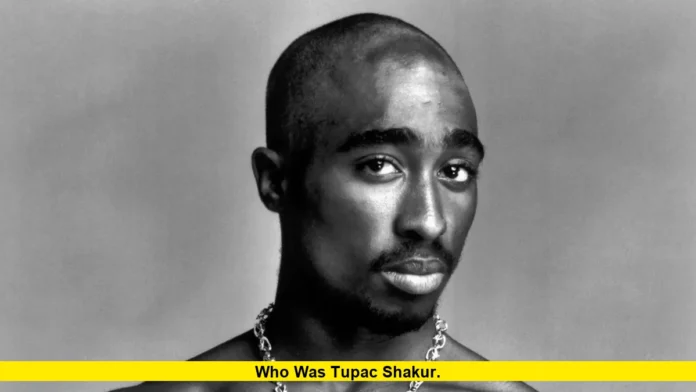

Tupac Shakur was one of the most influential and recognizable figures in hip-hop history, but understanding who was Tupac Shakur requires looking beyond his fame as a rapper. Born Tupac Amaru Shakur in New York City in 1971, he became a musician, actor, poet and outspoken cultural figure whose work addressed poverty, racism, police brutality, inequality, violence and the struggles faced by young people in America.
Although Tupac died at just 25 years old, his influence has continued for decades. His albums, lyrics and performances remain widely discussed, while his life has been examined through documentaries, books, films and music. His death in Las Vegas in 1996 became one of the most famous unsolved murders in music history for many years.
The case took a major turn in the latest update. On August 31, 2026, a Las Vegas jury found Duane “Keffe D” Davis guilty of first-degree murder with a deadly weapon in connection with Tupac’s killing. Davis was accused of orchestrating the attack, although prosecutors did not allege that he personally fired the fatal shots. His sentencing is scheduled for October 13, 2026, and he has indicated that he plans to appeal.
Who Was Tupac Shakur?
Tupac Amaru Shakur was an American rapper and actor who rose to prominence during the early 1990s. He was born on June 16, 1971, in New York City and was raised in an environment strongly influenced by politics, activism, music and social issues.
His mother, Afeni Shakur, was associated with the Black Panther movement and played a significant role in his upbringing. Tupac’s childhood and teenage years included time in New York, Baltimore and California, giving him experiences that later shaped his artistic identity.
Tupac was more than a commercial entertainer. His music frequently explored the realities of life in economically disadvantaged communities and the pressures experienced by young Black Americans. At different points in his career, he could be confrontational and aggressive, but he was also capable of producing deeply personal and reflective songs.
That combination helped distinguish him from many of his contemporaries. His catalog included songs about family, friendship, relationships, social injustice, ambition, violence and mortality.
Tupac Shakur’s Early Life and Education
Tupac’s family background exposed him to political activism and discussions about racial inequality from an early age. His mother and other members of his family were involved in Black liberation politics, giving him an unusually strong awareness of social and political issues.
As a teenager, Tupac attended the Baltimore School for the Arts, where he studied acting, poetry, jazz and other creative disciplines. His education in the arts became an important foundation for the performer he would eventually become.
He developed an interest in writing poetry and performing, and those skills later became central to his rap career. His ability to combine storytelling, emotion and social commentary helped him develop a distinctive voice.
His move to California was another important stage in his development. While living in the San Francisco Bay Area, he became increasingly involved in hip-hop and began pursuing a professional music career.
How Tupac Became Famous
Tupac initially gained attention after joining Digital Underground, a hip-hop group known for its energetic and humorous style. He appeared on the group’s music and performances before beginning his solo career.
His debut album, 2Pacalypse Now, was released in 1991. The project immediately established Tupac as an artist willing to discuss controversial subjects, including poverty, police treatment and violence.
His second album, Strictly 4 My N.I.G.G.A.Z…, followed in 1993 and expanded his audience. Songs such as “Keep Ya Head Up” demonstrated another side of his personality, highlighting themes involving women, family and social conditions.
Tupac’s career accelerated dramatically with his third studio album, Me Against the World, released in 1995. The album became a major commercial and critical success and showcased a more introspective side of the rapper.
Songs such as “Dear Mama” became especially important to his legacy because they demonstrated his ability to turn personal experiences into emotionally powerful music.
Tupac’s Music and Most Important Albums
Tupac released several major projects during his short career, and numerous additional albums appeared after his death.
Among the most important releases associated with his career are:
- 2Pacalypse Now (1991)
- Strictly 4 My N.I.G.G.A.Z… (1993)
- Me Against the World (1995)
- All Eyez on Me (1996)
- The Don Killuminati: The 7 Day Theory (released posthumously in 1996)
All Eyez on Me became one of the defining albums of 1990s hip-hop. Released after Tupac signed with Death Row Records, the double album included major songs such as “California Love,” “How Do U Want It” and “I Ain’t Mad at Cha.”
His music demonstrated an unusual range. Tupac could create aggressive gangsta rap, politically charged material, romantic songs and deeply emotional reflections on his own life.
That versatility remains one reason his work continues to attract new listeners.
Tupac Shakur as an Actor
Tupac also established himself as an actor during the early part of his music career. His film roles helped demonstrate that his talents extended beyond recording and performing.
He appeared in movies including Juice, Poetic Justice, Above the Rim and Gridlock’d. His performance in Juice in particular helped establish his screen presence and showed his ability to portray complicated characters.
His acting career was still developing when he died. Like his music career, it was cut short before audiences could see how far he might have progressed.
Tupac, Social Commentary and Activism
A major part of Tupac’s appeal came from his willingness to address subjects that were often uncomfortable or politically sensitive.
His songs discussed issues including:
- Poverty and economic inequality
- Racism and discrimination
- Police brutality
- Violence in urban communities
- The criminal justice system
- Family struggles
- Young people’s experiences
- Relationships and personal vulnerability
Tupac did not always present a simple or consistent worldview. His public image could shift between activist, rebellious rapper, actor, celebrity and controversial cultural figure.
That complexity is part of the reason discussions about who was Tupac Shakur continue decades after his death. He was not easily defined by a single identity.
The East Coast-West Coast Rap Rivalry
Tupac became closely associated with the West Coast hip-hop scene, particularly after signing with Death Row Records. During the mid-1990s, tensions between major figures associated with the West Coast and East Coast rap scenes became increasingly public.
Tupac’s feud with The Notorious B.I.G., Sean “Diddy” Combs and others became a defining part of the era. The rivalry was amplified by music, interviews, media coverage and personal disputes.
It is important, however, not to reduce Tupac’s entire career to the rivalry. His catalog contained extensive material unrelated to the conflict, and his broader influence came from his storytelling, personality, social commentary and artistic range.
The rivalry became even more significant in retrospect because both Tupac and The Notorious B.I.G. died in separate shootings within a short period.
What Happened to Tupac Shakur?
On September 7, 1996, Tupac was in Las Vegas, Nevada, after attending a heavyweight boxing match involving Mike Tyson. Later that night, he was traveling in a BMW with Death Row Records co-founder Marion “Suge” Knight when another vehicle approached.
Gunfire was directed at the BMW. Tupac was struck multiple times and was taken to a Las Vegas hospital.
He died on September 13, 1996, at the age of 25.
For decades, the identity of the person or people responsible remained one of the most debated mysteries in hip-hop history. Various theories circulated publicly, but many details remained unresolved.
The Duane “Keffe D” Davis Case
The investigation eventually produced a major development when Duane “Keffe D” Davis was arrested and charged in 2023.
Davis, a former leader associated with the South Side Compton Crips, had previously spoken publicly about his alleged involvement in the events surrounding Tupac’s death. Prosecutors ultimately argued that Davis helped organize the attack after a confrontation involving his nephew, Orlando “Baby Lane” Anderson, and members of Tupac’s group.
Davis was not accused of personally pulling the trigger. Prosecutors instead argued that he played a central role in organizing the shooting.
The case relied substantially on statements Davis had made over the years, including public interviews, a memoir and recordings connected to law-enforcement investigations. His defense argued that some of his statements were exaggerated or unreliable and challenged the prosecution’s interpretation of the evidence.
Latest Update on Tupac Shakur’s Murder Case
The latest development is significant because the case has now produced its first murder conviction.
On August 31, 2026, a Clark County, Nevada, jury found Duane “Keffe D” Davis guilty of first-degree murder with a deadly weapon in connection with Tupac Shakur’s 1996 killing. The jury reached its verdict after deliberating for several hours following an 11-day trial.
The conviction does not mean Davis was found to have personally fired the gun. Prosecutors maintained that he helped orchestrate the attack, and Nevada law allows an individual who participates in arranging a murder to face a murder charge even if another person fires the weapon.
The prosecution’s case centered heavily on Davis’ own past statements and recordings. The defense maintained that his accounts were unreliable and that the investigation had significant weaknesses.
Davis now faces the possibility of life imprisonment without parole. His sentencing is scheduled for October 13, 2026, and he has said he intends to appeal the conviction.
The other men prosecutors associated with the vehicle involved in the shooting are deceased, including Anderson, who died in 1998. Prosecutors did not identify a surviving gunman in the case.
The conviction represents a major change in the legal history surrounding Tupac’s death, although additional legal proceedings are expected because of Davis’ planned appeal.
Tupac Shakur’s Lasting Cultural Legacy
Tupac’s influence has extended far beyond the period in which he was alive. His music continues to be streamed, studied and discussed, while younger generations of artists have cited him as an influence.
The Rock & Roll Hall of Fame inducted Tupac in 2017, recognizing his importance to music and popular culture. His work has influenced artists across multiple generations, including major hip-hop performers who followed him.
His songs remain relevant because many of the issues he addressed have not disappeared. “Changes,” for example, continues to be associated with conversations about racism, poverty, inequality and police violence.
His influence is also visible in the continuing interest in his poetry, acting career, interviews and personal writings.
Why Tupac Shakur Remains Important
Tupac’s significance comes partly from the extraordinary amount he accomplished before turning 26. In only a few years, he became a successful recording artist, actor, cultural commentator and international celebrity.
His career also reflected contradictions that made him unusually compelling. He could write about violence while criticizing the conditions that contributed to it. He could project toughness while openly discussing fear, loneliness and family relationships.
That complexity makes Tupac difficult to summarize simply as a rapper or celebrity.
When considering who was Tupac Shakur, it is more accurate to view him as a multifaceted artist whose music reflected both his personal experiences and the broader social environment around him.
Final Thoughts
Tupac Shakur’s life was brief, but his artistic impact has lasted for decades. From his early work with Digital Underground to landmark albums such as Me Against the World and All Eyez on Me, he developed a distinctive voice that combined personal storytelling, social criticism and raw emotion.
His acting career, poetry and activism further expanded his influence, while his death at 25 transformed him into one of the most enduring figures in hip-hop history.
The latest legal development has added another major chapter to his story. With Duane “Keffe D” Davis convicted of first-degree murder in the 1996 killing and sentencing scheduled for October 2026, the legal history of Tupac’s death has reached a significant milestone. Davis’s planned appeal means the case may continue to develop.
Ultimately, Tupac’s legacy extends beyond the circumstances of his death. His music continues to introduce new audiences to his ideas, emotions and experiences, ensuring that his influence remains part of American popular culture.
What are your thoughts on Tupac Shakur’s music, career and lasting legacy? Share your views in the comments and stay updated as the latest developments in his case unfold.