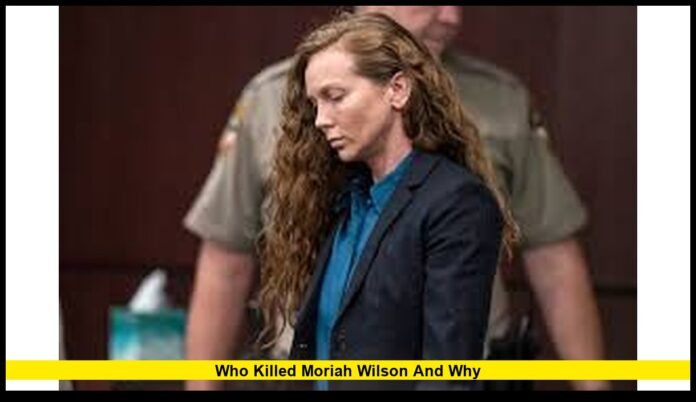

Who killed Moriah Wilson and why became one of the most talked-about true crime cases in the United States, and today the answer is no longer a mystery. The case has reached a legal conclusion after a detailed investigation, a high-profile trial, and a lengthy prison sentence for the person found responsible. As of now, all major facts surrounding the crime, motive, and outcome have been established in court.
Moriah “Mo” Wilson, a rising professional cyclist, was shot and killed in Austin, Texas, on May 11, 2022. Kaitlin Armstrong was later arrested, tried, and convicted of first-degree murder. In November 2023, a Texas jury sentenced Armstrong to 90 years in prison, bringing a major chapter of the case to a close.
Who Was Moriah Wilson?
Moriah Wilson was more than a victim in a criminal case. She was one of the fastest-rising athletes in American cycling. Known for her determination, endurance, and humble personality, Wilson had quickly made a name for herself in gravel racing and mountain biking.
She gained national recognition after winning several major events, including top finishes in elite gravel competitions. Many in the cycling world viewed her as a future champion with the potential to dominate the sport.
Wilson’s approach to racing set her apart. She focused on performance, discipline, and consistency. Her results reflected that mindset, as she regularly outpaced experienced competitors.
By early 2022, she was considered one of the most exciting talents in U.S. cycling. She had already built a strong fan base and earned respect among professionals. Her presence in Austin at the time of her death was tied to an upcoming race, making the tragedy even more devastating.
The Night of the Crime
On May 11, 2022, Moriah Wilson was staying at a friend’s apartment in Austin. Earlier that evening, she had gone out with fellow cyclist Colin Strickland. The two had previously been involved in a brief romantic relationship.
After spending time together, Wilson returned to the apartment. Not long after, she was shot multiple times. Authorities later confirmed she died from gunshot wounds.
The timeline of that evening became a critical part of the investigation. Law enforcement worked quickly to piece together Wilson’s final hours, focusing on her movements, communications, and interactions.
From the start, investigators suspected that the crime was targeted rather than random.
Who Killed Moriah Wilson?
Kaitlin Armstrong was identified as the primary suspect shortly after the investigation began. She had been in a relationship with Colin Strickland at the time of the murder.
Police gathered evidence linking Armstrong to the scene, including surveillance footage and vehicle data. This evidence placed her near the apartment around the time Wilson was killed.
Armstrong was initially questioned but not immediately held. Soon after, she fled the United States, triggering a multi-agency manhunt.
In June 2022, authorities located and arrested Armstrong in Costa Rica. She had reportedly used a false identity and altered her appearance while attempting to avoid capture.
Her arrest marked a turning point in the case and confirmed that investigators had a strong suspect.
Why Did the Killing Happen?
The central question—why the killing occurred—was addressed during the trial. Prosecutors argued that jealousy and a romantic conflict drove the crime.
At the time:
- Armstrong and Strickland were in an ongoing relationship
- Strickland had previously been romantically involved with Wilson
- Wilson and Strickland met on the night of the murder
Evidence presented in court showed that Armstrong had learned about the meeting. Prosecutors argued that this discovery triggered anger and jealousy, leading to the fatal confrontation.
The prosecution built its case around this motive, supported by:
- Text messages and communications
- Witness testimony about the relationships
- Armstrong’s behavior before and after the incident
The jury accepted this explanation as part of the overall case, concluding that the killing was intentional and driven by personal conflict.
Investigation and Evidence
The investigation into Wilson’s death was detailed and methodical. Law enforcement relied on both physical evidence and digital data to build a timeline.
Key evidence included:
- Surveillance Footage
Cameras captured a vehicle linked to Armstrong near the crime scene shortly before the shooting. - Ballistic Evidence
Forensic testing connected the firearm used in the shooting to Armstrong. - Vehicle and GPS Data
Data placed Armstrong in the vicinity of the apartment at the relevant time. - Digital Communications
Messages and online activity provided insight into the relationships and potential motive. - Witness Testimony
Individuals close to the parties involved described interactions and tensions.
Each piece of evidence contributed to a broader narrative that prosecutors presented in court.
The Trial and Verdict
The trial of Kaitlin Armstrong took place in 2023 and drew significant public attention. Prosecutors laid out a detailed case supported by forensic evidence, surveillance data, and testimony.
The defense challenged the prosecution’s claims, attempting to raise doubt about identification and intent. They questioned aspects of the timeline and argued that the evidence did not conclusively prove guilt.
Despite these efforts, the jury found the prosecution’s case convincing.
In November 2023:
- Armstrong was found guilty of first-degree murder
- The jury delivered a unanimous verdict
- She was sentenced to 90 years in prison
The sentencing reflected the severity of the crime and the evidence presented during the trial.
Escape and Capture in Costa Rica
One of the most dramatic developments in the case occurred when Armstrong fled the country.
After being questioned by police early in the investigation:
- She left the United States using travel arrangements that raised suspicion
- She traveled to Costa Rica and used a false identity
- Authorities tracked her location through coordinated efforts
She was eventually arrested in a hostel in Costa Rica. Reports indicated she had changed her appearance in an attempt to avoid recognition.
Her capture required cooperation between U.S. and international authorities. She was then extradited back to Texas to face charges.
This attempted escape became a significant part of the case, highlighting both the seriousness of the allegations and the strength of the investigation.
Timeline of Key Events
May 11, 2022
Moriah Wilson is shot and killed in Austin, Texas.
May 2022
Kaitlin Armstrong is identified as a suspect and charged with murder.
June 2022
Armstrong is arrested in Costa Rica after fleeing the country.
2023 (Trial Period)
The case goes to trial, with extensive evidence presented.
November 2023
Armstrong is convicted and sentenced to 90 years in prison.
2024–2026
The conviction remains in place, with no confirmed reversal.
Impact on the Cycling World
Moriah Wilson’s death deeply affected the cycling community across the United States and beyond.
Athletes, fans, and organizations responded in several ways:
- Memorial rides and tributes were held nationwide
- Fellow cyclists shared stories about Wilson’s character and talent
- Events honored her achievements and contributions
Wilson’s influence extended beyond competition results. She inspired many young athletes with her dedication and positive attitude.
Even after her passing, her name continues to be associated with excellence and determination in cycling.
Public Reaction and Media Coverage
The case received widespread media attention from the moment it was reported.
Several factors contributed to its visibility:
- The victim’s status as a rising athlete
- The personal nature of the motive
- The suspect’s international escape
- The detailed and public trial
Public interest remained high throughout the investigation and court proceedings. The case became one of the most closely followed true crime stories in recent years.
Current Status as of Today
As of now, the legal outcome of the case remains unchanged.
- Kaitlin Armstrong is serving a 90-year prison sentence
- The conviction for first-degree murder stands
- No official reversal or dismissal has been confirmed
While legal processes such as appeals can occur in cases like this, the verdict reached in 2023 remains the most current and authoritative outcome.
Why This Case Still Matters
The case continues to resonate for several reasons.
First, it highlights how personal relationships can escalate into violence. The motive presented in court centered on jealousy and emotional conflict, which made the case relatable yet deeply troubling.
Second, it underscores the role of modern investigative tools. Surveillance footage, digital records, and forensic science played a crucial role in solving the crime.
Third, it serves as a reminder of the risks faced by public figures and athletes. Wilson’s death prompted discussions about safety and awareness within the cycling community.
Finally, the case stands as an example of how law enforcement agencies can work across borders to capture suspects who attempt to flee.
Conclusion
The question of who killed Moriah Wilson and why has now been fully answered through the justice system. Kaitlin Armstrong was found guilty and sentenced to decades in prison, closing one of the most high-profile criminal cases in recent U.S. history.
While the legal process has concluded, the impact of Moriah Wilson’s life and career continues to be felt by those who knew her and those who followed her journey.
What are your thoughts on the case and its outcome? Share your perspective or stay updated for any new developments.