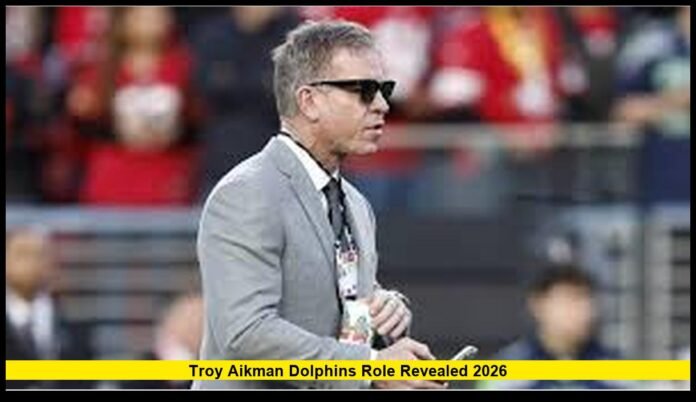

The troy aikman dolphins role has become one of the most talked-about developments in professional football, drawing attention from fans, analysts, and league insiders as the Miami Dolphins undergo a major transformation ahead of the 2026 NFL season. What initially appeared to be a short-term advisory assignment has steadily evolved into a meaningful behind-the-scenes influence during a critical moment for the franchise.
Miami’s leadership overhaul has been one of the most significant storylines of the offseason, and Aikman’s involvement adds another compelling layer to an already complex rebuild. As the organization works to reposition itself in a highly competitive AFC landscape, the presence of a Hall of Fame quarterback with deep league connections is shaping both internal decisions and public perception.
A Strategic Turning Point for the Dolphins
The Miami Dolphins entered the 2026 offseason at a crossroads. After a season that fell short of expectations, ownership made sweeping changes designed to reset the organization’s trajectory. The front office and coaching staff were both restructured, signaling a clear intention to rethink long-term strategy.
Rather than relying solely on internal voices, the Dolphins opted to bring in an external perspective—someone who understands winning at the highest level and has seen how successful franchises operate across the league.
That decision led them to Troy Aikman.
Aikman’s arrival was not announced with fanfare. Instead, it began quietly, with the former Dallas Cowboys quarterback stepping in to assist with one of the most important decisions any team can make: hiring a new general manager.
Inside Aikman’s Role in the GM Search
The Dolphins’ search for a new general manager was extensive and deliberate. The organization evaluated multiple candidates with varying backgrounds, ranging from experienced executives to rising front-office talents.
Aikman played a direct role in that process.
He participated in interviews, helped assess leadership qualities, and offered feedback on how each candidate’s philosophy aligned with the team’s goals. His input contributed to the eventual hiring of Jon-Eric Sullivan, a respected executive known for his work in a consistently competitive organization.
This was not a ceremonial role. Aikman’s experience as a Super Bowl-winning quarterback gave him insight into what players need from leadership, while his broadcasting career provided a broad view of how teams succeed—or fail—across the league.
Have thoughts on Miami’s front office reset? Stay with this story as more developments unfold throughout the offseason.
Continued Influence in Coaching Decisions
After the general manager was hired, Aikman’s involvement did not end.
Instead, he remained engaged as the Dolphins moved on to their next major decision: hiring a new head coach. This phase of the process required evaluating not only tactical expertise but also leadership style, communication skills, and the ability to build a strong culture.
Aikman again contributed insight during interviews and discussions.
The Dolphins ultimately selected Jeff Hafley as their new head coach, marking another major step in the organization’s reset. While the final decision rested with ownership and the newly hired general manager, Aikman’s perspective was part of the broader evaluation process.
His continued presence signaled that the Dolphins viewed him as more than a temporary consultant.
Understanding the Scope of His Role
Despite the growing attention, Aikman’s role remains clearly defined in one key way: he does not have direct authority over team decisions.
He is not part of the Dolphins’ ownership group.
He does not manage day-to-day operations.
He does not control roster moves or draft selections.
Instead, his position is advisory.
He provides input when asked, offers perspective based on his experience, and contributes to high-level discussions about the team’s direction. This structure allows the Dolphins to benefit from his knowledge without altering the formal chain of command.
At the same time, it ensures that final decisions remain with the organization’s leadership.
Why Aikman’s Perspective Matters
Aikman brings a unique combination of experience that few individuals in football can match.
As a former quarterback who led his team to multiple championships, he understands the demands placed on players and coaches. He knows what it takes to build a winning culture and sustain success over time.
In addition, his role as a broadcaster gives him a rare vantage point.
He studies teams across the league every week, gaining insight into different systems, coaching styles, and organizational structures. This exposure allows him to identify trends and evaluate strategies with a level of context that goes beyond any single franchise.
For the Dolphins, this perspective is especially valuable during a period of transition.
A Flexible, Ongoing Relationship
Even after the key hires were completed, Aikman’s connection to the Dolphins continued.
Rather than stepping away, he has remained involved in what has been described as an ongoing advisory capacity. The exact details of this arrangement are intentionally flexible, allowing the team to consult him as needed without requiring a full-time commitment.
This approach benefits both sides.
The Dolphins gain access to a trusted voice with extensive experience, while Aikman is able to maintain his broadcasting responsibilities. It also reflects a modern approach to team-building, where organizations seek diverse perspectives to inform their decisions.
League-Wide Attention and Discussion
As news of Aikman’s involvement spread, it sparked conversation across the NFL.
Some observers have raised questions about how his dual roles—as a broadcaster and team advisor—fit within the broader landscape of the league. The concern centers on whether access to information through one role could influence the other.
So far, there has been no indication of any issues or violations. Aikman’s responsibilities with the Dolphins are limited, and his advisory position does not involve access to sensitive, day-to-day operations.
Still, the situation highlights how the NFL continues to evolve.
As teams look for new ways to gain an edge, unconventional arrangements like this one may become more common. The league may need to revisit guidelines to ensure clarity as these roles develop.
How This Impacts the Dolphins’ Future
The Dolphins’ decision to involve Aikman is part of a broader strategy aimed at long-term success.
By combining new leadership with external insight, the organization is attempting to build a more resilient and adaptable structure. The hiring of a new general manager and head coach represents a fresh start, while Aikman’s input adds another layer of evaluation and accountability.
This approach could influence several key areas:
- Roster construction: Identifying players who fit the team’s vision
- Organizational culture: Establishing a consistent identity
- Strategic planning: Aligning short-term moves with long-term goals
While Aikman is not directly responsible for these decisions, his perspective helps shape the conversations that lead to them.
The Road Ahead for 2026
As the 2026 NFL season approaches, the Dolphins are entering a period of heightened expectations.
Fans will be watching closely to see how the new leadership performs and whether the team can translate its offseason changes into on-field success. The presence of Aikman adds an additional layer of intrigue, even if his role remains behind the scenes.
There are several key questions that will define the season:
- Can the new coaching staff implement its system effectively?
- Will the roster reflect a clear and cohesive vision?
- How quickly can the team return to playoff contention?
The answers will determine whether this organizational reset achieves its intended impact.
Why This Story Continues to Stand Out
The ongoing interest in the troy aikman dolphins role reflects more than just curiosity about one individual.
It represents a shift in how teams approach leadership and decision-making. The traditional boundaries between roles are becoming more fluid, and organizations are increasingly willing to explore new ways of gaining insight.
Aikman’s involvement is a prime example of this trend.
It combines experience, perspective, and flexibility in a way that aligns with the evolving nature of the NFL. Whether it becomes a model for other teams remains to be seen, but it has already captured the attention of the football world.
A Measured but Meaningful Influence
At its core, Aikman’s role with the Dolphins is about influence rather than control.
He is not making headlines with bold public statements or dramatic moves. Instead, his impact is felt in conversations, evaluations, and strategic discussions that shape the direction of the franchise.
This type of involvement may not always be visible, but it can be significant.
As the Dolphins move forward, the success of their approach will ultimately be judged by results on the field. If the team improves and competes at a higher level, Aikman’s contribution will be seen as part of that progress.
Join the conversation and share your take on Miami’s new direction as the 2026 season draws closer.