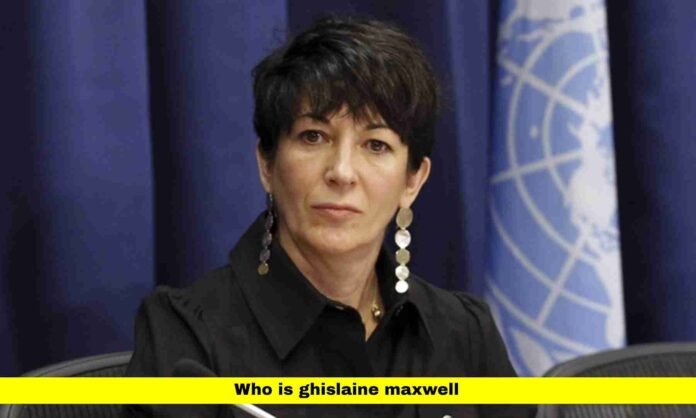

Who is Ghislaine Maxwell? She is a British socialite and former associate of financier Jeffrey Epstein, who became widely known due to her involvement in a high-profile sex trafficking case. Maxwell’s role in recruiting and grooming underage girls for Epstein led to her conviction in 2021, and she continues to serve a federal prison sentence in 2025. Her story has drawn international attention, raising questions about accountability, privilege, and the U.S. justice system.
Early Life and Family Background
Ghislaine Maxwell was born on December 25, 1961, in Maisons-Laffitte, France, into a wealthy and influential family. She is the daughter of Robert Maxwell, a British media tycoon, and Elisabeth Maxwell, an academic and linguist. Growing up in a high-profile family gave Maxwell access to elite social circles from a young age.
She was educated at prestigious institutions, including Balliol College, Oxford, where she studied modern history. Maxwell later worked in public relations and publishing, building connections in both the business and social elite communities. Her upbringing and family connections played a key role in her later associations, including her relationship with Jeffrey Epstein.
Association With Jeffrey Epstein
Maxwell became closely associated with Jeffrey Epstein in the 1990s. Epstein, a financier with a history of illegal sexual activity, relied on Maxwell to help manage his social connections and, according to court records, to recruit and groom young girls for sexual abuse.
Her involvement in Epstein’s network eventually led to federal charges, as evidence revealed her role in facilitating sexual encounters between underage girls and Epstein. Maxwell’s name became synonymous with Epstein’s crimes due to her central role in coordinating and concealing illegal activities.
Conviction and Legal Proceedings
In December 2021, Maxwell was convicted on five counts related to sex trafficking of minors. The charges included:
- Transporting a minor with intent to engage in criminal sexual activity.
- Conspiracy to entice minors to travel to engage in illegal sexual activity.
- Three additional counts related to recruitment and grooming.
The trial revealed the extent of her involvement in Epstein’s operations, with multiple victims testifying against her. The conviction resulted in a 20-year federal prison sentence, which she continues to serve in 2025.
Recent Legal Developments
As of 2025, Maxwell’s legal team has pursued appeals and other avenues to challenge her conviction. One key argument centered on a 2007 non-prosecution agreement between Epstein and federal prosecutors, which Maxwell’s attorneys claimed should have extended to her.
The U.S. Supreme Court declined to hear her appeal, leaving her sentence intact. Following this, her legal team has explored clemency options as a potential way to reduce or alter her sentence. Despite these efforts, courts have consistently upheld her conviction, citing the overwhelming evidence of her involvement in the trafficking operation.
Current Incarceration
Maxwell is currently serving her sentence in a federal prison facility. She was transferred to a minimum-security camp in Texas in 2025, following previous imprisonment in Florida. While incarcerated, she remains under standard federal supervision with access to prison programs appropriate for her security level.
Her imprisonment has drawn attention from both the media and the public, reflecting the high-profile nature of her case and the broader discussions about accountability for powerful individuals involved in criminal activity.
Public Perception and Controversy
Maxwell’s case has been the subject of intense public scrutiny. Some view her as a scapegoat for Epstein’s crimes, while others see her as a willing participant who enabled illegal activities. The case has sparked debates about privilege, the justice system, and how high-profile individuals are held accountable.
Conspiracy theories and misinformation have surrounded Maxwell’s story, but the courts have consistently relied on verified evidence and testimonies to reach their judgments. Public interest remains high due to the connections between Maxwell, Epstein, and influential figures worldwide.
Impact on Victims and Legal Precedent
The conviction of Ghislaine Maxwell has provided a sense of justice for many of Epstein’s victims. It has also set a legal precedent for holding enablers accountable in sex trafficking cases. Maxwell’s trial demonstrated that individuals who facilitate or orchestrate abuse can face severe consequences, regardless of social status or connections.
Her case has contributed to increased awareness about sex trafficking and the importance of prosecuting those who exploit vulnerable individuals. Legal experts note that the case will continue to influence the handling of similar cases in the future.
Conclusion
Ghislaine Maxwell remains a central figure in the aftermath of Jeffrey Epstein’s criminal activities. Who is Ghislaine Maxwell is now widely understood in the context of her conviction for sex trafficking minors and her ongoing federal imprisonment. While she maintains her innocence, the legal system has consistently upheld her sentence, and her story serves as a significant example of accountability for those who enable exploitation. The case continues to resonate in public discourse, highlighting the intersection of wealth, privilege, and justice.