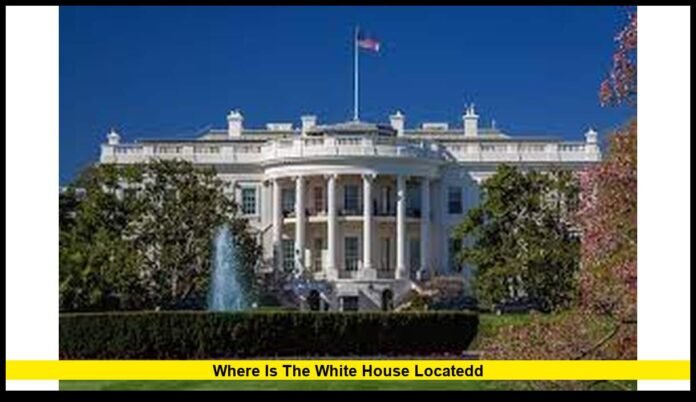

Where is the White House located is a question many Americans and visitors ask when learning about the center of U.S. presidential power. The White House stands at 1600 Pennsylvania Avenue Northwest in Washington, D.C., serving as the official residence and primary workplace of the President of the United States. As of today, the historic building remains the headquarters of the executive branch and one of the most recognizable landmarks in the world.
The White House sits in the heart of the nation’s capital within a carefully planned government district that houses major federal institutions. Every day, the building hosts presidential meetings, diplomatic visits, national security discussions, and official ceremonies. Understanding the location and structure of the White House offers insight into how the U.S. government operates and why the building carries enormous symbolic importance.
The Official Address of the White House
The official address of the White House is:
1600 Pennsylvania Avenue NW
Washington, D.C. 20500
United States
Pennsylvania Avenue is one of the most historically significant streets in the United States. It connects two powerful centers of American government: the White House and the U.S. Capitol.
This avenue stretches across the capital city and forms part of the ceremonial route used during presidential inaugurations and major national events.
Key facts about the White House address include:
| Feature | Details |
|---|---|
| Street | Pennsylvania Avenue NW |
| City | Washington, D.C. |
| Address Number | 1600 |
| ZIP Code | 20500 |
| Property Size | About 18 acres |
Why Washington, D.C. Became the Capital
To understand the White House location, it helps to know how Washington, D.C. became the capital of the United States.
In 1790, Congress passed the Residence Act, which established a permanent national capital along the Potomac River. President George Washington chose the location between Maryland and Virginia.
The founders wanted the capital to exist outside any single state. That decision ensured the federal government would operate independently from state governments.
The selected location offered several advantages:
- Access to major waterways for transportation
- Neutral ground between northern and southern states
- Space for a carefully designed capital city
City planner Pierre Charles L’Enfant created the original design for Washington, D.C. His plan included wide avenues, open public spaces, and prominent sites for government buildings.
The White House became one of the most important buildings within that design.
Construction of the White House
Construction of the presidential residence began in 1792.
Irish-born architect James Hoban designed the building in a neoclassical architectural style influenced by European palaces and government buildings.
Workers built the structure primarily from Aquia Creek sandstone, which was later painted white.
Important milestones during construction include:
- 1792: Construction begins
- 1800: First presidential occupants move in
- 1814: British forces burn the building during the War of 1812
- 1817: Reconstruction completed and the building reopened
President John Adams became the first president to live in the White House in November 1800.
Every U.S. president since then has lived or worked there.
The Design and Architecture of the White House
The White House reflects neoclassical design principles common in government buildings during the late 18th century.
These design features emphasize symmetry, columns, and formal entrances.
The structure includes several key architectural elements:
- Large columned porticos on the north and south sides
- Symmetrical window placement
- Decorative moldings and stone detailing
- Formal gardens surrounding the building
Over time, the building expanded to include additional wings and support structures.
Today, the White House complex contains multiple buildings connected to the main residence.
The White House Complex Layout
The White House is not a single building. It is part of a larger complex that supports presidential operations.
The main sections include:
Executive Residence
This central building serves as the president’s official home.
It includes private family living quarters as well as historic ceremonial rooms.
West Wing
The West Wing houses the president’s primary working offices.
Major rooms in this area include:
- Oval Office
- Cabinet Room
- Situation Room
- Offices for senior advisors
East Wing
The East Wing supports ceremonial functions and administrative offices.
It contains offices for the First Lady and staff involved in social events.
Eisenhower Executive Office Building
Located next to the White House, this large building contains offices for many members of the president’s staff.
Important Rooms Inside the White House
Many rooms inside the White House have become symbols of American leadership.
Some of the most famous include:
Oval Office
The Oval Office serves as the president’s main workspace. Presidents hold meetings, sign legislation, and address the nation from this room.
Cabinet Room
The president meets with Cabinet members in this room to discuss government policy and national priorities.
State Dining Room
The State Dining Room hosts official dinners and diplomatic events for world leaders.
Blue Room
The Blue Room functions as a reception room for official gatherings.
Situation Room
The Situation Room provides a secure location for monitoring national security events and coordinating crisis responses.
Each room plays a specific role in the daily operation of the presidency.
The White House Grounds and Gardens
The White House sits on approximately 18 acres of landscaped grounds.
These outdoor areas host ceremonies, public events, and official gatherings.
Major sections of the grounds include:
- North Lawn: Faces Pennsylvania Avenue and provides the traditional public view of the building
- South Lawn: Used for helicopter landings and large events
- Rose Garden: Hosts press conferences and presidential announcements
- Jacqueline Kennedy Garden: Used for ceremonies and receptions
Marine One, the presidential helicopter, often lands on the South Lawn when the president travels.
Security at the White House
Because it houses the president, the White House ranks among the most secure buildings in the world.
The United States Secret Service protects the president, the residence, and the surrounding grounds.
Security measures include:
- Restricted access points around the property
- Security personnel stationed around the perimeter
- Advanced surveillance systems
- Airspace restrictions above the White House
Vehicles cannot drive directly past the building on Pennsylvania Avenue due to security rules established in the 1990s.
Pedestrians can still view the White House from designated public areas.
Public Tours of the White House
Although the building functions as a working government facility, the White House remains open to visitors through guided tours.
Tour requests must be submitted through members of Congress.
Key tour information includes:
- Requests must be made several weeks in advance
- Visitors must complete security screening
- Tours typically include several historic rooms in the Executive Residence
Millions of visitors from around the world tour the White House each year.
The building continues to serve as both a national symbol and an active government workplace.
Major Renovations in White House History
The White House has undergone several major renovations since its construction.
One of the most important occurred during the presidency of Harry Truman.
By the late 1940s, engineers determined the structure had become dangerously unstable.
Between 1948 and 1952, workers completely rebuilt the interior structure while preserving the historic exterior walls.
Other modernization projects added:
- Updated electrical systems
- Communications technology
- Security upgrades
- Structural reinforcements
These updates allow the building to function as a modern government headquarters while preserving its historic character.
The White House as a National Symbol
Beyond its physical location, the White House represents the presidency of the United States.
It stands as a global symbol of American leadership, diplomacy, and democracy.
Images of the White House appear in:
- Presidential speeches
- International diplomatic announcements
- News coverage of government decisions
- Educational materials about U.S. history
For many people worldwide, the building represents the center of American executive authority.
Nearby Landmarks in Washington, D.C.
The White House sits near many important landmarks in the U.S. capital.
Notable locations nearby include:
- The Washington Monument
- The National Mall
- The U.S. Capitol
- The Lincoln Memorial
- The Smithsonian Institution museums
These landmarks form part of Washington, D.C.’s central government and cultural district.
Visitors exploring the capital often tour these locations together.
Why the Location of the White House Matters
Understanding where is the white house located helps explain the structure of the U.S. government.
The building sits in a central position within Washington, D.C., symbolizing the role of the presidency within the federal system.
Its placement along Pennsylvania Avenue connects the executive branch to Congress and other government institutions.
For more than two centuries, the White House has served as the workplace of American presidents and the home of presidential families.
The building continues to represent national leadership and the functioning of the U.S. government.
What interests you most about the White House and its role in American history? Share your thoughts and stay connected for more insights about important landmarks in the United States.