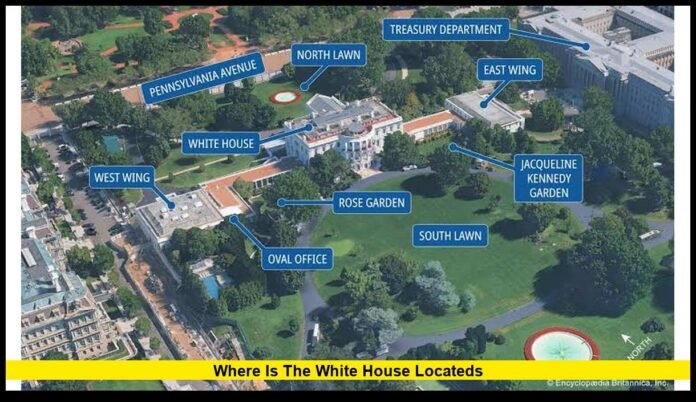

The White House remains one of the most recognizable buildings in the United States, attracting worldwide attention because of its connection to the American presidency. Anyone researching where is the white house located will find it at 1600 Pennsylvania Avenue NW, Washington, D.C. 20500. The historic property serves as both the official residence and principal workplace of the U.S. president, making it an important center of American political activity.
Beyond its recognizable exterior, the White House represents more than two centuries of presidential history. It has witnessed major political decisions, international negotiations, national celebrations, and changes in American leadership. Its location in the nation’s capital also places it close to several important government institutions and historic attractions.
Washington, D.C. Is Home to the Presidential Residence
The White House stands in the Northwest quadrant of Washington, D.C., along Pennsylvania Avenue. The capital city was specifically planned to accommodate the federal government, and the presidential residence became one of its most important architectural features.
Unlike most American cities, Washington, D.C., does not belong to an individual state. Congress established it as a separate federal district to serve as the national capital. Maryland borders much of the district, while Virginia lies across the Potomac River.
This distinction explains why the presidential residence is sometimes incorrectly associated with neighboring states. Its official location is entirely within the District of Columbia.
The surrounding area includes government offices, historic parks, museums, and important national monuments. Pennsylvania Avenue also provides a prominent connection between the executive residence and the legislative center of the country.
How the White House Became America’s Presidential Home
The story of the White House began during the early development of the federal capital. President George Washington helped select the location in 1791, recognizing the importance of establishing a permanent residence for future American presidents.
Irish-born architect James Hoban won the competition to design the building. Construction started in 1792, with workers completing the residence sufficiently for occupancy in 1800.
John Adams became the first president to move into the property. George Washington, despite overseeing the original planning process, never lived there.
The building experienced a major disaster during the War of 1812. British troops burned the presidential residence in 1814, leaving significant portions damaged. Reconstruction followed, and President James Monroe moved into the restored building in 1817.
Over subsequent decades, renovations and additions transformed the property into the presidential complex recognized today.
Why 1600 Pennsylvania Avenue Has National Importance
The address has become closely associated with American political leadership. Presidential announcements, diplomatic receptions, executive meetings, and important national ceremonies frequently take place within the complex.
Its location also carries historical significance because Pennsylvania Avenue connects two major institutions of the federal government.
The White House represents the executive branch, while the nearby Capitol serves as the home of Congress. Their positions along the same historic avenue reflect the original vision behind Washington’s development.
For international visitors, the address is often among the first places associated with American government and presidential history.
Inside the White House: More Than a Presidential Residence
The White House complex contains several distinct areas designed for residential, administrative, and ceremonial responsibilities.
The Executive Residence
The central building contains the president’s private living quarters and numerous historic rooms used for official receptions and gatherings. Its interior includes spaces such as the Blue Room, Red Room, Green Room, and State Dining Room.
The residence has six levels, including two basement levels, two public floors, and two floors primarily associated with the presidential family.
The West Wing
The West Wing houses important presidential offices and administrative operations. The Oval Office, one of America’s most recognizable political workplaces, is located here.
Senior advisers and other members of the president’s staff also work in this section of the complex.
The East Wing and Redevelopment
The East Wing has historically supported various administrative and public-facing functions, including activities associated with the First Lady.
However, the property is undergoing a significant transformation. The existing East Wing was demolished as part of an administration-backed redevelopment project that includes a proposed state ballroom and additional facilities.
The project has generated considerable public discussion about historic preservation, presidential authority, construction costs, and the future appearance of the presidential complex.
As of November 2026, the redevelopment remains an important ongoing development. A Supreme Court order in August allowed construction to continue while the legal proceedings move forward. The project is therefore a significant part of the property’s current history.
What Makes the White House Different From Other Government Buildings?
Many federal buildings serve specific administrative purposes, but the White House combines residential, professional, diplomatic, and ceremonial functions.
The president conducts official business while also maintaining a family residence inside the complex. This combination makes the property unusual among major government institutions.
Foreign heads of state frequently visit for diplomatic discussions and formal receptions. State dinners, official ceremonies, and important presidential events also take place there.
Its historical rooms preserve connections to earlier administrations, while its working offices support the responsibilities of the modern presidency.
The building consequently serves as both a functioning government center and a national historical landmark.
What Visitors Should Know Before Traveling to the White House
Washington, D.C., receives visitors throughout the year, and the presidential residence remains one of the city’s most recognizable attractions.
Public access to the surrounding park areas is different from access to the building itself. Visitors may see the exterior from designated public viewing areas, but entering the residence requires an authorized tour arrangement.
American citizens generally need to request tours through their congressional representatives. International travelers can contact their country’s embassy in Washington for information about the process.
Tours are free when available, but advance arrangements and security screening are required.
The ongoing East Wing redevelopment has also changed the traditional visitor experience. Public tours have operated on an adjusted route, with some historic spaces no longer included.
Tour schedules and access conditions can change because of construction, presidential activities, and security requirements. Travelers should verify arrangements before making their plans.
Nearby Attractions Worth Exploring
The presidential residence is surrounded by several major destinations that help visitors understand Washington’s political and cultural history.
Lafayette Square: Located directly north of the White House, this historic park offers an important public space near the presidential grounds.
Washington Monument: This towering memorial honors George Washington and stands prominently on the National Mall.
United States Capitol: Located farther east, the Capitol houses the Senate and House of Representatives.
National Mall: This extensive public area features museums, memorials, monuments, and historic attractions.
White House Visitor Center: Situated at 1450 Pennsylvania Avenue NW, the center features historical exhibits, artifacts, educational displays, and a short film about the presidential residence.
These attractions make the surrounding neighborhood an important destination for visitors interested in American history and government.
Getting Around the White House Area
Public transportation is generally one of the easiest ways to reach the presidential neighborhood.
Several Metro stations serve the surrounding area, including McPherson Square, Federal Triangle, and Metro Center.
Walking is another practical option for visitors exploring central Washington. The Washington Monument, Lafayette Square, and several museums are accessible from the surrounding streets.
Drivers should plan carefully because parking is limited and security restrictions can affect vehicle access near the property.
Visitors should also expect temporary street closures during major presidential events and other official activities.
Why the White House Continues to Attract Worldwide Attention
The presidential residence remains an important symbol of American democracy, political authority, and national identity.
Its significance extends beyond the individual occupying the Oval Office. Each administration contributes another chapter to the property’s history, while its architecture and location preserve connections to the country’s founding period.
The latest redevelopment has added another dimension to public interest, particularly regarding the balance between modern security requirements and historic preservation.
For travelers, students, historians, and people following American politics, the property offers an opportunity to understand how the country’s executive government operates.
Final Thoughts
The White House occupies a unique position in American life. Its address along Pennsylvania Avenue places it at the center of the nation’s political capital, while its historic architecture connects modern presidential leadership with the country’s earliest years.
From its construction in the 1790s to its continuing role in federal government, the property has experienced fires, reconstruction, renovations, and major political events. Its current redevelopment represents another important chapter in that history.
Whether viewed as a historic landmark, presidential workplace, or diplomatic destination, the White House remains one of the most important places in the United States.