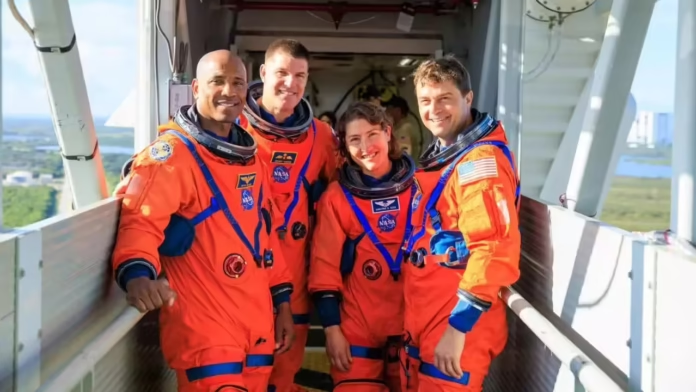

The question “when is Artemis 2 scheduled to launch” is suddenly everywhere—and for good reason. NASA is now targeting no earlier than April 1, 2026, for its first crewed mission to orbit the Moon in more than 50 years, turning a long-awaited dream into a near-term reality.
From space enthusiasts to casual viewers, excitement is building fast. The Artemis II mission isn’t just another rocket launch—it’s a moment many are already calling the biggest leap for U.S. space exploration in decades.
Keep reading as the countdown unfolds and the buzz around this historic mission continues to grow.
What Started the Conversation
The surge in attention began after NASA locked in a clearer launch window and astronauts entered the final phase of preparation.
For months, delays and technical adjustments kept the timeline uncertain. Now, with a specific early April target, interest has exploded across news feeds and social platforms.
The idea that humans will once again travel toward the Moon—something not seen since the Apollo era—has captured national attention.
What Fans First Noticed
One of the first things people picked up on was the timing.
Early April 2026 suddenly feels close, especially for a mission of this scale. The announcement gave the public something concrete to look forward to, sparking searches, discussions, and countdown posts online.
There’s also growing curiosity about:
- The crew members preparing for launch
- The Orion spacecraft they’ll travel in
- The powerful Space Launch System rocket
For many, it’s the realization that this mission is no longer “someday”—it’s happening soon.
Old Space Moments Are Trending Again
As Artemis II gains attention, so does history.
Clips and photos from Apollo missions have resurfaced across social media, with users comparing past Moon missions to what’s coming next.
Many are pointing out:
- How technology has evolved since the 1970s
- The difference in spacecraft design
- The renewed sense of purpose behind lunar exploration
This mix of nostalgia and innovation is fueling even more conversation.
What Social Media Users Are Saying
Online reactions range from awe to anticipation.
Some users are calling Artemis II:
- “The return of deep space travel”
- “A moment we’ve waited generations for”
- “The mission that makes space exciting again”
Others are focused on the emotional impact—especially those who grew up hearing about Apollo but never witnessed anything similar in their lifetime.
There’s also a wave of younger audiences discovering space exploration in real time, turning Artemis II into a shared cultural moment.
What NASA Has Said About the Launch
As interest rises, many are still asking: when is Artemis 2 scheduled to launch?
NASA’s current timeline points to:
- Earliest launch date: April 1, 2026
- Launch site: Kennedy Space Center in Florida
- Mission duration: Around 10 days
- Objective: Send astronauts around the Moon and safely back to Earth
Officials have emphasized that Artemis II is a critical test mission. It will evaluate systems needed for future lunar landings, including life support, navigation, and spacecraft performance in deep space.
While the date is set, launch timing can still shift depending on weather and final system checks.
Why This Mission Feels Bigger Than a Typical Launch
Artemis II stands out for several reasons.
It marks the first time in over five decades that astronauts will travel beyond low Earth orbit toward the Moon.
It also represents a major step toward long-term goals:
- Returning humans to the lunar surface
- Building a sustained presence on the Moon
- Preparing for future missions to Mars
For the U.S., it’s not just about exploration—it’s about leadership, innovation, and setting the stage for the next era of space travel.
Why Everyone Is Suddenly Paying Attention
Timing plays a big role.
With the launch window approaching, the mission has shifted from planning to execution. That change alone has made it more real for the public.
There’s also a broader trend at play:
- Increased interest in space missions
- Growing coverage of NASA projects
- A new generation engaging with science and exploration
Artemis II sits right at the center of all of it.
What Happens Next
As the countdown continues, several key moments are ahead.
Final preparations will take place at Kennedy Space Center, including system checks and astronaut readiness procedures.
Weather conditions will also be closely monitored, as they play a major role in determining the exact launch moment.
If the early April window shifts, additional opportunities are already planned, ensuring flexibility without delaying the mission too far.
Beyond Artemis II, attention will quickly turn to future missions, including those aiming to land astronauts on the Moon for the first time in the Artemis program.
The Big Picture
Artemis II isn’t just a mission—it’s a signal.
It shows that human space exploration is entering a new phase, one that blends past achievements with future ambition.
For many Americans, this launch represents something bigger than science:
- A return to bold exploration
- A reminder of what’s possible
- A shared national moment
And as the question “when is Artemis 2 scheduled to launch” continues to trend, the answer now feels closer—and more meaningful—than ever.
What are your thoughts on NASA’s Artemis II launch—are you planning to watch history unfold? Share your reactions and stay tuned for more updates.