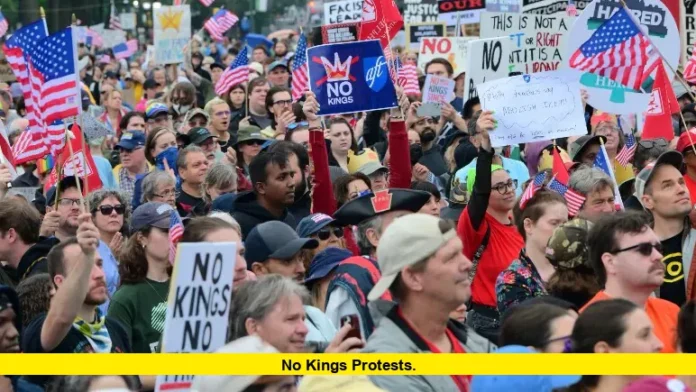

The phrase “No Kings” protests has become a defining rallying cry across the United States, as millions of Americans take to the streets in one of the largest coordinated protest movements in recent years. From major cities to small towns, demonstrators are showing up in record numbers—each with their own reason, but united by a shared message about democracy, leadership, and the direction of the country.
These protests, which unfolded on March 28, 2026, mark the latest and largest wave of a growing national movement. Organizers reported more than 3,000 events across all 50 states, drawing millions of participants and even sparking demonstrations in multiple countries abroad.
After reading this, share your thoughts—do you think these protests will shape the political landscape in the months ahead?
A Nationwide Movement Reaches Historic Scale
The scale of the latest demonstrations is hard to ignore. Cities like New York, Washington, Chicago, and Los Angeles saw massive turnouts, while smaller communities reported a noticeable surge in participation compared to earlier waves.
In Minnesota, one of the largest gatherings drew around 200,000 people, turning the state into a focal point of the movement. But what makes this moment stand out is not just the size—it’s the reach. Protests appeared in conservative and rural areas as well, signaling a broader spread of political engagement than in previous years.
Participation increased significantly compared to earlier rounds of protests in 2025, showing that the movement is gaining momentum rather than fading.
What Sparked the Latest Wave of Protests
The protests did not emerge from a single issue. Instead, they reflect a convergence of concerns that have been building over time.
Key issues driving demonstrators include:
- Immigration enforcement policies and federal agency actions
- Concerns about executive power and government overreach
- The ongoing U.S. military conflict in Iran
- Economic pressures, including inflation and public spending priorities
- Civil rights issues, including abortion access and LGBTQ+ protections
Many protesters describe the movement as a response to what they see as a shift away from democratic norms. Signs and chants across rallies echoed themes of accountability, transparency, and constitutional rights.
In Their Own Words: Why Protesters Showed Up
One of the most powerful aspects of the movement comes directly from the people participating.
Across the country, individuals shared deeply personal reasons for joining the demonstrations. Some said they felt a responsibility to defend democratic values. Others described fear about the future of civil liberties or frustration with political leadership.
A recurring message among participants is the idea that power should belong to the people—not concentrated in a single office or figure.
Many attendees emphasized that protesting is not just about opposition, but about engagement. For some, it was their first time participating in a political demonstration. For others, it was part of a long history of activism.
Older participants spoke about witnessing political change over decades, while younger protesters said they were motivated by concerns about the future they will inherit.
A Movement Built on Organization and Momentum
Behind the scenes, the protests are supported by a wide network of grassroots organizations, labor groups, and advocacy coalitions. These groups have helped coordinate thousands of events, train volunteers, and promote nonviolent participation.
Organizers have emphasized peaceful demonstration as a core principle. Many rallies included trained volunteers focused on de-escalation and crowd safety.
Despite the overall peaceful nature of the protests, some cities reported isolated clashes and arrests, particularly where counter-protesters were present.
Still, the majority of events proceeded without major incidents, reinforcing the movement’s focus on civic engagement rather than confrontation.
From Big Cities to Small Towns: A Changing Protest Map
One notable shift in the 2026 demonstrations is where they are happening.
While large metropolitan areas continue to draw major crowds, smaller cities and towns are seeing increased turnout. In some places, participation rose by as much as 40% compared to earlier protests.
This geographic expansion suggests that the movement is reaching beyond traditional political strongholds.
Local organizers say this growth reflects rising awareness and concern among communities that have not historically been at the center of national protest movements.
Political Reactions and National Debate
The protests have sparked strong reactions across the political spectrum.
Supporters of the movement describe it as a necessary expression of democratic participation. They argue that large-scale protests show that Americans are paying attention and willing to speak out.
Critics, however, have dismissed the demonstrations as politically motivated or overstated in their impact.
Government officials have also responded, with some defending current policies and others acknowledging the concerns raised by protesters.
The divide in reactions highlights the broader political tensions shaping the country today.
Global Attention and International Solidarity
The movement is not limited to the United States. Demonstrations connected to the same message have appeared in cities around the world, including in Europe, Asia, and Australia.
These international events show that the issues raised by the protests—such as governance, rights, and political accountability—resonate beyond U.S. borders.
For many participants, this global dimension reinforces the idea that the movement is part of a larger conversation about democracy in the modern era.
The Role of Culture and Public Figures
The protests have also drawn attention from public figures in politics, entertainment, and music.
High-profile appearances and performances at major rallies have helped amplify the movement’s message and draw larger crowds.
However, organizers stress that the focus remains on everyday participants—the individuals who show up, speak out, and engage with the issues.
What Comes Next for the Movement
While March 28 marked a major milestone, organizers say it is only one step in an ongoing effort.
Future protests and events are already being planned, with some scheduled in the coming weeks. The movement is also focusing on voter registration, community organizing, and continued outreach.
The timing is significant, as the country moves closer to upcoming elections. Many participants see the protests as part of a broader effort to influence political outcomes and encourage civic participation.
Why This Moment Matters
The scale and intensity of the “No Kings” protests suggest that something deeper is happening in American society.
These demonstrations are not just about specific policies—they reflect broader questions about leadership, governance, and the role of citizens in shaping the future.
Whether the movement leads to lasting change remains to be seen. But one thing is clear: millions of Americans are choosing to make their voices heard.
What do you think about the rise of these protests? Join the conversation and share your perspective below.