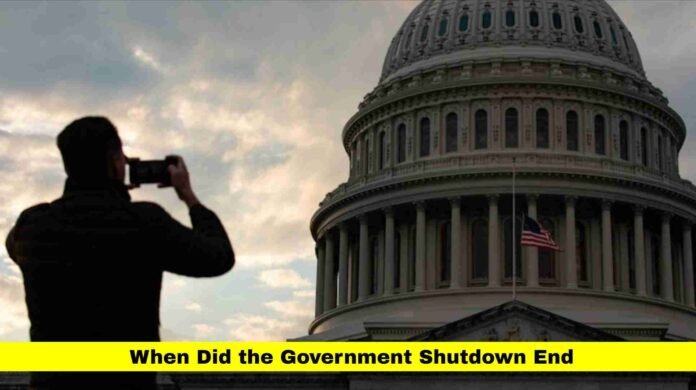

When did the government shutdown end? This central question dominated headlines and public discussion throughout late 2025 and into the start of 2026 as lawmakers, federal workers, and millions of Americans watched closely for action to reopen the federal government after a prolonged budget impasse.
The shutdown, which began on October 1, 2025, left tens of thousands of federal employees furloughed, disrupted critical services, and temporarily closed national parks and museums. It became the longest shutdown in U.S. history, stretching across six weeks of gridlock before lawmakers reached a deal and the government reopened in mid-November. The impacts of this event continue to shape discussion about federal budgeting, congressional negotiations, and the future of funding agreements.
This article provides a comprehensive, up-to-date overview of how the shutdown unfolded, when it ended, what happened during the impasse, and what its resolution means for federal workers and the broader American public.
The Shutdown Begins: What Triggered the Funding Lapse
The federal government shutdown began on October 1, 2025, after Congress failed to pass appropriations legislation needed to fund federal agencies for the 2026 fiscal year. Without full-year funding bills or a temporary continuing resolution in place, operations for many federal departments and programs ceased.
A shutdown occurs when legislators do not agree on how to allocate spending for federal functions by the start of a new fiscal year, which begins on October 1. In this case, ongoing disagreements over budget priorities, spending levels, and policy riders created a stalemate in both the House of Representatives and the Senate, preventing an agreement that would keep the government open.
As a result, non-essential services were paused, and affected employees were furloughed without regular pay, though essential personnel continued working under contingency plans. The shutdown quickly became a focal point of national discussion as its duration stretched beyond initial expectations and began affecting a broad range of Americans.
National Attention Rises: Federal Impacts and Responses
Almost immediately after the shutdown began, its effects were felt nationwide. National parks, museums, and cultural sites that rely on federal funding closed their doors indefinitely. Many federal workers faced weeks without paychecks, creating financial hardship for individuals and families.
Federal programs that serve vulnerable populations, including food assistance benefits, experienced interruptions. Travel disruptions and delays also occurred as operations at agencies such as the Federal Aviation Administration faced staffing and resourcing challenges.
While some essential services continued under federal law, the overall impact was widespread. Discussions about the broader economic effects of a prolonged shutdown emerged as businesses and observers considered the implications for consumer confidence, government spending, and service delivery.
Historical Context: A Shutdown Unlike Any Other
Though the United States has experienced government shutdowns before, the 2025–2025 funding lapse broke records for duration. Previously, the longest shutdown lasted 35 days in 2018–2019. The 2025 shutdown surpassed that benchmark, continuing through 43 days of funding gridlock before a resolution was reached.
This record-setting duration reflected deep partisan divides in Congress and heightened stakes for both lawmakers and the public. Disagreements over healthcare subsidies, spending cuts, and other legislative priorities contributed to the extended stalemate, making it one of the most consequential funding impasses in recent memory.
The sustained impasse tested the resilience of federal agencies, challenged workers and program participants across sectors, and raised questions about the effectiveness of existing budgetary processes.
Negotiations and Legislative Pressure Mount
Throughout October and early November 2025, negotiations between Senate and House lawmakers intensified. Congressional leaders from both political parties expressed urgency in reaching an agreement to reopen the government and restore funding for critical services.
During this period, discussions focused on the terms of a spending package that would both fund the government and address key points of contention among lawmakers. Efforts to craft a deal required balancing policy priorities from various branches of government while maintaining operational continuity for federal functions.
Tension heightened as federal agencies continued to operate without funding under contingency plans, and as the economic impacts of a prolonged shutdown were increasingly felt by everyday Americans.
A Turning Point: Agreement Reached to Reopen the Government
After weeks of stalemate, Congress reached an agreement in early November 2025 that finally ended the shutdown. Lawmakers negotiated terms for a continuing funding resolution paired with specific appropriations bills that would temporarily restore government operations.
The breakthrough package provided funding through January 30, 2026, extending appropriations for the balance of the fiscal year while giving Congress additional time to finalize full-year spending bills. Some departments received full-year funding, and backpay provisions were included to compensate federal employees for lost wages during the shutdown.
President Donald Trump signed the funding package into law on November 12, 2025, formally ending the record-long 43-day shutdown. Once he signed the bill, federal agencies began the process of reopening and federal employees started to return to work. All federal operations that had been paused were scheduled to resume normal function as agencies reinstated staffing and resources.
What Agencies and Workers Experienced During the Shutdown
As the shutdown dragged on, federal agencies operated under contingency measures. Essential employees continued mandatory duties but without pay, while non-essential employees were furloughed. These working conditions applied to hundreds of thousands of federal workers in departments such as health services, federal law enforcement, agricultural assistance, and administrative support.
Many of these furloughed workers faced extended periods without compensation, and the stress of financial uncertainty added strain to families and communities. Workers in sectors such as national parks, museums, and social services were among those whose daily work routines were disrupted most visibly.
Once the deal passed and the government reopened, federal employees received retroactive pay as part of the appropriations package. This provision ensured that furloughed workers and those who worked without pay during the shutdown received compensation for the days lost, offering critical financial relief after many weeks of hardship.
Public Reaction and Broader Implications
The shutdown sparked significant public reaction, with widespread debate about Congress’s ability to enact timely funding agreements. Many Americans expressed frustration at seeing essential services disrupted and workers left without pay for over a month.
Public discourse centered on broader questions about the federal budgeting process, partisan negotiations, and how future funding stalemates might be prevented. The duration of the shutdown amplified these discussions, as record-breaking shutdowns often influence public expectations about congressional priorities and governmental stability.
For many citizens, the depth of the impacts on everyday life — from delayed benefits to closed parks — highlighted how dependent a wide range of services are on timely federal action. The conclusion of the shutdown spurred conversations about accountability, legislative priorities, and the need for more efficient budget mechanisms.
Economic Consequences of the Prolonged Funding Gap
The government shutdown did not merely affect federal workers and service access. The broader economy experienced impacts as consumer confidence wavered, spending patterns shifted, and businesses that rely on federal contracts or worker income felt pressure.
Hits to sectors such as tourism occurred where national parks and public sites contribute to local revenue. Retail and hospitality industries in regions with high percentages of federal workers also reported slower activity.
Some economists noted that prolonged disruptions in government services can slow economic growth in the near term and have ripple effects that influence planning for businesses and municipalities alike. The shutdown became a case study in how political gridlock can have wide-ranging effects on economic ecosystem health and fiscal planning.
Restoration of Services After Reopening
Once the funding deal passed and the shutdown officially ended, federal agencies embarked on the complex process of restoration. Programs that had been suspended attempted to return to full capacity, national parks reopened to the public, and administrative agencies resumed their standard workflow.
Restoring normal operations took time and careful coordination. Departments needed to refill positions, issue backpay to workers, and address backlogs of work that accumulated during the funding lapse. Parts of the federal bureaucracy welcomed staff back gradually as systems and resources were brought back online.
American citizens also began to notice the tangible difference following the reopening of services that had been paused. From routine administrative functions to cultural institutions reopening their doors, the transition back to full operations underscored the importance of the federal funding process.
Looking Ahead: Funding Through Early 2026
The funding package that ended the shutdown extended appropriations through January 30, 2026, giving lawmakers continued time to negotiate full fiscal year 2026 budgets. This provisional funding period reflects a strategy used during past budget conflicts to maintain government functions while continuing negotiations behind the scenes.
Federal agencies will operate under this temporary agreement while Congress works to finalize appropriations for the remainder of the year. This means that discussions about long-term budgeting and fiscal priorities will continue, but without interrupting services or staffing.
The period of restored funding through January 30 provides a buffer and a deadline for lawmakers to finish work on remaining funding bills. It also allows federal workers and citizens to transition with stability as negotiations unfold.
How the Shutdown Influenced Future Budget Conversations
The prolonged shutdown and its resolution have reshaped how many observers think about federal budgeting. Lawmakers from both parties acknowledged the urgency of reaching timely appropriations to avoid future disruptions. The shutdown’s length emphasized the real-world consequences of funding disputes that fail to meet fiscal deadlines.
Policy discussions heading into early 2026 focus on balancing legislative priorities with efficient budget passage, and ensuring that essential services remain uninterrupted. There is growing talk among lawmakers about mechanisms that could help prevent similar impasses, such as adjusting procedural rules or establishing trigger mechanisms that protect against prolonged funding lapses.
The collective experience of a 43-day shutdown left an imprint on policy debates, urging legislators to consider both the human and economic costs of political gridlock.
What This Means for Federal Workers and the Public
In practical terms, the end of the shutdown brought immediate relief to federal workers who had endured weeks without pay. Restored paychecks, reinstated benefits, and returned job stability marked the most direct impacts felt by those who suffered through the impasse.
For the broader public, the resumption of government services restored access to programs that millions rely on daily. Whether renewing official documents, accessing national parks, or receiving public health information, the reopening of the federal government reinstated functions that touch the lives of Americans across states and demographics.
The shutdown served as a reminder of how government operations affect everyday life, beyond political discussions in Washington.
Reflecting on the End of the Shutdown
The resolution of the longest government shutdown in U.S. history stands as a major milestone in recent federal budgeting events. After 43 days of costly disruption, the decision by Congress and the President to pass appropriations and reopen the government demonstrated the ability of elected leaders to ultimately find common ground.
The shutdown’s conclusion not only returned government operations to normal but also sparked deeper consideration about how funding processes can be improved. While fiscal challenges remain part of the political landscape, the end of this shutdown offered both relief and a renewed focus on constructive legislative action.
How did the end of the shutdown affect you or your community? Share your experience or thoughts below and stay connected for ongoing coverage.