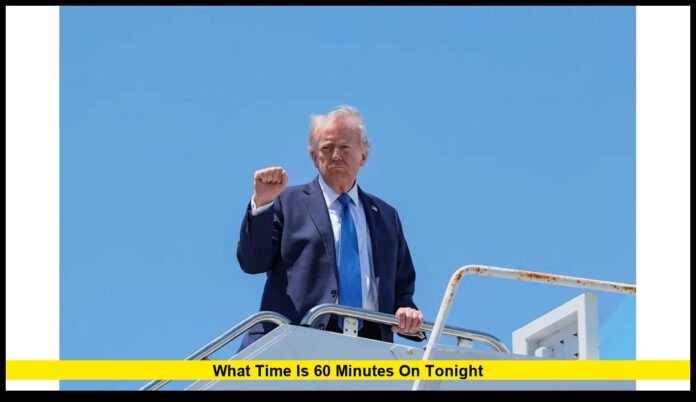

If you are searching for What time is 60 minutes on tonight, the CBS newsmagazine 60 Minutes is scheduled for Sunday, November 8, 2026, from 7 p.m. to 8 p.m. Eastern Time and Pacific Time. The broadcast features President Donald Trump in an interview with correspondent Ross Douthat, along with a report examining political unrest in France. Viewers can watch the program on CBS and access it through Paramount+, subject to the streaming service’s availability and subscription terms.
The November 8 episode arrives after a consequential U.S. midterm election and focuses on issues affecting American politics, the economy, and international relations. Its second major report turns to France, where demonstrations over education funding and living costs have become part of a broader political debate. For viewers planning their Sunday evening, checking the local CBS schedule remains important because live sports and regional programming can affect the actual start time.
What Time Is 60 Minutes on Tonight on CBS?
The scheduled airtime for 60 Minutes on Sunday, November 8, is 7 p.m. Eastern Time and 7 p.m. Pacific Time. The network lists the broadcast as a one-hour program, with an expected conclusion at 8 p.m. in those time zones.
The following schedule details can help viewers prepare to watch the latest episode.
- Program: 60 Minutes
- Broadcast date: Sunday, November 8, 2026
- Eastern Time: 7 p.m. to 8 p.m.
- Pacific Time: 7 p.m. to 8 p.m.
- Central Time: Generally 6 p.m. to 7 p.m., subject to local scheduling
- Network: CBS
- Streaming option: Paramount+
- Featured reports: Donald Trump interview and France on Fire
The listed time provides a useful reference for viewers across the United States. However, the exact airtime can differ by market, particularly during the NFL season. Local CBS stations may carry football games or other programming that affects when the newsmagazine begins.
Viewers in Mountain Time and other regions should consult their local television listings rather than assume that every station follows the same clock time.
What Is the Latest 60 Minutes Schedule for November 8?
The latest published schedule identifies two principal reports for the November 8 broadcast. The first is a double-length interview with President Donald Trump, conducted by 60 Minutes correspondent Ross Douthat. The second, titled France on Fire, examines demonstrations and political tensions in France.
The combination gives the program a strong focus on political leadership and public dissatisfaction. The U.S. segment considers the implications of the midterm elections and the challenges facing the administration. The France report explores the connection between economic frustration, public demonstrations, and the ambitions of an influential opposition politician.
These subjects are particularly relevant to viewers who follow government policy, elections, international affairs, and the economic concerns affecting households.
The episode is scheduled for 7 p.m. to 8 p.m. Eastern and Pacific Time on CBS and Paramount+. Viewers should still check the current listings for their local station before the broadcast.
Donald Trump Sits Down With Ross Douthat
One of the central features of the November 8 episode is President Donald Trump’s interview with Ross Douthat. The conversation marks Trump’s first sit-down interview with the program since the midterm elections.
The interview takes place against a changing political backdrop. Election results have created new challenges for Republicans, while the incoming Congress may alter the administration’s legislative priorities and its relationship with Democratic lawmakers.
Douthat addresses several subjects, including Republican election losses, congressional investigations, cooperation with Democrats, the economy, and the conflicts involving Iran and Ukraine.
The double-length segment gives the interview a prominent place in the broadcast, allowing the program to examine multiple areas of domestic and foreign policy.
The Midterm Election Results and Republican Losses
The midterm elections are a major subject of the discussion because their results affect the balance of political power in Washington. Elections held halfway through a presidential term often provide voters with an opportunity to express their views on the administration’s performance.
For Republicans, losses in congressional races create questions about campaign strategy, voter priorities, and the party’s ability to maintain support. The interview explores Trump’s interpretation of those results and the factors he believes contributed to the outcome.
Economic concerns, public attitudes toward the administration, and foreign policy can all influence voting decisions. The discussion provides an opportunity to hear how the president responds to questions about the election and the political challenges that follow.
The results also matter beyond individual campaigns. The composition of Congress can influence legislation, federal spending, oversight hearings, and the administration’s ability to advance its priorities.
Congressional Investigations and Relations With Democrats
Another important topic is the possibility of congressional investigations and the administration’s relationship with Democratic lawmakers.
Congressional oversight is a regular part of the U.S. political system. Lawmakers can hold hearings, request records, question government officials, and examine executive branch decisions as part of their responsibilities.
Changes in congressional control can affect the scope and direction of those activities. The interview addresses how Trump views the prospect of investigations and whether cooperation with Democrats will be possible on selected issues.
Bipartisan cooperation can become important when legislation requires support across party lines. Budget decisions, economic measures, and national security policies may create opportunities for agreement, even when political disagreements remain significant.
The president’s responses provide viewers with a direct account of his position on these challenges. The broader consequences will depend on the decisions lawmakers make and how the administration responds after the interview.
The Economy and the Cost of Living
Economic conditions remain a major concern for American households. Prices, employment opportunities, housing costs, energy expenses, and economic growth all influence how families assess their financial circumstances.
The interview includes questions about the economy, making this topic relevant to viewers interested in the connection between government policy and everyday expenses.
Economic performance also has political consequences. Voters may judge an administration by whether their income keeps pace with costs, whether jobs remain available, and whether they feel confident about their financial future.
The conversation offers an opportunity to examine the president’s position on these issues and the economic challenges facing the country. Viewers should distinguish between the president’s explanations and independently established economic outcomes when evaluating the discussion.
The Wars Involving Iran and Ukraine
Foreign policy is another major part of the interview. Douthat asks Trump about the wars involving Iran and Ukraine, two international issues with significant implications for American security and diplomacy.
Developments in the Middle East can affect energy markets, shipping, international relations, and security planning. Changes in the conflict involving Iran may also influence the economic outlook for countries that rely on stable energy supplies and trade routes.
The war in Ukraine raises separate questions about European security, relations with Russia, diplomatic negotiations, and the role of the United States in supporting international stability.
The interview places these matters within a broader discussion of the administration’s priorities. The president’s responses may help viewers understand his stated approach, although future developments will depend on military, diplomatic, and political decisions.
France on Fire Examines Protests and Political Tensions
The second major report in the November 8 episode is titled France on Fire. Correspondent Trevor Phillips examines demonstrations that have swept France since September, including protests linked to education funding and frustration over the cost of living.
The report considers how these grievances have become part of a wider political debate. While demands for better school funding are among the issues driving demonstrations, public anger has also intersected with broader concerns about household finances and the direction of the country.
Some demonstrations have turned violent, adding to the pressure on public authorities and increasing attention on the political forces seeking to benefit from the unrest.
France has a long history of demonstrations and strikes. Public protests have often played an important role in debates over labor rights, public services, economic reforms, and government policy.
The current situation provides an opportunity to examine how individual grievances can become part of a wider national discussion.
Marine Le Pen and France’s Political Future
The report also features an interview with Marine Le Pen, the leader of France’s National Rally party. Le Pen is seeking the French presidency for a fourth time, making her political ambitions an important part of the story.
National Rally has become a significant force in French politics. Its support has drawn attention to issues including immigration, national identity, household purchasing power, and dissatisfaction with established political parties.
Phillips examines Le Pen’s response to the demonstrations and how she views the country’s political direction.
The interview offers viewers an opportunity to hear her position directly rather than relying solely on summaries of her political views. Her answers also provide context for understanding how opposition figures attempt to connect public frustration with their political programs.
However, demonstrations do not necessarily represent a single political position. Participants may have different priorities, and public dissatisfaction can stem from several issues at once.
The report explores the relationship between economic pressure, public protest, and political ambition without requiring viewers to assume that all demonstrators support the same party or agenda.
Why the France Report Matters to American Viewers
France is an important European country with a major role in the European Union and international diplomacy. Its domestic political developments can influence debates about economic policy, immigration, public services, and Europe’s broader political direction.
The demonstrations also illustrate how concerns about living costs and government decisions can become significant political issues.
For American viewers, the report provides an international comparison with domestic debates about the economy, public confidence, and the relationship between political leaders and voters.
Although the political systems of France and the United States differ, both countries face questions about how governments respond to public dissatisfaction and how opposition movements seek electoral support.
The segment offers a closer look at these questions through reporting from France and an interview with one of its most prominent political figures.
Where to Watch 60 Minutes Tonight
Viewers can follow the November 8 broadcast through CBS or check streaming availability through Paramount+.
CBS television: Households with access to a local CBS affiliate can watch through an antenna, cable television, or a satellite provider that carries the station.
Paramount+: The program is listed for streaming through Paramount+. Access, timing, and viewing options may depend on the subscriber’s plan and the service’s current terms.
Local TV listings: A television provider’s electronic program guide can confirm the scheduled start time for the CBS station serving a particular area.
Digital coverage: The full Trump interview is also scheduled for publication on YouTube after the broadcast, providing another way for viewers to access the conversation.
Anyone who wants to watch the entire program should check the availability of the full episode rather than assume that every streaming option carries the same material at the same time.
Why the 60 Minutes Airtime May Change
Although 60 Minutes generally occupies a Sunday evening slot, its start time can shift when the network schedule changes.
NFL football is a major consideration during the fall. Live games do not always finish at their originally scheduled time, and an extended game can delay programs that follow it.
The November 1 edition, for example, was listed for 7:30 p.m. Eastern and 7 p.m. Pacific after NFL football. The November 8 edition has a separate published listing of 7 p.m. to 8 p.m. Eastern and Pacific.
This difference illustrates why viewers should check the schedule for the specific Sunday they intend to watch. An airtime from a previous episode may not apply to the next broadcast.
Local programming decisions can also affect individual stations. Checking the television guide shortly before the show begins is the most reliable way to avoid missing the opening report.
What Makes 60 Minutes a Notable News Program?
Since its debut in 1968, 60 Minutes has become known for investigative journalism, interviews with newsmakers, and detailed reports on significant issues.
Its format differs from a traditional headline-driven newscast because individual stories receive more time for interviews, context, and explanation. Episodes can cover government, business, international relations, science, public policy, and cultural developments.
The program’s format also makes the weekly lineup important to regular viewers. Someone interested in a particular interview may want to know the broadcast time in advance, while other viewers may watch for the investigative reports.
The November 8 episode follows this established approach by pairing an extended interview with the U.S. president with a report about political unrest in France.
Together, the two segments address how political leaders respond to public pressure, how elections influence government priorities, and how economic concerns can shape national debates.
Latest Update on Tonight’s 60 Minutes Broadcast
The published schedule for Sunday, November 8, 2026, lists 60 Minutes from 7 p.m. to 8 p.m. Eastern and Pacific Time on CBS and Paramount+.
The program features Ross Douthat’s interview with President Donald Trump, covering the midterm election results, congressional oversight, relations with Democrats, economic concerns, and the conflicts involving Iran and Ukraine.
The second report, France on Fire, follows Trevor Phillips as he examines demonstrations in France and interviews Marine Le Pen about the country’s political direction.
Viewers should remember that local CBS stations may have different schedules because of live sports or regional programming. Confirming the local listing before airtime can help ensure that the broadcast is not missed.
Final Thoughts
For viewers asking What time is 60 minutes on tonight, the published schedule for Sunday, November 8, 2026, lists the program at 7 p.m. Eastern and 7 p.m. Pacific on CBS, with an expected end time of 8 p.m. in both time zones. Paramount+ is another listed viewing option, and the full Trump interview is scheduled to appear on YouTube after the broadcast.
The episode brings together two timely reports: a presidential interview following the midterm elections and an investigation into political unrest in France. Both segments examine the challenges facing political leaders as they respond to election results, economic concerns, and public dissatisfaction.
Checking the local CBS schedule remains the best final step for viewers who want to confirm their exact airtime.
Share your thoughts in the comments and keep checking for the latest 60 Minutes airtime, episode highlights, and CBS programming updates.