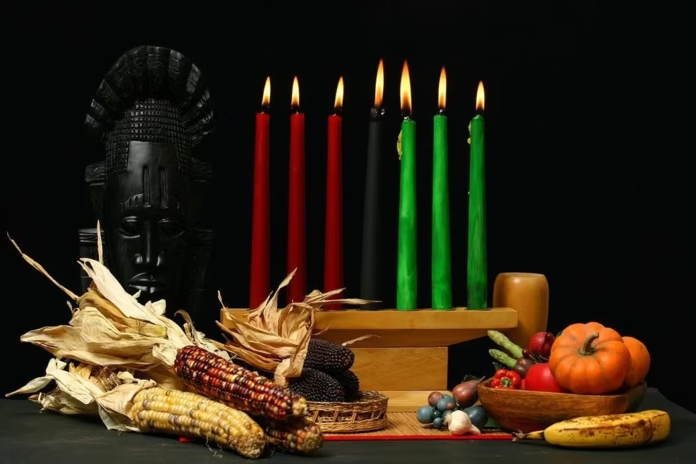

As the year draws to a close, many people across the United States look beyond traditional holidays to better understand celebrations rooted in culture and heritage. One question continues to surface each December: what religion is Kwanzaa? The answer often surprises people. Kwanzaa is not a religious holiday. It is a cultural celebration centered on shared values, history, and community, observed from December 26 through January 1.
Understanding this distinction is essential for appreciating why Kwanzaa holds lasting significance and how it fits naturally alongside religious holidays celebrated during the same season.
Understanding What Kwanzaa Represents
Kwanzaa is a weeklong cultural observance created to honor African heritage and African American identity. It focuses on unity, purpose, creativity, and collective responsibility rather than religious worship or belief.
The celebration was established in 1966 during a period of social change in the United States. Its purpose was to help African Americans reconnect with African cultural traditions and reinforce community values after generations of displacement and cultural disruption.
Kwanzaa draws inspiration from traditional African harvest celebrations, which historically emphasized gratitude, cooperation, and shared success. These ideas remain central to how Kwanzaa is observed today.
What Religion Is Kwanzaa? Clearing Up a Common Misunderstanding
To be clear and direct: Kwanzaa is not affiliated with any religion.
It does not involve religious doctrine, worship services, sacred texts, or prayer requirements. Instead, it offers a set of ethical principles that participants reflect on and apply to daily life.
Because Kwanzaa is secular, people of all faiths can celebrate it without compromising their religious beliefs. Many families observe Kwanzaa alongside Christmas, Hanukkah, or other spiritual holidays. Others celebrate Kwanzaa on its own as a cultural expression.
This flexibility is intentional. Kwanzaa was designed to unite people around shared values rather than divide them by belief systems.
The Meaning Behind the Name Kwanzaa
The name “Kwanzaa” comes from a Swahili phrase meaning “first fruits.” First-fruit celebrations are common in many African societies and traditionally mark the harvest season, emphasizing gratitude, community, and continuity.
An extra “a” was added to the spelling of Kwanzaa to allow the word to have seven letters, reflecting the seven core principles of the celebration.
Swahili was chosen because it is widely spoken across Africa and symbolizes pan-African unity rather than a single ethnic origin.
The Seven Principles That Define Kwanzaa
At the heart of Kwanzaa are the Nguzo Saba, or Seven Principles. Each day of the celebration focuses on one principle, encouraging reflection, discussion, and action.
Umoja (Unity)
Promotes togetherness within families, communities, and society as a whole.
Kujichagulia (Self-Determination)
Encourages people to define themselves, speak for themselves, and shape their own futures.
Ujima (Collective Work and Responsibility)
Highlights the importance of solving problems together and supporting one another.
Ujamaa (Cooperative Economics)
Focuses on building and maintaining businesses that benefit the community.
Nia (Purpose)
Calls for collective goals that restore and strengthen communities.
Kuumba (Creativity)
Encourages creativity in all forms to improve community life.
Imani (Faith)
Emphasizes belief in people, families, leaders, and the righteousness of collective struggle.
Importantly, “faith” in Kwanzaa refers to confidence in people and shared values, not faith in a religious sense.
Symbols Used in Kwanzaa Celebrations
Kwanzaa uses several symbols that reinforce its themes and principles. These items are usually arranged on a table or display area within the home or community space.
The Kinara is a candleholder that holds seven candles.
The Mishumaa Saba, or seven candles, include one black candle, three red candles, and three green candles.
The Mkeka is a woven mat representing the foundation of tradition.
The Mazao, or crops, symbolize productivity and harvest.
The Kikombe cha Umoja, or unity cup, represents togetherness and shared purpose.
The Zawadi, or gifts, are typically educational or culturally meaningful rather than extravagant.
Each night, a candle is lit and the corresponding principle is discussed, reinforcing learning and connection.
How Families and Communities Celebrate Kwanzaa
Kwanzaa celebrations vary widely depending on family traditions and community involvement. Some households observe the holiday quietly at home, while others participate in larger community events.
Evenings often include:
- Lighting a candle
- Discussing the day’s principle
- Sharing stories and cultural reflections
- Enjoying traditional or symbolic foods
A communal feast known as Karamu is commonly held on December 31. This gathering brings together extended family and friends to celebrate culture, creativity, and collective achievement.
Music, dance, poetry, and storytelling are also common elements, reinforcing the holiday’s emphasis on cultural expression.
Who Celebrates Kwanzaa in the United States
Kwanzaa is primarily observed by African Americans, but participation is not limited by race or background. Anyone who values the principles of unity, self-determination, and community responsibility can take part.
Over time, Kwanzaa has gained recognition in schools, cultural institutions, and civic organizations across the country. Its presence reflects a broader appreciation for multicultural traditions and shared values.
While not everyone observes Kwanzaa annually, its influence continues to shape conversations about identity, heritage, and community building.
Why Kwanzaa Matters in Today’s Society
Kwanzaa remains relevant because it addresses timeless challenges: strengthening families, supporting communities, and encouraging responsibility beyond individual success.
The holiday invites reflection on how cultural values can guide daily decisions, economic choices, and relationships. In a fast-paced society, Kwanzaa offers a structured moment to slow down and focus on purpose and connection.
Understanding that Kwanzaa is not a religion helps remove barriers to participation and encourages respectful curiosity rather than misunderstanding.
Kwanzaa’s Place in the Modern Holiday Season
Kwanzaa’s timing allows it to coexist with end-of-year celebrations without replacing them. For many, it serves as a bridge between reflection on the past year and intention-setting for the year ahead.
Its emphasis on values rather than gifts or commercialism makes it especially meaningful for those seeking depth during the holiday season.
As more people ask what religion is Kwanzaa, the continued answer reinforces its inclusive nature and lasting relevance.
What does Kwanzaa mean to you or your community? Join the conversation and stay connected for more cultural insights and updates.