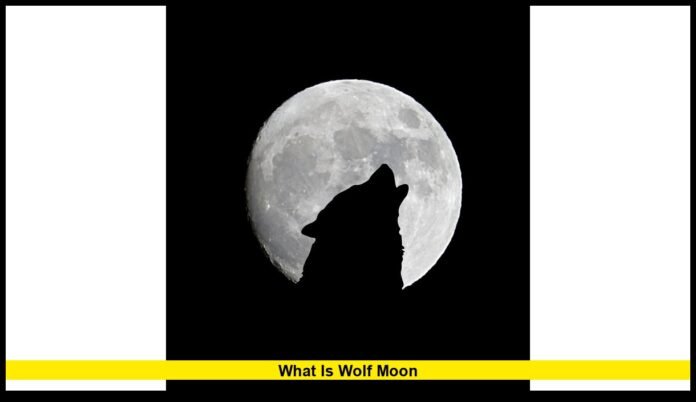

The first full moon of the year, known as the Wolf Moon, will soon rise in January 2026, giving skywatchers across the United States a striking view of winter’s brightest celestial event. For those wondering what is Wolf Moon, it marks the moment when the Moon reaches full illumination in January—a time deeply tied to folklore, natural rhythms, and modern astronomy. In 2026, the Wolf Moon will reach its full phase on Thursday, January 8, 2026, at 6:24 p.m. Eastern Standard Time, creating an impressive spectacle visible across the entire country.
A Name Rooted in History and Winter Lore
The name “Wolf Moon” has origins that stretch back centuries. It was used by several Native American tribes and later by European settlers who tracked the seasons by the lunar calendar. During the coldest part of winter, wolves were often heard howling in forests and valleys, especially when food was scarce. These haunting sounds inspired early peoples to name January’s full moon after the wolf’s call echoing through the snowy wilderness.
The Old Farmer’s Almanac continues to list Wolf Moon as the traditional name for January’s full moon. Each month’s lunar event carries a distinct name, often reflecting nature’s patterns or seasonal activity. For January, the Wolf Moon represents endurance, survival, and the quiet strength found in winter’s stillness.
When and Where to See the 2026 Wolf Moon
For U.S. residents, the Wolf Moon will appear full for several nights, peaking in brilliance on the evening of January 8, 2026. The Moon will rise in the east just after sunset and remain visible through the night, glowing high in the sky before setting in the early morning hours.
Below is a guide to help determine the best viewing times across regions:
| Region | Best Viewing Window (Local Time) | Typical January Conditions |
|---|---|---|
| East Coast (e.g., New York, Boston) | After 6:30 p.m. | Cold, crisp skies, occasional clouds |
| Midwest (e.g., Detroit, Chicago) | 5:30–6:00 p.m. | Clear, dry air with low humidity |
| Mountain States (e.g., Denver, Boise) | Around 5:00 p.m. | Excellent visibility, minimal haze |
| West Coast (e.g., Los Angeles, San Francisco) | Around 5:10 p.m. | Mostly clear skies with mild temperatures |
Even if clouds obscure parts of the night sky, the Moon’s brightness during this time often pierces through thin cloud layers. Observers in rural or dark-sky areas will notice greater detail on the lunar surface, including craters, ridges, and the shimmering reflection of sunlight across the highlands.
Astronomy Behind the Wolf Moon
Astronomically, the Wolf Moon occurs when the Moon is directly opposite the Sun, with Earth sitting between the two. This alignment allows sunlight to fully illuminate the Moon’s surface, creating the radiant roundness that defines the full moon stage.
In 2026, the Moon will pass through the constellation Cancer during its full phase. Its distance from Earth will be approximately 222,500 miles, slightly less than its average orbital distance. This proximity will make the Wolf Moon appear subtly larger and brighter in the night sky, though not enough to be categorized as a “supermoon.”
The moment of peak illumination—when the Moon’s face is fully lit—will occur at 6:24 p.m. EST. Those watching around this time will see the Moon rise with a pale golden hue before it shifts to bright white as it climbs higher into the sky.
Cultural and Symbolic Meaning in the Modern Era
Beyond its scientific definition, the Wolf Moon holds enduring cultural significance. Many people view it as a symbol of fresh beginnings, aligning naturally with the start of the calendar year. The Moon’s glow represents clarity and focus, themes that resonate during January’s quiet introspection.
Across the centuries, cultures have attached various meanings to this midwinter moon:
- Algonquin tribes named it the Wolf Moon to reflect the sounds of wolves during the harshest winter nights.
- Celtic traditions regarded it as a symbol of protection, urging communities to stay close to hearth and home.
- European folklore viewed it as a guiding light during the darkest stretch of winter.
Today, people across the U.S. still pause to look upward, finding in the Moon’s glow a reminder of resilience and renewal after the holiday season.
Best Ways to Watch the Wolf Moon
No special tools are required to enjoy the Wolf Moon—just clear skies and a bit of patience. However, a few small adjustments can enhance the viewing experience:
- Find open space: Parks, beaches, and countryside areas offer the clearest sightlines.
- Avoid bright lighting: Streetlamps and buildings can reduce visibility.
- Use binoculars or a telescope: Even basic binoculars reveal lunar craters and shadows.
- Observe near moonrise: The Moon often looks larger and more colorful close to the horizon due to atmospheric effects.
Photography enthusiasts can capture breathtaking shots by framing the Moon with foreground landmarks such as bridges, trees, or mountains. A tripod, low ISO setting, and manual focus will help preserve detail and sharpness.
Effects on Tides and the Natural World
As with every full moon, the Wolf Moon influences Earth’s tides through gravitational pull. The alignment of the Sun, Earth, and Moon enhances this effect, leading to spring tides—periods of higher high tides and lower low tides. Coastal regions along the Atlantic and Pacific may notice minor fluctuations between January 8 and January 10, 2026.
Animals also respond to the increased brightness. Many nocturnal creatures adjust their feeding and movement patterns during full moons. While wolves do not actually howl at the Moon, their calls often carry farther under its bright light, reinforcing the ancient link between their behavior and the January moon.
Why the Wolf Moon Matters in 2026
The Wolf Moon of 2026 holds special importance for astronomers and skywatchers because it occurs in a year filled with remarkable celestial activity. Later in August, parts of the United States will experience a total solar eclipse, one of the most anticipated events of the decade.
The Wolf Moon serves as a fitting prelude—a reminder to pay attention to the sky and its recurring patterns. Its timing also coincides with perigee, the Moon’s nearest approach to Earth in January, which enhances its visual impact for observers nationwide.
The Moon’s Yearly Journey Ahead
The Wolf Moon begins the sequence of 12 full moons that will mark the lunar year of 2026. Below is the schedule for the rest of the year’s full moons, each carrying its own seasonal significance:
| Month | Full Moon Name | Date (2026) |
|---|---|---|
| February | Snow Moon | February 6 |
| March | Worm Moon | March 8 |
| April | Pink Moon | April 7 |
| May | Flower Moon | May 6 |
| June | Strawberry Moon | June 5 |
| July | Buck Moon | July 4 |
| August | Sturgeon Moon | August 3 |
| September | Harvest Moon | September 2 |
| October | Hunter’s Moon | October 1 |
| November | Beaver Moon | November 30 |
| December | Cold Moon | December 30 |
Each full moon carries traditional names based on agricultural and natural cycles. The Wolf Moon stands as the opening chapter, connecting people to both ancient tradition and the rhythm of the modern calendar.
The Wolf Moon in Modern American Culture
Across social media, the Wolf Moon consistently trends each January. Platforms like Instagram, X (formerly Twitter), and TikTok fill with breathtaking photos as viewers share how they experienced the first full moon of the year. The tag #WolfMoon frequently garners millions of views within days of the event.
Television meteorologists and astronomy educators also use this moon to encourage interest in stargazing. In 2026, observatories and science centers across states such as Arizona, California, and Colorado will host viewing nights to help families and students learn more about lunar cycles. The event offers a rare chance to unite science and storytelling under one glowing symbol.
Scientific Observations and Ongoing Research
Even as people celebrate its beauty, the Wolf Moon plays a role in ongoing research. Lunar observations help scientists study how light reflects off the Moon’s surface, revealing information about its mineral makeup. Consistent monitoring of full moons also assists in refining calculations for satellite calibration and Earth’s atmospheric brightness.
For 2026, astronomers expect particularly sharp data collection due to favorable viewing conditions across much of North America. The Moon’s steady brilliance in January skies allows researchers to capture high-contrast images that support both professional and educational studies.
Tips for Lunar Photography During the Wolf Moon
Photographers can make the most of this natural event by planning ahead. Here are simple techniques to achieve the best results:
- Scout your location early – Check where the Moon will rise using mobile astronomy apps.
- Use manual mode – Set a low ISO (100–400) and shutter speed between 1/125 and 1/250 seconds.
- Include landmarks – Framing the Moon beside buildings, trees, or hills adds scale and drama.
- Experiment with timing – Moonrise provides warm tones, while midnight shots highlight contrast.
- Stay steady – Use a tripod or remote shutter release to prevent blur.
Whether using a DSLR or a smartphone, clear skies and patience are key. Each Wolf Moon offers unique lighting, influenced by humidity, air clarity, and position on the horizon.
The Enduring Appeal of the Wolf Moon
Generations have admired the Wolf Moon not just for its glow, but for what it represents. In the quiet of January, when much of the natural world rests beneath frost and snow, the full moon reminds us that light still endures through darkness.
Its cycle continues unchanged across centuries, linking modern life with ancient observation. From Native American legends to modern astrophotography, the Wolf Moon remains both a scientific and emotional touchstone—a symbol of continuity between Earth and sky.
When the Wolf Moon rises on January 8, 2026, take a moment to look up. Its cold brilliance and quiet strength will mark the beginning of another year beneath the same ancient light.