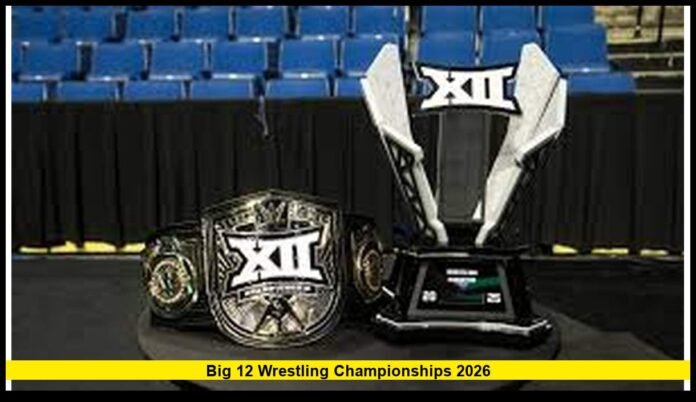

Big 12 Wrestling Championships 2026 brought together some of the most talented collegiate wrestlers in the United States as conference teams competed for titles and NCAA qualification spots in early March. The annual championship event featured intense matchups across ten weight classes, with elite programs such as Oklahoma State, Iowa State, Missouri, and Northern Iowa battling for conference supremacy.
The tournament plays a crucial role in the college wrestling postseason. Individual wrestlers compete for conference championships while also securing automatic qualification for the NCAA Division I Wrestling Championships. For teams, the event determines conference bragging rights and reflects the overall strength of their programs.
As the 2025–2026 college wrestling season nears its conclusion, the Big 12 tournament once again delivered high-level competition and dramatic matches.
Importance of the Big 12 Wrestling Tournament
The Big 12 wrestling championship serves as the conference’s most important event of the season. Wrestlers spend months preparing for this tournament, where individual titles and national tournament opportunities are decided.
Each program sends its top athletes to compete in a two-day bracket tournament format.
Key objectives for wrestlers include:
- Winning a conference championship
- Earning automatic qualification for the NCAA tournament
- Scoring team points for their program
- Improving national rankings before the national championships
Because of these stakes, the tournament often features some of the most competitive matches of the entire season.
Participating Programs in the Conference
The Big 12 Conference includes a mix of traditional wrestling powers and emerging programs. Several affiliate members compete in the league specifically for wrestling, increasing the conference’s competitive depth.
Programs competing in the conference include:
- Oklahoma State
- Iowa State
- Missouri
- Northern Iowa
- South Dakota State
- Wyoming
- North Dakota State
- Utah Valley
- West Virginia
- Air Force
These teams consistently develop talented wrestlers who compete at the highest level of NCAA Division I competition.
The conference has produced numerous national champions and All-American athletes over the years.
Ten Weight Classes in NCAA Wrestling
The championship tournament features ten official NCAA weight divisions. Each class has its own bracket and champion.
| Weight Class | Division Type |
|---|---|
| 125 lbs | Lightweight |
| 133 lbs | Lightweight |
| 141 lbs | Lightweight |
| 149 lbs | Lightweight |
| 157 lbs | Middleweight |
| 165 lbs | Middleweight |
| 174 lbs | Middleweight |
| 184 lbs | Upper Weight |
| 197 lbs | Upper Weight |
| 285 lbs | Heavyweight |
Wrestlers must manage their conditioning and weight carefully throughout the season in order to compete effectively in their divisions.
Each bracket includes quarterfinals, semifinals, finals, and placement matches.
Tournament Format and Structure
The championship uses a double-elimination format, allowing wrestlers to continue competing after their first loss.
This system ensures that athletes still have opportunities to finish in the top placements and earn NCAA qualification.
Key elements of the structure include:
- Championship bracket for undefeated wrestlers
- Consolation bracket for athletes with one loss
- Placement matches determining final rankings
Matches are contested under standard NCAA wrestling rules with three periods.
Competitors earn team points throughout the tournament based on victories and bonus scoring.
Team Scoring System
Team scores determine the conference champion.
Programs accumulate points through individual wrestler performances.
Ways teams earn points
- Advancement through rounds
- Technical fall victories
- Major decision wins
- Pins
Bonus-point victories can significantly impact the team standings.
A single dominant wrestler who records several pins can add major points to a team’s total.
This scoring structure encourages aggressive wrestling throughout the tournament.
Oklahoma State’s Continued Wrestling Tradition
Oklahoma State remains one of the most recognized programs in college wrestling history.
The Cowboys have established a legacy that includes decades of success at both the conference and national level.
Major highlights of the program’s history include:
- More than 30 NCAA team championships
- Numerous individual national champions
- A long record of conference titles
Every year, Oklahoma State enters the Big 12 championship as a serious contender.
The program consistently produces elite wrestlers across several weight classes.
Strong recruiting and experienced coaching contribute to their sustained success.
Iowa State’s Competitive Lineup
Iowa State continues to field a strong wrestling roster capable of challenging for conference titles.
The Cyclones have maintained a respected wrestling tradition for decades.
Their athletes are known for technical skill and strategic wrestling.
Key strengths of the program include:
- Solid middleweight competitors
- Balanced lineup across multiple divisions
- Experienced coaching staff
Iowa State wrestlers frequently earn NCAA tournament qualification through strong performances at the conference championships.
Missouri’s Rise as a Conference Power
Missouri has become a major competitor in the Big 12 over the past several seasons.
The Tigers have produced multiple All-Americans and national champions.
Their success stems from a disciplined program that emphasizes conditioning and aggressive offense.
Missouri’s wrestlers often thrive in tournament environments where stamina and mental toughness are crucial.
Strong showings at conference championships have helped solidify the program’s national reputation.
Northern Iowa and Other Emerging Programs
Several other teams continue to improve within the Big 12 wrestling landscape.
Programs such as Northern Iowa, South Dakota State, and North Dakota State regularly produce competitive wrestlers capable of upsetting higher-ranked opponents.
These teams bring depth to the conference and create unpredictable tournament brackets.
Competitive balance across the league means that even lower-seeded wrestlers can deliver surprising performances.
That unpredictability adds excitement to the conference tournament every year.
Atmosphere at the Championship Event
College wrestling fans are known for their passion and dedication.
The Big 12 championship tournament typically features enthusiastic crowds filled with supporters from multiple schools.
Fans travel from across the Midwest and surrounding regions to watch their teams compete.
The environment inside the arena often includes:
- Loud cheering after takedowns
- Intense rivalries between programs
- Emotional celebrations after major wins
Wrestlers feed off the energy from the crowd, especially during close matches.
The excitement adds another layer of intensity to the competition.
Preparation and Training for Wrestlers
Athletes prepare all season for the conference championship tournament.
Training programs emphasize several key elements:
Strength and conditioning
Wrestlers must maintain exceptional physical endurance.
Tournament competition requires multiple matches within a short time frame.
Technique and strategy
Coaches study opponents and prepare athletes with detailed match plans.
Small technical adjustments can determine the outcome of close matches.
Mental preparation
Confidence and focus play major roles in high-pressure situations.
Successful wrestlers remain calm even when matches become intense.
Connection to the NCAA Wrestling Championships
The Big 12 Wrestling Championships 2026 play a direct role in determining who advances to the national tournament.
The NCAA assigns a certain number of automatic qualifying spots to each conference for every weight class.
Wrestlers who finish within those positions earn guaranteed entry into the NCAA championships.
Athletes who fall short of automatic qualification may still receive at-large selections, but strong conference performances greatly improve those chances.
For many wrestlers, this tournament represents the final step before competing for a national title.
Growing Popularity of College Wrestling
College wrestling continues to maintain a dedicated fan base in the United States.
The sport remains especially popular in states such as:
- Oklahoma
- Iowa
- Missouri
- Pennsylvania
- South Dakota
Youth wrestling participation has increased in many areas, helping develop future college athletes.
Television coverage of major tournaments and social media highlights have also helped bring more attention to the sport.
Conference championships like the Big 12 event showcase the skill and intensity that make wrestling exciting to watch.
Looking Ahead to the National Stage
After the conference tournament concludes, attention shifts toward the NCAA Division I Wrestling Championships.
Qualified athletes from the Big 12 join competitors from conferences across the country to compete for national titles.
Preparation during the weeks leading up to the national tournament often includes:
- Recovery and injury management
- Detailed analysis of potential opponents
- Strategic adjustments for the national bracket
Wrestlers who perform well at the conference level often carry strong momentum into the NCAA championships.
The Big 12 has historically produced numerous All-Americans and national champions.
The Significance of the Tournament
The conference championship represents more than just a competition.
It highlights the dedication, training, and determination required to succeed in collegiate wrestling.
Athletes spend countless hours preparing for the opportunity to compete on this stage.
Winning a conference title can become one of the most meaningful achievements in a wrestler’s college career.
For teams, the event also reinforces program pride and tradition.
Which wrestler or match stood out most during the Big 12 wrestling tournament this year? Share your thoughts and keep following for more college sports updates.