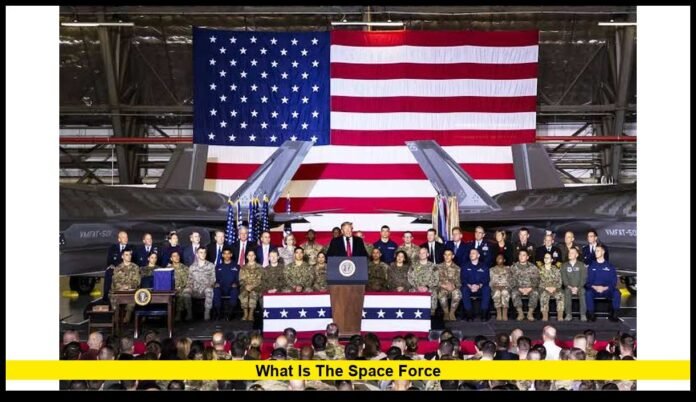

The United States Space Force is the military branch responsible for protecting American interests in space, maintaining critical space-based capabilities, and ensuring that the United States can operate safely and effectively in an increasingly competitive space environment. If you are wondering what is the space force, why it was established, what its members do, and how it differs from the Air Force, the answer goes beyond launching satellites or monitoring objects in orbit.
The Space Force is the newest branch of the U.S. Armed Forces. Established in December 2019, it focuses on military operations beyond Earth’s atmosphere, including satellite communications, missile warning, space surveillance, navigation support, and protection of important space infrastructure.
Although astronauts and civilian space agencies often receive the most public attention, the Space Force performs a different job. It is primarily concerned with national security and the systems that allow America’s military and other essential services to function in space.
Understanding its mission is increasingly important because modern communications, military operations, navigation, weather forecasting, and national defense depend heavily on space-based technology.
What Is the U.S. Space Force and Why Was It Created?
The United States Space Force, commonly abbreviated as USSF, is a military service created to organize and strengthen the country’s space-related defense capabilities. It became the sixth branch of the U.S. Armed Forces on December 20, 2019, when the National Defense Authorization Act for Fiscal Year 2020 was signed into law.
Before the Space Force existed as a separate service, many military space responsibilities were handled by the U.S. Air Force. These responsibilities included operating satellites, monitoring objects in orbit, providing missile warnings, and supporting military communications.
As space became more important to national security, U.S. policymakers determined that a dedicated military service could focus more directly on these specialized responsibilities.
The Space Force was established to develop, organize, train, and equip personnel who can protect American interests in space. Its mission also includes ensuring that U.S. forces can continue using space-based systems when facing interference, cyberattacks, or other potential threats.
The service operates within the Department of the Air Force, but it has its own leadership, personnel, mission responsibilities, and organizational structure.
Its creation reflects a broader change in modern defense planning: space is no longer viewed solely as a place for scientific discovery. It is also an important environment for communications, intelligence, navigation, surveillance, and military operations.
What Does the Space Force Do?
The Space Force performs several interconnected missions that support American national security. Although satellites are central to many of its responsibilities, the organization also depends on ground facilities, secure computer networks, specialized personnel, and launch infrastructure.
Its primary activities can be understood through the following functions.
1. Protecting Military and National Security Satellites
Satellites support a wide range of military and civilian activities. They provide communications, navigation, weather information, intelligence, and early warnings about potential missile launches.
The Space Force helps develop, operate, and protect military satellite systems that provide these capabilities.
Satellite protection involves more than preventing a spacecraft from being physically damaged. It also includes monitoring potential interference, securing supporting networks, identifying suspicious activity, and improving the ability of systems to continue operating when individual components fail.
The goal is to make critical space capabilities more reliable, resilient, and difficult to disrupt.
2. Monitoring Objects in Space
Space contains thousands of active satellites, along with inactive spacecraft, rocket bodies, and fragments of orbital debris.
The Space Force conducts space domain awareness activities to identify, track, and characterize objects in orbit. This information helps military planners understand the space environment and assess potential risks to important satellites.
Monitoring orbital activity can help identify possible collisions, unexpected satellite movements, and other developments that require further examination.
Not every unusual movement indicates a hostile action. Understanding an object’s behavior and the circumstances surrounding it is important before drawing conclusions about its purpose.
Space surveillance is therefore a significant part of maintaining safe and informed operations in orbit.
3. Providing Missile Warning and Tracking
Early warning is another major responsibility associated with U.S. military space operations.
Space-based infrared sensors can detect heat signatures associated with missile launches. Information from these systems can help military commanders and national leaders assess potential threats and make time-sensitive decisions.
Missile warning systems are particularly important because launches can occur far from the locations being threatened.
The Space Force operates and develops satellite capabilities that contribute to missile warning and tracking. These capabilities work alongside ground-based sensors and other defense systems.
Detecting a possible launch does not automatically mean that a missile can be intercepted. Warning, tracking, assessment, and interception are separate functions that may involve different military organizations.
4. Supporting GPS and Military Navigation
The Global Positioning System, or GPS, is one of the most familiar examples of space technology used in everyday life.
GPS satellites transmit signals that allow compatible receivers to determine their positions and support navigation and timing applications.
The Space Force manages the military responsibilities associated with the GPS satellite constellation. The system also supports civilian users, including drivers, aircraft operators, emergency services, businesses, and telecommunications networks.
Accurate timing is particularly important for modern infrastructure. Financial transactions, communication networks, and other technical systems rely on precise synchronization.
GPS signals can be disrupted or manipulated under certain conditions. Consequently, improving the resilience of positioning, navigation, and timing capabilities is an important national security priority.
5. Supporting Satellite Communications
Military operations often require secure communications between personnel, aircraft, ships, command centers, and deployed forces.
Satellite communications allow information to travel across large distances, including areas where terrestrial communication infrastructure is unavailable or unreliable.
The Space Force supports military satellite communication capabilities designed for different operational requirements. These include protected communications for sensitive missions and systems capable of carrying large volumes of information.
Reliable communications help military leaders coordinate activities and maintain connections with forces operating around the world.
6. Supporting Space Launches and Access to Orbit
Military satellites must reach orbit before they can perform their missions.
The Space Force supports launch operations through its launch infrastructure, ranges, tracking capabilities, and associated mission support. It also manages programs that procure launch services for national security payloads.
Launch operations require coordination among government organizations, commercial launch providers, range personnel, and satellite operators.
The objective is to provide reliable access to space for important national security missions.
The Space Force does not manufacture or launch every rocket itself. Commercial companies perform many launch services under government contracts, while military organizations provide oversight and specialized support.
7. Defending U.S. Interests in Space
The Space Force also works to preserve the ability of American forces to operate in space without unacceptable interference.
Potential threats include electronic interference, cyberattacks, attempts to disrupt satellite services, and technologies designed to damage or disable spacecraft.
Military space defense includes understanding these threats, protecting critical systems, and developing capabilities to respond when necessary.
The broader objective is to prevent hostile activity from undermining the space-based services on which the United States and its allies depend.
Why Is the Space Force Important to Everyday Americans?
The Space Force may appear distant from ordinary life because much of its work takes place through satellites and specialized facilities. However, space-based capabilities influence numerous services that Americans use every day.
Navigation and transportation: GPS supports navigation applications, fleet management, aviation, maritime operations, and location-based services.
Weather and emergency preparedness: Satellites operated by different government agencies provide weather observations and environmental information. Military space capabilities also contribute to warning and defense operations.
Communication systems: Satellite networks provide connectivity in remote locations and support government and military communications.
Financial and digital infrastructure: Precise timing signals help synchronize certain communications, computing, and financial systems.
National defense: Space-based intelligence, communications, navigation, and missile warning support the U.S. military’s ability to plan and conduct operations.
It is important to distinguish the Space Force’s responsibilities from those of other organizations. The service does not operate every GPS receiver, manage every weather satellite, or control the entire civilian satellite industry.
Instead, it provides and protects military space capabilities while working with other government agencies, allied nations, and commercial partners.
Its work matters because disruptions to critical space systems could affect military readiness and, in some circumstances, services that support the broader economy.
When Was the Space Force Created? A Brief History
Although the U.S. Space Force was officially established in 2019, American military space operations began decades earlier.
1950s: Early military space programs
During the early Cold War, the United States began developing technologies for satellites, missile warning, and other space-related defense missions. Military organizations established specialized programs to manage these emerging capabilities.
1982: Air Force Space Command
The U.S. Air Force activated Air Force Space Command in 1982. The command consolidated important space-related activities, including satellite operations, launch support, missile warning, and space surveillance.
1991: Space capabilities demonstrate their military value
During the Gulf War, satellite-based communications, navigation, and other technologies played important roles in military operations. Their use reinforced the importance of space systems to modern warfare.
2019: The Space Force becomes a separate military service
Congress established the U.S. Space Force through the Fiscal Year 2020 National Defense Authorization Act, signed on December 20, 2019.
The new service inherited many responsibilities previously managed by Air Force organizations.
2020 onward: Building a distinct service
The Space Force began developing its own organizational identity, training arrangements, operational structures, and personnel policies. It also continued working with the Air Force and other military branches to support joint operations.
2025–2026: Greater emphasis on contested space and modernization
Recent planning has emphasized resilient satellite architectures, improved space awareness, faster technology development, and preparation for potential threats to space systems.
These developments reflect the growing importance of space in national defense and the need to adapt military capabilities as technology and threats change.
How Is the Space Force Different From the Air Force?
The Space Force and the Air Force are separate military services, but they operate under the same civilian department: the Department of the Air Force.
Their missions differ primarily in the environments and capabilities on which they focus.
| Category | U.S. Space Force | U.S. Air Force |
|---|---|---|
| Primary focus | Military operations and capabilities in space | Airpower and associated military operations |
| Main responsibilities | Satellite operations, space surveillance, missile warning, military space systems, and space access | Aircraft operations, air defense, air mobility, and other airpower missions |
| Personnel | Guardians | Airmen |
| Department | Department of the Air Force | Department of the Air Force |
| Relationship | Separate military service specializing in space | Separate military service specializing in airpower |
Despite their different missions, the two services work closely together.
For example, an aircraft conducting a military mission may depend on satellite navigation, secure communications, and information provided by space-based sensors. The Space Force supports these space capabilities, while the Air Force operates aircraft and other systems that may use them.
Both services also depend on shared support arrangements in areas such as personnel administration, facilities, and other services.
The organizational relationship allows the Space Force to maintain a distinct mission without duplicating every support function already available through the Department of the Air Force.
How Is the Space Force Different From NASA?
One of the most common misconceptions about the Space Force is that it is another version of NASA.
Both organizations work in the space environment, but they have fundamentally different purposes.
NASA is a civilian government agency focused on scientific research, space exploration, aeronautics, and the development of knowledge and technology.
The Space Force is a military service focused on national defense and protecting American interests in space.
| Category | Space Force | NASA |
|---|---|---|
| Organization type | Military service | Civilian government agency |
| Main purpose | National security and military space operations | Science, exploration, research, and aeronautics |
| Personnel | Military Guardians and civilian employees | Civilian employees, astronauts, researchers, and contractors |
| Typical activities | Operating military satellite systems, space surveillance, missile warning, and launch support | Scientific missions, planetary exploration, Earth science, and human spaceflight |
| Human spaceflight | Not its primary mission | A major part of its human exploration program |
Space Force Guardians are not automatically astronauts, and most do not travel into space. Their work is primarily conducted through operations centers, technical facilities, command organizations, and supporting installations.
NASA and the Space Force may cooperate on certain space-related activities, but they do not have interchangeable responsibilities.
Commercial space companies are another distinct part of the space ecosystem. Companies that build satellites, develop rockets, or provide communications services may work with NASA, the Space Force, or other government customers depending on their contracts and capabilities.
Who Leads the Space Force?
The Space Force has its own military leadership and organizational structure.
The senior uniformed officer is the Chief of Space Operations, who is responsible for leading the service’s military organization and advising senior civilian and national security leaders on space-related matters.
As of the latest verified leadership information available for this article, General Douglas A. Schiess serves as the Chief of Space Operations. He succeeded General B. Chance Saltzman in September 2026.
The Space Force operates under the civilian leadership of the Secretary of the Air Force and the broader Department of Defense leadership structure.
Its organization includes several major field commands with different responsibilities.
Combat Forces Command: Responsible for organizing and preparing operational space forces and developing the methods used to employ them. It was previously known as Space Operations Command.
Space Training and Readiness Command: Focuses on training Guardians, developing space-related expertise, and preparing personnel for operational requirements.
Space Systems Command: Manages important aspects of space capability development, acquisition, and delivery, including satellites, launch-related systems, and supporting technologies.
These commands have different roles but work toward the same overall mission: ensuring that the United States can access, use, and defend critical space capabilities.
The service also coordinates with organizations such as U.S. Space Command, which is a unified combatant command responsible for military operations in the space domain. The Space Force and U.S. Space Command are related but are not the same organization.
What Are Space Force Guardians?
Members of the Space Force are known as Guardians.
The name reflects the service’s mission of protecting American interests in space. It also draws on the heritage of earlier military space organizations, including the Air Force Space Command motto, “Guardians of the High Frontier.”
Guardians work in a wide range of specialties. Their responsibilities are not limited to watching satellites or monitoring computer screens.
Depending on their training and assignments, they may operate spacecraft control systems, analyze orbital activity, manage satellite communications, support cyber operations, develop new technologies, or help acquire and maintain national security space systems.
Some work directly in operational units, while others focus on intelligence, engineering, research, planning, logistics, training, or administration.
The Space Force also employs civilian professionals who support its mission. These employees can contribute specialized expertise without necessarily serving in a military uniform.
The service is smaller than the Army, Navy, Air Force, and Marine Corps, but its missions require highly technical skills and close coordination with other organizations.
What Careers Are Available in the Space Force?
People interested in space technology, national security, engineering, or information systems may find several career paths within the Space Force.
Military career opportunities generally fall into enlisted and officer categories, while civilian positions provide additional ways to contribute.
Enlisted Careers
Enlisted Guardians receive specialized training for operational and technical responsibilities. Depending on their career field, they may work with satellite systems, space surveillance, communications, intelligence, cyber operations, or other mission-support capabilities.
Enlisted personnel can develop technical expertise and take on increasing leadership responsibilities throughout their careers.
Officer Careers
Officers generally take on leadership, operational planning, technical management, and organizational responsibilities.
Depending on their qualifications and assignments, they may lead operational teams, manage complex systems, oversee acquisition programs, or help develop strategies for future space missions.
Officer career paths have different educational and eligibility requirements, which applicants should review before applying.
Engineering and Technology Careers
Space missions depend on specialists who understand spacecraft, software, communications, sensors, cybersecurity, and other technical systems.
Engineering and technology professionals may help develop new capabilities, test equipment, improve system reliability, or solve technical problems that affect mission performance.
Intelligence and Cybersecurity Careers
The Space Force also requires personnel who can analyze threats, protect networks, interpret information about the space environment, and support secure military operations.
These positions may require specialized training, security clearances, and particular educational or technical qualifications.
Civilian Space Force Careers
Not everyone working for the Space Force must join the military.
Civilian employees may support engineering, program management, acquisition, data analysis, administration, logistics, and other functions.
Eligibility requirements vary by position. Applicants should check the specific vacancy for citizenship rules, educational qualifications, experience requirements, and security-clearance conditions.
How Can You Join the Space Force?
People interested in joining the Space Force can explore enlisted military service, officer commissioning opportunities, and eligible civilian positions.
Military applicants typically need to meet applicable requirements involving citizenship, education, medical fitness, background screening, and other eligibility standards. The exact requirements depend on the career path and current recruiting policies.
Potential applicants can generally follow these steps:
- Research available careers. Learn about the different military specialties and civilian occupations to determine which match your interests and qualifications.
- Review eligibility requirements. Check the applicable age, education, citizenship, medical, and other standards for the specific position.
- Contact an authorized recruiter or hiring office. Ask about current openings, application procedures, training, and available career options.
- Complete the required application and assessments. Military applicants may need to complete aptitude testing, medical evaluations, background screening, and other required steps.
- Complete the required training. Applicants who qualify must complete the training appropriate to their service category and career field.
Selection is not guaranteed, and requirements may change.
People already serving in another military branch may have separate opportunities to transfer, depending on current policies and application windows.
The Space Force is particularly relevant to people interested in combining technical expertise with military service, but applicants should understand that it is a military organization with professional standards, obligations, and operational responsibilities.
Where Is the Space Force Located?
The Space Force maintains headquarters and operational installations across the United States, along with personnel and mission activities in other locations.
Its headquarters is at the Pentagon in Arlington, Virginia.
Major Space Force installations include:
- Vandenberg Space Force Base, California: Supports important launch activities and other national security space missions.
- Los Angeles Air Force Base, California: A major center for space systems acquisition and program management.
- Buckley Space Force Base, Colorado: Supports space-based missile warning and related operational missions.
- Peterson Space Force Base, Colorado: Hosts important space command and operational organizations.
- Schriever Space Force Base, Colorado: Supports satellite operations and other space mission activities.
- Patrick Space Force Base, Florida: Supports space training, readiness, and launch-related activities.
The exact responsibilities at each installation depend on the units and organizations stationed there.
The Space Force also works with military installations, government facilities, commercial providers, and partner organizations that contribute to space operations.
Not every Space Force employee works at a launch site. Many Guardians serve in operations centers, engineering offices, training facilities, intelligence organizations, or acquisition programs.
What Is the Space Force’s Role in Modern Space Defense?
Space has become increasingly important to military planning because countries depend on satellites for communications, navigation, intelligence, and warning systems.
At the same time, potential adversaries have developed or explored technologies that could interfere with space-based capabilities.
These threats may include jamming satellite signals, cyberattacks against supporting infrastructure, and systems designed to damage or disrupt spacecraft.
The Space Force’s response includes improving its ability to detect threats, protect critical systems, maintain access to space, and continue delivering services under difficult conditions.
A central concept is space resilience.
Resilience means that a system can continue functioning or recover when part of its infrastructure is disrupted. For satellite networks, this may involve distributing capabilities across multiple spacecraft, improving cybersecurity, maintaining alternative communication paths, and reducing dependence on any single system.
The service also works with commercial companies and international partners because space capabilities are increasingly interconnected.
However, the existence of a potential threat does not mean that every satellite is under attack or that a particular conflict in space is underway. Publicly available information about military capabilities may also be incomplete because some operational details are classified.
Latest Space Force Updates: What Has Changed in 2026?
The latest verified developments available for this article point to continued modernization, organizational changes, and preparations for a more contested space environment.
New Leadership Under General Douglas Schiess
In September 2026, General Douglas A. Schiess became the Space Force’s third Chief of Space Operations, succeeding General B. Chance Saltzman.
The position is responsible for senior military leadership of the service, including its organization, training, and equipment priorities.
The leadership transition is significant because the Space Force continues to develop its operational capabilities and adjust to changing national security requirements.
Texas Selected as the Preferred Location for a Third DARC Site
In September 2026, the Space Force announced that Lake Kickapoo, Texas, had been selected as the preferred location for the third and final site in the Deep Space Advanced Radar Capability, or DARC, network.
DARC is intended to improve space domain awareness by providing continuous coverage of geostationary orbit.
This type of monitoring can help the military better understand activity involving satellites operating at high altitudes.
The announcement concerned a preferred location and project planning. It should not be interpreted as confirmation that the entire network is already operational.
Greater Attention to Artificial Intelligence and Military Coordination
Recent Department of the Air Force experiments have explored how artificial intelligence can help process information and support faster military decision-making.
In September 2026, a two-week experiment involving AI and Space Force integration examined how human-machine collaboration could accelerate joint command-and-control processes.
Artificial intelligence may help personnel manage large volumes of information, identify relevant patterns, and present information more efficiently. Human oversight remains important, especially when decisions involve military operations and national security.
The extent to which individual AI capabilities will be deployed operationally depends on testing, requirements, and applicable approvals.
Modernization of Space Technology and Acquisition
The Space Force has continued adjusting how it develops and acquires new technologies.
In 2026, the Department of the Air Force announced changes intended to streamline aspects of space acquisition and accelerate the delivery of important capabilities.
These efforts address a persistent challenge in defense technology: military systems must keep pace with rapidly changing threats while managing complex development schedules, costs, and technical requirements.
The service has also emphasized future operating concepts involving resilient space systems, commercial partnerships, improved space awareness, and more adaptable operations.
Golden Dome and Space-Based Missile Defense
Golden Dome for America is a missile defense initiative that has received significant attention in U.S. defense planning.
Space-related sensors and other potential space-based capabilities may play important roles in its development. The Space Force is involved in relevant space capabilities, while other defense organizations have their own responsibilities.
However, a proposed architecture or funded development program is not the same as a fully deployed operational defense system.
Specific capabilities, schedules, costs, and implementation details can change as the government develops plans and makes funding decisions. It is therefore important to distinguish announced goals from systems that have completed testing and entered service.
Overall, the latest developments indicate that the Space Force is continuing to evolve as a military organization focused on increasingly complex space missions.
How Large Is the Space Force?
The Space Force remains the smallest U.S. military service by personnel.
Its workforce includes military Guardians and civilian employees, with contractors also supporting many programs and activities. These categories should not be combined without explaining the difference between them.
A July 2026 Government Accountability Office report described approximately 15,400 total Space Force personnel in fiscal year 2025. The report also identified workforce-planning challenges, including differences between personnel assigned to units and the number of people estimated to be required for their missions.
These figures represent a historical reporting period rather than a precise headcount for November 2026.
The Space Force has been working to align its workforce with evolving operational requirements. Its technical mission, growing responsibilities, and reliance on specialized skills make workforce planning an important issue.
Personnel totals can change because of recruiting, transfers from other military services, civilian hiring, and changes in authorized staffing levels.
For that reason, a specific personnel number should always be understood in relation to its reporting date and whether it counts military members, civilians, or a broader workforce.
Common Misconceptions About the Space Force
Several misunderstandings persist because the Space Force is relatively new and its work is often less visible than that of other military branches.
Misconception 1: The Space Force is responsible for sending astronauts into space.
Its primary mission is military space operations, not human spaceflight. NASA and other organizations manage different aspects of space exploration and human spaceflight.
Misconception 2: Guardians spend their time flying spaceships.
Most Space Force duties involve technical, operational, intelligence, cyber, engineering, planning, and support work on Earth.
Misconception 3: The Space Force and NASA are the same organization.
NASA is a civilian science and exploration agency. The Space Force is a military service focused on national security.
Misconception 4: The Space Force operates independently of every other military branch.
It is a separate service, but it works closely with the Air Force, other military branches, joint commands, government agencies, allies, and commercial companies.
Misconception 5: Every military satellite belongs to the Space Force.
The Space Force has major responsibilities for military space capabilities, but the broader space environment includes systems operated by other government agencies, intelligence organizations, commercial companies, and foreign governments.
Understanding these distinctions makes it easier to assess the service’s actual responsibilities and public announcements.
Frequently Asked Questions
Q1. What is the Space Force in simple terms?
The Space Force is the U.S. military branch responsible for organizing, training, and equipping personnel to conduct space operations and protect American interests in space. Its missions include satellite operations, missile warning, space surveillance, military communications, and access to orbit.
Q2. When was the Space Force established?
The U.S. Space Force was established on December 20, 2019, through the National Defense Authorization Act for Fiscal Year 2020.
Q3. Is the Space Force the sixth branch of the military?
Yes. The Space Force is the sixth branch of the U.S. Armed Forces, joining the Army, Navy, Air Force, Marine Corps, and Coast Guard.
Q4. Who is the head of the Space Force in 2026?
As of the latest verified information available for this article, General Douglas A. Schiess is the Chief of Space Operations. He assumed the position in September 2026.
Q5. What is the difference between the Space Force and NASA?
NASA focuses on scientific research, space exploration, aeronautics, and related civilian missions. The Space Force focuses on military space operations, national security, and protecting American interests in space.
Final Thoughts
The U.S. Space Force is a military service dedicated to protecting American interests in space and ensuring that space-based capabilities remain available for national security operations.
Its responsibilities extend far beyond satellites. The service supports missile warning, military communications, GPS, space surveillance, launch operations, cybersecurity, and the development of new technologies designed for an increasingly complex space environment.
Since its establishment in 2019, the Space Force has continued to develop its leadership, training, operational structure, and technical capabilities. Developments during 2026, including new senior leadership, plans for the DARC radar network, and experiments involving artificial intelligence, demonstrate how its mission continues to evolve.
For the public, understanding what the Space Force does provides a clearer picture of how modern national defense depends on systems that operate hundreds or thousands of miles above Earth.
As technology advances and space becomes more important to global security, the service is likely to remain a significant part of America’s military planning. Its long-term effectiveness will depend on trained personnel, reliable technology, sound planning, appropriate funding, and cooperation with other organizations.
What do you think about the growing role of the U.S. Space Force in national security? Share your thoughts in the comments and stay updated for the latest developments in military space technology and defense.