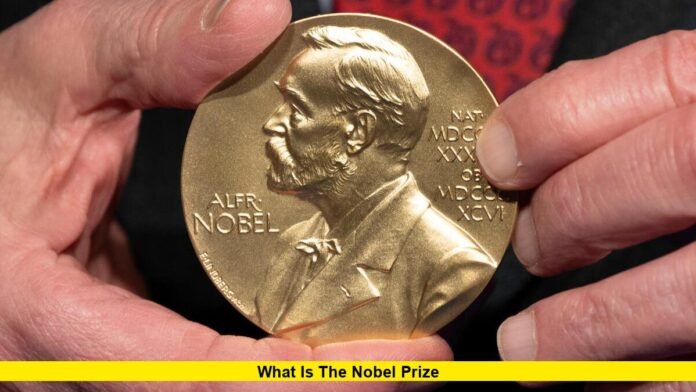

The Nobel Prize is one of the world’s most prestigious international awards, recognizing outstanding achievements that benefit humanity in science, literature, medicine, and efforts to promote peace. If you are searching for What Is the Nobel Prize, it is important to understand that the award honors discoveries, ideas, and contributions that have made a meaningful difference to human knowledge, society, and the world. Established through the will of Swedish inventor Alfred Nobel, the prizes have recognized scientists, writers, peace advocates, and other influential figures since 1901.
The Nobel Prize attracts worldwide attention every year because its recipients often influence scientific research, public policy, education, culture, and international relations. The 2026 Nobel announcements are taking place from October 5 through October 12, with winners already announced in several categories. The Nobel Peace Prize announcement on October 9 is among the major developments of this year’s awards, while the economics prize is scheduled for October 12.
What Is the Nobel Prize and Why Is It Important?
The Nobel Prize is an international award established to recognize exceptional achievements in fields that contribute to humanity’s progress. Its origins date to 1895, when Alfred Nobel signed his last will and testament and directed that most of his fortune be used to establish prizes for outstanding contributions in five areas: physics, chemistry, physiology or medicine, literature, and peace.
Nobel’s vision was to reward people whose work delivered substantial benefits to humanity. The first Nobel Prizes were awarded in 1901, five years after his death. Since then, the awards have become a global symbol of excellence, innovation, intellectual achievement, and humanitarian commitment.
Today, the Nobel Prize recognizes accomplishments ranging from discoveries about the universe and the human body to literary works that influence culture and efforts that advance peace. The award is not simply a recognition of popularity or public visibility. Recipients are selected through established nomination and evaluation procedures managed by the designated prize-awarding institutions.
The Sveriges Riksbank Prize in Economic Sciences in Memory of Alfred Nobel was established in 1968 by Sweden’s central bank. Although it is commonly called the Nobel Prize in Economics, it was not one of the five prizes specified in Alfred Nobel’s original will. It is presented alongside the other Nobel awards and follows similar principles of recognizing outstanding contributions.
Who Was Alfred Nobel, the Founder of the Nobel Prize?
Alfred Nobel was a Swedish inventor, chemist, engineer, entrepreneur, and businessman born on October 21, 1833. He became internationally known for his inventions, including dynamite, and held numerous patents during his lifetime. His scientific and commercial work generated substantial wealth, which ultimately helped establish the Nobel Prize.
Nobel had broad intellectual interests that extended beyond engineering and chemistry. He was interested in literature, philosophy, scientific progress, and questions concerning war and peace. His will, signed in Paris on November 27, 1895, directed that most of his estate be placed in a fund whose income would support annual prizes.
The original five categories reflected areas Nobel considered important enough to receive dedicated recognition. His decision created a lasting institution that would honor people for their contributions rather than their wealth, nationality, or social position.
After Nobel died on December 10, 1896, carrying out the provisions of his will required considerable work. The Nobel Foundation was established to manage the financial arrangements, while designated Swedish and Norwegian institutions were assigned responsibility for selecting laureates in their respective categories.
The first awards were presented in 1901. December 10, the anniversary of Nobel’s death, remains the traditional date for the Nobel Prize ceremonies.
What Are the Six Nobel Prize Categories?
The Nobel Prize program recognizes achievements across six categories. Five were established under Alfred Nobel’s will, while the economics prize was created later.
Nobel Prize in Physics
The Nobel Prize in Physics honors discoveries and inventions that deepen our understanding of the physical world. Recipients may investigate matter, energy, particles, space, radiation, or the fundamental laws governing the universe.
Physics laureates have contributed to technologies and scientific knowledge that influence electronics, communications, astronomy, energy research, and other fields. The prize recognizes research that has significantly advanced scientific understanding.
For 2026, Belgian-American physicist Francis Halzen received the Nobel Prize in Physics for his pioneering contributions to the IceCube Neutrino Observatory and the detection of high-energy neutrinos. This work has helped scientists investigate energetic phenomena beyond Earth using particles that travel through space and matter with very little interaction.
Nobel Prize in Chemistry
The Nobel Prize in Chemistry recognizes important discoveries and advances in chemistry. The field examines the composition, structure, properties, and transformations of matter.
Chemical research has helped improve medicines, develop new materials, explain biological processes, and advance industrial technologies. The award can recognize fundamental discoveries as well as research with substantial practical applications.
The 2026 Nobel Prize in Chemistry was awarded jointly to Henri B. Kagan of France and Kenso Soai of Japan for discoveries concerning asymmetric chemical reactions and the production of molecules with specific three-dimensional arrangements. Such research is important because molecules that appear similar can behave differently in biological systems, making molecular structure particularly relevant to pharmaceutical development.
Nobel Prize in Physiology or Medicine
The Nobel Prize in Physiology or Medicine recognizes discoveries that advance understanding of living organisms, human biology, and disease. Its recipients may uncover biological mechanisms, identify important processes in cells, or establish new ways of understanding how the body functions.
Medical and physiological research can influence future treatments, diagnostic methods, and scientific approaches to health problems. However, winning the award does not automatically mean that a discovery has already become an approved medical treatment.
The 2026 Nobel Prize in Physiology or Medicine was awarded to Karl Deisseroth of the United States, Peter Hegemann of Germany, and Georg Nagel of Germany for their contributions to the development of optogenetics. This technique allows researchers to use light to control the activity of specific cells, particularly neurons, providing valuable tools for studying the brain and nervous system.
Nobel Prize in Literature
The Nobel Prize in Literature recognizes an author whose literary work demonstrates exceptional achievement. It may honor a writer’s broader body of work rather than a single book.
Literary contributions can include novels, poetry, drama, essays, and other forms of writing. The award recognizes the ability of literature to explore human experiences, challenge assumptions, express complex ideas, and shape cultural understanding.
For 2026, the Nobel Prize in Literature was awarded to Anne Carson, a Canadian poet, essayist, and writer known for combining poetry, prose, classical literature, and experimental forms. Her work has attracted international recognition for its distinctive approach to language and literary tradition.
Nobel Peace Prize
The Nobel Peace Prize recognizes people and organizations whose work contributes to peace. Alfred Nobel’s will connected this award with efforts involving fraternity among nations, the reduction or abolition of standing armies, and the promotion of peace congresses.
Over time, the award has recognized a wide range of contributions, including conflict resolution, human rights advocacy, humanitarian work, and efforts to strengthen international cooperation.
The 2026 Nobel Peace Prize was awarded to Navi Pillay, the South African jurist and former United Nations High Commissioner for Human Rights. Her career has included work in international criminal justice, human rights, and accountability under international law.
The award has renewed attention to the relationship between human rights protections, international legal institutions, and efforts to address serious violations. It also highlights the importance of examining the official reasoning behind the committee’s decision when assessing the significance of a particular laureate’s work.
Nobel Prize in Economic Sciences
The Sveriges Riksbank Prize in Economic Sciences in Memory of Alfred Nobel recognizes outstanding contributions to economic research. It is commonly known as the Nobel Prize in Economics, although it was established separately from the five original Nobel awards.
Economic research can examine subjects such as employment, markets, poverty, financial systems, economic growth, incentives, and public policy. The prize may recognize theories or empirical research that substantially improves the understanding of how economies operate.
The 2026 economics prize is scheduled to be announced on October 12. As of October 9, the recipient has not yet been officially announced. The winner’s identity and the committee’s explanation of the award should be confirmed after the announcement.
How Are Nobel Prize Winners Selected?
The Nobel Prize selection process is designed to evaluate candidates according to the standards of each award category. The process involves eligible nominators, specialist committees, expert assessments, and a final decision by the designated awarding institution.
Nominations are generally solicited from qualified individuals and institutions, which may include university professors, researchers, previous laureates, members of academies, and other eligible experts. The requirements differ by category.
Candidates cannot nominate themselves. A nomination also does not guarantee that a candidate will receive an award, even if the person has been nominated repeatedly.
After nominations are received, the relevant committee examines the candidates and may seek expert advice. The process narrows the field and evaluates the significance of the candidates’ work before the responsible institution makes its final decision.
The institutions responsible for selecting laureates include the Royal Swedish Academy of Sciences for physics and chemistry, the Nobel Assembly at Karolinska Institutet for physiology or medicine, and the Swedish Academy for literature. The Norwegian Nobel Committee selects the Peace Prize recipient. The Royal Swedish Academy of Sciences also selects the recipient of the economics prize.
The identities of Nobel nominees generally remain confidential for 50 years. Consequently, claims about the complete list of current-year nominees cannot be independently verified through official nomination records while that confidentiality period remains in effect.
This structured system is intended to protect the integrity of the awards and ensure that decisions are based on the merits of the candidates’ achievements.
What Do Nobel Prize Winners Receive?
Nobel laureates receive more than international recognition. Each award includes a medal, an individually designed diploma, and a monetary prize.
The medal is a lasting symbol of the achievement, while the diploma is created specifically for the recipient. The monetary award provides financial recognition, although the amount can change over time.
For 2026, the reported monetary value of a full Nobel Prize is 12 million Swedish kronor (SEK). Its equivalent in U.S. dollars depends on the prevailing exchange rate, so the precise dollar value may change.
When a prize is shared, the monetary award is divided among the recipients according to the applicable rules. A prize may recognize one person, multiple individuals, or an organization, depending on the category and the decision of the awarding institution.
The Nobel Peace Prize is also presented with a medal and diploma. Its award ceremony takes place in Oslo, Norway, while the ceremonies for the other Nobel categories take place in Stockholm, Sweden.
The awards are traditionally presented on December 10, the anniversary of Alfred Nobel’s death.
Nobel Prize 2026: Latest Updates and Announced Winners
The 2026 Nobel Prize announcements are taking place between October 5 and October 12. This year’s results have attracted attention across science, literature, international law, and public affairs.
The following recipients have been announced as of October 9, 2026:
| Nobel Prize category | 2026 recipient or recipients |
|---|---|
| Physiology or Medicine | Karl Deisseroth, Peter Hegemann, and Georg Nagel |
| Physics | Francis Halzen |
| Chemistry | Henri B. Kagan and Kenso Soai |
| Literature | Anne Carson |
| Peace | Navi Pillay |
| Economic Sciences | Announcement scheduled for October 12 |
These awards recognize different forms of achievement, from advances in neuroscience and particle physics to literary innovation and international justice. Each recipient is selected by the institution responsible for the relevant category.
The economics award remains pending as of October 9. Its recipient should not be described as confirmed until the official announcement has been made.
The award ceremonies are scheduled for December 10, 2026. The Nobel Peace Prize ceremony will take place in Oslo, while the other Nobel Prize ceremonies will take place in Stockholm.
Why Does the Nobel Prize Attract Global Attention?
The Nobel Prize receives international attention because its recipients often influence how people understand important questions about science, society, culture, and peace.
Scientific discoveries recognized by the awards can reshape research and inspire new investigations. A breakthrough in physics may change scientists’ understanding of the universe, while a discovery in medicine may provide new ways to investigate biological processes or develop future treatments.
The Literature Prize brings attention to authors whose writing offers distinctive perspectives on human experience. Readers may discover unfamiliar literary traditions or revisit established questions through a writer’s work.
The Peace Prize has a different but equally significant role. It can bring international visibility to efforts involving conflict resolution, human rights, diplomacy, and humanitarian protection. Its recipients may work in politically sensitive environments where their contributions are subject to public debate.
The awards can also influence education and public discussion. Universities, researchers, journalists, students, and policymakers frequently examine Nobel-recognized work to understand its importance and broader implications.
Nevertheless, receiving a Nobel Prize does not mean that every aspect of a laureate’s career is beyond criticism. The award recognizes particular achievements or contributions, and its significance is best understood by considering the official award rationale and the evidence supporting the work.
The Historical Legacy of the Nobel Prize
Since the first awards in 1901, the Nobel Prize has developed into one of the most recognizable honors in international academic and cultural life.
Its history includes major scientific discoveries, influential literary works, and individuals and organizations associated with peacebuilding and humanitarian efforts. The recipients represent a wide range of nationalities, professional backgrounds, and intellectual traditions.
The Nobel Prize has also evolved while maintaining its original purpose. The creation of the economics prize in 1968 expanded the awards program beyond the five categories established by Alfred Nobel’s will.
The history of the prizes illustrates how recognition can encourage public interest in work that might otherwise remain within specialist communities. Research findings, literary achievements, and peace initiatives receive broader exposure when they are recognized internationally.
At the same time, the awards remain selective. Many important discoveries, writers, and humanitarian contributions never receive a Nobel Prize. The absence of an award does not necessarily indicate that a person’s work lacks value or influence.
Understanding the Nobel Prize therefore involves appreciating both its prestige and its specific purpose: recognizing exceptional contributions in designated fields rather than providing a complete ranking of human achievement.
Final Thoughts on What Is the Nobel Prize
Understanding What Is the Nobel Prize begins with Alfred Nobel’s decision to dedicate much of his fortune to recognizing achievements that benefit humanity. The resulting awards have honored scientific discoveries, medical advances, literary accomplishments, and efforts to promote peace for more than a century.
The six-category program now covers physics, chemistry, physiology or medicine, literature, peace, and economic sciences. Each category has its own selection process and recognizes a different kind of contribution, but all share an emphasis on exceptional achievement.
The 2026 announcements have highlighted advances in scientific research, literary innovation, and international justice. With the economics announcement still scheduled for October 12, this year’s Nobel season is continuing toward the traditional December ceremonies.
The Nobel Prize remains important not simply because of the recognition it brings to recipients, but because it directs public attention toward discoveries, ideas, and efforts that can deepen knowledge and improve human understanding.
What do you think makes a Nobel Prize achievement truly important? Share your thoughts in the comments and stay updated for the latest Nobel Prize 2026 announcements and ceremony news.