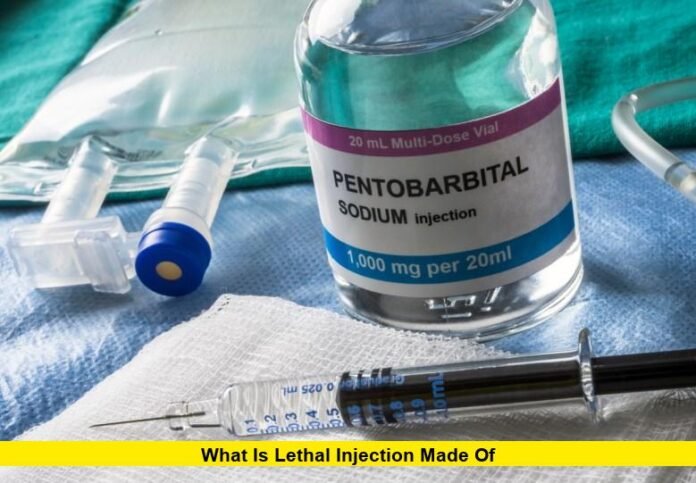

Lethal injection is not made from one universal drug or formula. In the United States, execution protocols vary by state and can involve either a single drug or combinations of several drugs. Pentobarbital is currently one of the most important drugs used in U.S. lethal-injection protocols, particularly where a single-drug method is authorized.
The latest developments in 2026 have again drawn attention to the drugs used in executions, particularly after Tennessee’s unsuccessful lethal-injection attempt involving death-row prisoner Christa Pike.
What Drugs Are Used in Lethal Injection?
The substances used depend on the jurisdiction and its approved execution protocol. Current U.S. protocols include drugs such as:
- Pentobarbital
- Midazolam
- Etomidate
- Sodium thiopental
- Pancuronium bromide
- Rocuronium bromide
- Vecuronium bromide
- Cisatracurium besylate
- Potassium chloride
- Potassium acetate
- In some jurisdictions, other sedatives or anesthetic drugs
Some states use only one drug, while others authorize two-, three-, or even four-drug procedures.
Pentobarbital Is the Main Single-Drug Lethal Injection
Pentobarbital is a barbiturate that depresses activity in the central nervous system. At sufficiently high doses, it can cause profound unconsciousness and death.
Several U.S. jurisdictions have adopted pentobarbital-only execution protocols. Tennessee’s current protocol, for example, specifies pentobarbital as the sole drug for lethal injection.
Texas also authorizes a one-drug pentobarbital protocol, while other states have similar arrangements.
The federal government reinstated a pentobarbital-based lethal-injection protocol in 2026.
How Does a Three-Drug Lethal Injection Work?
The traditional three-drug method generally uses substances intended to perform different functions.
First drug: Sedative or anesthetic
The first substance is intended to cause unconsciousness. Depending on the jurisdiction, this can include drugs such as midazolam or etomidate.
Second drug: Neuromuscular blocker
A drug such as rocuronium bromide, vecuronium bromide or pancuronium bromide may be used to cause paralysis.
Third drug: Potassium-based substance
Potassium chloride or, in some protocols, potassium acetate is intended to cause fatal cardiac disruption.
Not every state uses this approach. Some jurisdictions have moved toward single-drug protocols, while others continue to authorize combinations.
What Is Pentobarbital Made Of?
Pentobarbital is a chemical compound belonging to the barbiturate class of drugs. Pharmaceutical pentobarbital sodium injection is formulated with the active drug along with inactive ingredients used to create the injectable solution.
A commercially manufactured pentobarbital sodium injection can contain pentobarbital sodium, water for injection, propylene glycol and alcohol, with the pH adjusted using hydrochloric acid and/or sodium hydroxide.
However, the formulation of a pharmaceutical product should not automatically be assumed to be identical to the formulation or preparation used by a corrections department during an execution.
Why Do States Use Different Lethal-Injection Drugs?
There is no national lethal-injection formula because states establish their own execution procedures.
Drug availability has been a major factor. Pharmaceutical companies have placed restrictions on the use of their products in executions, making some conventional execution drugs difficult for states to obtain.
As a result, states have changed protocols, selected alternative drugs and, in some cases, adopted single-drug procedures.
Execution-related secrecy laws can also limit public information about where particular drugs came from, who supplied them and how they were prepared.
What Is Lethal Injection Made Of in Tennessee?
Tennessee currently uses a single-drug pentobarbital protocol.
The state’s lethal-injection protocol was revised following an independent review of its execution procedures. The revised system uses pentobarbital rather than the earlier three-drug approach.
That protocol became particularly important in the latest Tennessee execution controversy.
Latest Tennessee Development Involving Christa Pike
On September 30, 2026, Tennessee attempted to execute Christa Pike by lethal injection.
According to the latest reports, Pike was administered two doses of pentobarbital, but the execution did not result in her death. She remained alive and was subsequently taken to a hospital.
Tennessee Gov. Bill Lee announced a halt to the state’s remaining executions for 2026 while a third-party investigation is conducted.
The incident has generated renewed scrutiny of Tennessee’s execution protocol, including questions surrounding intravenous access, the administration of the drug and what procedures should apply if an execution does not proceed as intended.
The Tennessee Department of Correction has said its personnel followed the state’s protocol.
Does Every Lethal Injection Use Three Drugs?
No.
The belief that lethal injection always consists of three drugs is outdated.
The United States currently has both single-drug and multi-drug lethal-injection protocols.
For example, Tennessee and Texas use pentobarbital-only protocols, while Florida has continued using a three-drug procedure.
Florida’s protocol involves etomidate, rocuronium bromide and potassium acetate.
Recent Florida executions have therefore involved a substantially different drug combination from executions in states relying exclusively on pentobarbital.
Why Are Neuromuscular Blockers Used?
Neuromuscular-blocking drugs are included in some multi-drug execution protocols because they prevent voluntary muscle movement.
These drugs are not used in every lethal injection. They are associated primarily with multi-drug protocols.
Their use has also generated legal and ethical controversy because paralysis can prevent a person from communicating or visibly demonstrating distress.
This is one reason the exact structure of a lethal-injection protocol matters when assessing how an execution is conducted.
What Is Potassium Chloride Used for?
Potassium chloride is used in some three-drug execution protocols as the final drug.
The purpose is to cause a severe disruption of the heart’s electrical activity, ultimately resulting in cardiac arrest.
Some jurisdictions instead authorize potassium acetate.
Single-drug pentobarbital protocols do not require a separate potassium injection.
Is Lethal Injection the Same in Every State?
No.
The differences can be substantial.
One state may authorize pentobarbital alone, another may use a sedative followed by a paralytic and potassium-based drug, while another jurisdiction may authorize multiple alternative drug combinations.
Some states also have other execution methods available, including electrocution, nitrogen hypoxia or firing squad, depending on state law.
Therefore, the answer to what is lethal injection made of depends on the particular state and the protocol in effect at the time of execution.
Why Has Lethal Injection Become More Complicated?
Lethal injection was originally promoted as a more medically controlled alternative to older execution methods. Over time, however, states have encountered problems obtaining execution drugs and have faced legal challenges over their protocols.
Pharmaceutical companies generally do not want their medicines associated with executions, which has contributed to shortages of some drugs historically used in capital punishment.
States have consequently experimented with different drugs and combinations.
Execution procedures can also encounter technical problems involving intravenous access and drug administration.
The 2026 Tennessee incident involving Christa Pike has brought those issues back into the national spotlight.
What Is Lethal Injection Made Of in 2026?
As of the latest available information, there is no single lethal-injection formula in the United States.
The most prominent substances include:
- Pentobarbital for single-drug executions
- Midazolam as a sedative in some multi-drug protocols
- Etomidate as an anesthetic in Florida’s protocol
- Rocuronium, vecuronium and pancuronium as neuromuscular blockers
- Potassium chloride or potassium acetate as the final cardiac agent in certain multi-drug protocols
The federal government currently relies on a pentobarbital-based lethal-injection protocol, while individual states continue to maintain their own procedures.
The Bottom Line
Lethal injection is not made from one standardized substance. In the United States, the principal drug used in many current single-drug protocols is pentobarbital, while other states use combinations involving sedatives or anesthetics, neuromuscular blockers and potassium-based drugs.
The latest Tennessee developments show why the question is more complicated than simply naming a drug. The execution protocol also involves the method of administration, intravenous access, safeguards and procedures for unexpected complications.
What do you think about the latest developments surrounding lethal injection? Share your thoughts in the comments and stay tuned for further updates.