
Every year from December 26 through January 1, millions of people across the United States observe what is Kwanzaa, a cultural celebration centered on African heritage, shared values, and community strength. As Kwanzaa continues in 2025, the holiday remains an important time for reflection, unity, and purposeful celebration, bringing families and communities together during the final days of the year.
Kwanzaa is not a religious holiday. Instead, it is a cultural observance that can be celebrated alongside Christmas, Hanukkah, New Year’s, or on its own. Its focus is on honoring African roots, reinforcing community bonds, and encouraging personal and collective growth through shared principles.
The Origins of Kwanzaa
Kwanzaa was established in 1966 during a period of major social and cultural change in the United States. The goal was to create a meaningful cultural holiday that honored African traditions while addressing the needs and experiences of African Americans in modern society.
The name “Kwanzaa” is derived from a Swahili phrase meaning “first fruits,” reflecting the holiday’s inspiration from traditional African harvest celebrations. These harvest festivals emphasized gratitude, togetherness, and responsibility to the community. Kwanzaa adapted those themes into a contemporary celebration focused on cultural pride, education, and unity.
From the beginning, Kwanzaa was designed to be inclusive and educational. It encourages participants to learn about African history, honor ancestors, and strengthen relationships within families and neighborhoods.
The Seven Principles of Kwanzaa
At the heart of Kwanzaa are the Nguzo Saba, or Seven Principles. Each day of the celebration highlights one principle, guiding reflection and discussion throughout the week.
Umoja (Unity)
This principle emphasizes maintaining harmony within families, communities, and the larger society.
Kujichagulia (Self-Determination)
Self-determination encourages people to define themselves, speak for themselves, and shape their own futures.
Ujima (Collective Work and Responsibility)
This principle focuses on solving problems together and supporting one another through shared responsibility.
Ujamaa (Cooperative Economics)
Ujamaa promotes building and supporting businesses within the community to create shared prosperity.
Nia (Purpose)
Purpose encourages individuals to set goals that uplift their families and communities.
Kuumba (Creativity)
Creativity inspires people to use their talents to leave their communities stronger and more beautiful than before.
Imani (Faith)
Faith reflects belief in people, shared values, and the ongoing pursuit of justice and progress.
Together, these principles form a moral framework that extends beyond the seven days of celebration and into everyday life.
Key Symbols Used in Kwanzaa Celebrations
Kwanzaa includes several important symbols that visually represent its values and history.
The Kinara
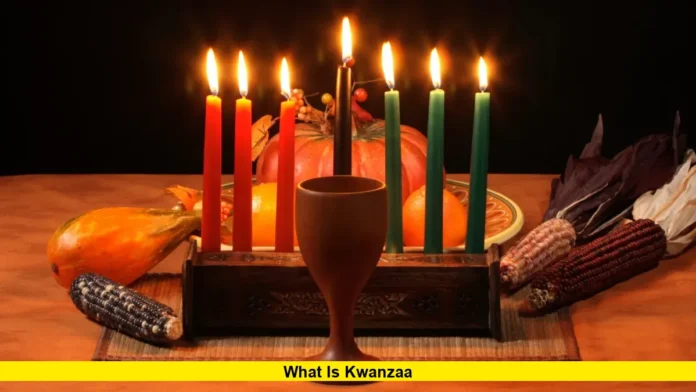
The kinara is a candleholder that holds seven candles. One black candle represents unity, three red candles symbolize struggle, and three green candles represent hope and the future.
The Candles
One candle is lit each night, starting with the black candle in the center. Each lighting corresponds to the principle of the day.
The Mkeka
A woven mat placed beneath the symbols, representing tradition and foundation.
Mazao
Crops such as fruits or vegetables symbolize the results of collective labor.
Muhindi
Ears of corn represent children and future generations.
The Unity Cup
Used to honor ancestors and express gratitude through shared reflection.
Zawadi
Gifts that emphasize education, creativity, and cultural awareness, especially for children.
How Kwanzaa Is Celebrated in the United States
Kwanzaa celebrations vary widely depending on family traditions and community involvement. Some households observe Kwanzaa quietly at home, while others participate in large public events.
Families often gather each evening to light candles, discuss the principle of the day, and reflect on how it applies to their lives. Storytelling, music, poetry, and reading are common activities.
Across the country, community centers, cultural organizations, and local groups host Kwanzaa events that include performances, educational workshops, and shared meals. These gatherings provide opportunities for people of all ages to connect, learn, and celebrate together.
Kwanzaa remains open to everyone. While it was created to honor African heritage, people of all backgrounds are welcome to participate and learn from its values.
The Karamu Feast
One of the most anticipated parts of Kwanzaa is the karamu, or community feast, typically held on December 31. This celebration brings together family, friends, and neighbors to share food inspired by African and African American culinary traditions.
The karamu often includes music, dancing, spoken word, and expressions of gratitude. It serves as a joyful conclusion to the year and a moment to reflect on shared accomplishments and hopes for the future.
Why Kwanzaa Still Matters Today
Kwanzaa continues to hold cultural importance because its principles address timeless values. Unity, responsibility, creativity, and purpose remain relevant in today’s society.
For many families, Kwanzaa provides an opportunity to slow down at the end of the year and focus on meaningful conversations rather than material gifts. It encourages intentional reflection on identity, heritage, and community connections.
As conversations around culture, inclusion, and history continue to grow, Kwanzaa offers a space for education and positive engagement that resonates across generations.
Kwanzaa and the New Year Ahead
Because Kwanzaa concludes on January 1, it naturally connects reflection with renewal. Many people use the final day to set intentions for the year ahead, guided by the Seven Principles.
This connection between past, present, and future gives Kwanzaa lasting relevance. It honors where people come from while encouraging thoughtful progress forward.
Kwanzaa remains a powerful celebration of culture, values, and togetherness—share how you observe Kwanzaa or what the holiday means to you, and stay connected for more cultural stories and insights.