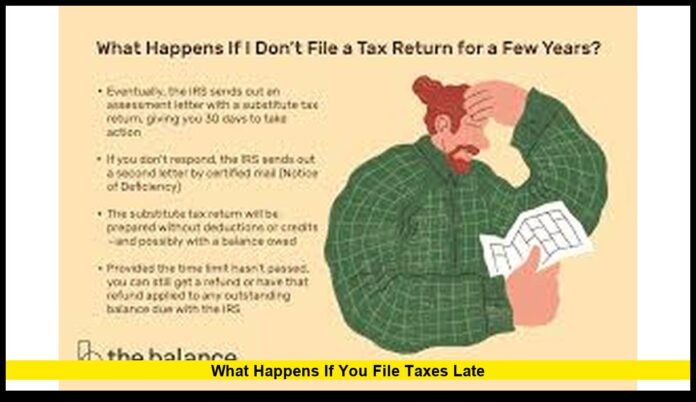

What happens if you file taxes late is a major concern for U.S. taxpayers in 2026 as the IRS continues to enforce strict filing and payment rules after the April deadline. Missing the deadline does not mean immediate legal trouble, but penalties and interest begin quickly if no action is taken.
Late Tax Filing: What It Means Right Now
If you miss the federal tax deadline, the IRS does not ignore your return. Instead, it applies penalties based on whether you filed, paid, or did neither.
Two separate penalties apply:
- Failure-to-file penalty
- Failure-to-pay penalty
These charges can stack, increasing your total tax bill over time.
Failure-to-File Penalty Explained
The failure-to-file penalty is the most severe consequence of filing late.
Here’s how it works:
- Charged at 5% of unpaid taxes per month
- Caps at 25% of the total unpaid amount
- Applies immediately after the deadline passes
Even a short delay can increase what you owe significantly. Filing as soon as possible reduces this penalty.
Failure-to-Pay Penalty and Interest
If you file your return but cannot pay in full, the IRS still adds penalties.
- 0.5% of unpaid taxes per month
- May increase over time if the balance remains unpaid
- Maximum cap of 25%
Interest also builds daily on unpaid taxes. This continues until the full balance is cleared.
If You’re Expecting a Refund
Filing late is less risky if you are owed money.
- No penalty for late filing
- No interest charges
- Refund remains available for up to three years
However, waiting delays your refund. After three years, unclaimed refunds are forfeited.
Extensions Can Prevent Major Penalties
An extension gives you more time to file, not more time to pay.
For 2026:
- File an extension by April 15, 2026
- New filing deadline becomes October 15, 2026
If you estimate and pay your taxes by April, you can avoid the failure-to-file penalty entirely.
What Happens If You File Taxes Late Without an Extension
Missing both the deadline and the extension triggers immediate consequences.
You may face:
- Rapidly increasing penalties
- IRS notices and collection letters
- Possible enforcement actions over time
If ignored long enough, the IRS can pursue collection methods such as wage garnishment or bank levies.
IRS Payment Plans for Late Filers
The IRS offers structured options to help taxpayers catch up.
Short-Term Plan
- Up to 180 days to pay
- No setup fee
- Penalties and interest continue
Installment Agreement
- Monthly payments over time
- Helps avoid aggressive collections
- Setup fees may apply
Offer in Compromise
- Settle for less than owed in rare cases
- Requires proof of financial hardship
Setting up a plan early can prevent escalation.
Penalty Relief Options You Should Know
Some taxpayers may qualify for relief.
First-Time Penalty Abatement
You may qualify if:
- You have a clean filing history
- You filed all required returns
- You arranged to pay your taxes
Reasonable Cause Relief
Accepted reasons may include:
- Medical emergencies
- Natural disasters
- Serious financial hardship
You must request relief; it is not automatic.
Financial Impact Beyond IRS Penalties
Late filing can affect more than just your tax bill.
- Delays refunds many households depend on
- Can complicate loan or mortgage approvals
- May increase scrutiny on future returns
While tax debt itself does not appear on credit reports, unresolved issues can still affect financial stability.
Common Errors Late Filers Make
Avoid these mistakes to limit damage:
- Ignoring IRS communication
- Filing too late without explanation
- Paying nothing at all
- Missing extension opportunities
- Underestimating total tax owed
Even partial payments reduce penalties and interest.
What to Do Immediately If You Filed Late
Taking action quickly makes a big difference.
- File your return as soon as possible
- Pay as much as you can upfront
- Set up a payment plan if needed
- Check if you qualify for penalty relief
Speed matters. The sooner you act, the less you pay overall.
Key Takeaways for 2026
- Filing late leads to higher penalties than paying late
- Refunds are safe for three years but delayed
- Extensions protect you from filing penalties
- Payment plans help manage tax debt
- Acting early reduces financial impact
Understanding what happens if you file taxes late can help you avoid costly mistakes and stay on track financially.
Have you ever faced a late filing situation, or are you dealing with one now? Share your thoughts and stay informed.