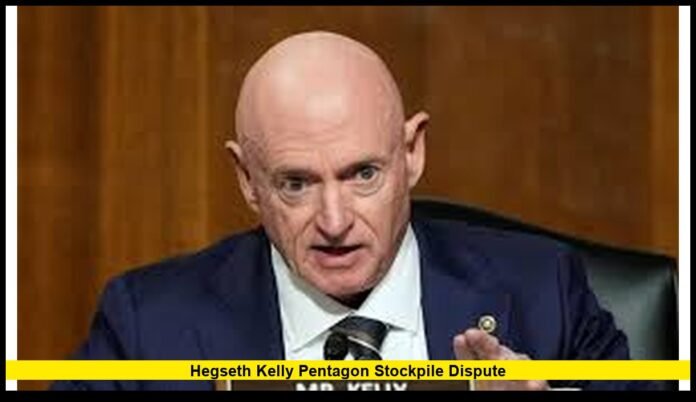

Hegseth Kelly Pentagon stockpile dispute tensions continued to dominate political and military discussions in Washington on May 11, 2026, after a public clash between Defense Secretary Pete Hegseth and Senator Mark Kelly over U.S. weapons inventory disclosures. The controversy has grown into a major national security story, raising questions about classified briefings, military readiness, congressional oversight, and the balance between transparency and operational secrecy.
The dispute intensified after Kelly publicly discussed American missile stockpiles during a television appearance following recent military operations tied to the Iran conflict. Hegseth accused the Arizona senator of revealing information obtained during classified Pentagon briefings, while Kelly rejected the accusation and insisted that his comments reflected information already discussed publicly during congressional hearings.
The political fallout spread quickly across Capitol Hill and inside the Pentagon, where tensions between the administration and Democratic lawmakers have already been running high for months.
The Interview That Triggered the Latest Pentagon Clash
The latest round of conflict began after Senator Mark Kelly appeared on CBS’s “Face the Nation” and addressed concerns about the condition of U.S. military inventories after the Iran war earlier this year.
During the interview, Kelly discussed the heavy use of several advanced American missile systems. He pointed to growing concerns about replenishment timelines and warned that rebuilding certain stockpiles may take years because of manufacturing limitations.
Kelly referenced multiple defense systems, including:
- Patriot missile interceptors
- Tomahawk cruise missiles
- THAAD missile defense systems
- SM-3 interceptors
- Army Tactical Missile Systems
The senator argued that maintaining adequate reserves remains critical because the United States must stay prepared for future military confrontations involving larger global threats.
Kelly also stressed that Congress needs a clear understanding of how recent conflicts have affected American military readiness.
Those comments immediately attracted attention inside the administration.
Within hours, Pete Hegseth publicly criticized Kelly and accused him of discussing information tied to classified Pentagon briefings. The defense secretary suggested that Pentagon lawyers would examine whether the senator improperly disclosed sensitive national security information.
That accusation quickly transformed a policy disagreement into a broader political and legal confrontation.
Pete Hegseth’s Strong Public Response
Pete Hegseth did not limit his response to private Pentagon discussions.
Instead, the defense secretary took the issue directly into public view through television appearances and social media posts. Hegseth accused Kelly of irresponsibly discussing military vulnerabilities at a time when global tensions remain elevated.
According to Hegseth, even broad discussions involving weapons inventories can create risks because foreign governments monitor American political debates closely. Supporters of the defense secretary argued that adversaries could use information about depleted stockpiles to calculate U.S. military limits during future crises.
Hegseth framed the issue as one involving operational security rather than partisan politics.
The Pentagon has not released detailed information about any formal legal review connected to Kelly’s comments. Officials also have not confirmed whether the matter has developed into a full investigation.
Still, Hegseth’s statements significantly escalated the dispute and pushed the story into national headlines.
The controversy also added another chapter to the increasingly personal feud between the Pentagon chief and the Arizona senator.
Mark Kelly Rejects Claims of Improper Disclosure
Mark Kelly strongly denied any wrongdoing after Hegseth’s criticism became public.
The senator stated that he did not reveal classified material and emphasized that many of the issues he discussed had already surfaced during open congressional hearings and public defense discussions.
Kelly argued that Americans deserve honest conversations about military readiness, especially after major overseas conflicts involving significant weapons usage.
The former Navy pilot and NASA astronaut also accused the administration of attempting to silence political criticism by threatening legal consequences against lawmakers.
Kelly maintained that his remarks focused on general readiness concerns rather than operational secrets.
He further argued that debates over defense production capacity have become increasingly common in Washington because recent conflicts have strained military supply chains across multiple sectors.
The senator’s allies quickly rallied behind him and accused the administration of overreacting for political reasons.
Military Stockpile Concerns Have Been Growing for Months
Although the latest dispute centers on one interview, concerns about U.S. weapons stockpiles have been building for a long time.
Military analysts and defense officials have repeatedly discussed the strain placed on missile inventories during recent global conflicts. Precision-guided weapons and advanced interceptor systems require sophisticated manufacturing processes that cannot easily scale up overnight.
Several systems used heavily during recent operations have long production timelines. Some components rely on specialized factories, limited suppliers, and complex testing requirements before deployment.
Defense experts have highlighted concerns involving:
- Missile interceptor shortages
- Slow replenishment timelines
- Supply chain bottlenecks
- Industrial production limits
- Rising international demand for defense systems
The Pentagon has increasingly focused on strengthening domestic manufacturing capacity as global military tensions continue to rise.
Many lawmakers from both parties have also pushed for faster weapons production and larger reserve inventories.
Kelly’s comments brought those concerns into public discussion again, while Hegseth argued that openly discussing stockpile levels could create national security risks.
That disagreement reflects a much larger debate unfolding inside Washington.
The Feud Between Hegseth and Kelly Started Earlier
The current stockpile dispute is only the latest conflict between the two men.
Pete Hegseth and Mark Kelly have been locked in political and legal battles since late 2025. Their relationship sharply deteriorated after Kelly and several Democratic lawmakers released a controversial video aimed at military personnel.
In the video, lawmakers reminded service members that they are required to refuse unlawful orders under the Constitution and military law.
The administration reacted aggressively.
Trump allies accused the lawmakers of encouraging resistance inside the armed forces. Hegseth later pursued actions against Kelly tied to the senator’s status as a retired Navy officer.
The Pentagon’s response reportedly included:
| Pentagon Action | Outcome |
|---|---|
| Formal letter of censure | Issued |
| Military rank review | Legally challenged |
| Pension-related review | Temporarily blocked |
| Expanded Pentagon inquiry | Faced court resistance |
Kelly argued that the administration attempted to punish him for protected political speech. Earlier this year, he filed a lawsuit against the Pentagon claiming violations of his constitutional rights.
A federal judge later blocked parts of the Pentagon’s actions while the legal battle continued.
The case quickly became one of the most closely watched constitutional disputes involving retired military officers serving in Congress.
Federal Court Battles Continue in Washington
The legal fight between Kelly and the Pentagon remains active in federal court.
Just days before the latest stockpile controversy erupted, a federal appeals court heard arguments tied to Kelly’s lawsuit against Hegseth and the Defense Department.
The central legal issue focuses on whether retired military officers serving as elected officials remain subject to certain military disciplinary rules when speaking publicly about political matters.
Kelly’s legal team argues that members of Congress retain full First Amendment protections even if they previously served in the armed forces.
Pentagon lawyers have defended the department’s authority to enforce military standards involving retired officers under specific circumstances.
Legal experts believe the case could shape future boundaries involving political speech, military status, and constitutional protections.
The latest stockpile dispute may now further complicate the court battle because it introduces additional accusations involving classified information and national security.
Congressional Democrats Defend Kelly
Democratic lawmakers quickly defended Mark Kelly after Hegseth’s accusations became public.
Several senators argued that Kelly merely discussed issues already known to lawmakers and defense observers. Others accused the administration of using intimidation tactics against political opponents.
Some Democrats warned that threatening lawmakers over public policy discussions could damage congressional oversight responsibilities.
Members of Congress regularly receive classified briefings related to military operations, intelligence matters, and national security planning. Lawmakers from both parties often discuss broad policy concerns publicly afterward without revealing operational secrets.
Kelly’s supporters argue that his comments fell within that tradition.
The dispute has also increased concerns among civil liberties advocates who believe the administration is pushing aggressive interpretations of executive authority inside the Pentagon.
Read More – Pete Hegseth Impeachment Articles
Republicans Rally Behind Hegseth
Republicans largely sided with Hegseth during the controversy.
Conservative lawmakers argued that discussions involving missile shortages and military inventories can create strategic risks even when exact classified numbers are not disclosed publicly.
Some Republicans also accused Kelly of politicizing national security issues during a period of heightened global instability.
Supporters of Hegseth praised the defense secretary for aggressively defending operational secrecy and military discipline.
The administration’s allies have repeatedly argued that public confidence in the military depends on strong leadership and tight control over sensitive information.
For many conservatives, the dispute reflects broader frustrations over what they view as increasing political activism among some former military officials serving in elected office.
The Pentagon Faces Broader Questions About Transparency
The conflict has renewed wider debates about Pentagon transparency and government accountability.
Many Americans support strong protections for classified military information. At the same time, lawmakers and voters often demand greater transparency involving defense policy, military spending, and wartime planning.
Those competing priorities can create political tensions during periods of conflict.
Recent military operations in the Middle East have intensified public interest in weapons usage rates, defense spending, and long-term military readiness.
Congressional hearings over the past year have frequently focused on supply chain weaknesses and the pace of missile production.
The Pentagon has acknowledged that rebuilding certain inventories may take years because of industrial limitations.
That reality has increased pressure on defense contractors and federal planners to accelerate production capabilities.
Kelly’s comments reflected those broader concerns, while Hegseth focused on the security implications of public discussion.
Pete Hegseth’s Pentagon Leadership Remains Divisive
Pete Hegseth has remained one of the Trump administration’s most controversial cabinet officials since taking office in 2025.
Supporters view him as a strong reformer determined to reshape the Pentagon and restore what they describe as military focus and discipline.
Critics argue that Hegseth has politicized the Defense Department and aggressively targeted opponents inside and outside the military establishment.
Several controversies have surrounded the Pentagon during his tenure, including:
- Disputes involving senior military leadership
- Media access restrictions
- Personnel removals
- Cultural policy changes
- Public confrontations with lawmakers
Despite those controversies, Hegseth continues to maintain strong support among conservative voters and many administration allies.
The latest dispute with Kelly has once again placed him at the center of a major national political battle.
Mark Kelly’s Military Background Shapes the Debate
Mark Kelly’s military credentials have played a major role in the public reaction to the controversy.
Before entering politics, Kelly served as a Navy combat pilot and later became a NASA astronaut. His national security background gives him credibility among many voters on defense issues.
Kelly has consistently focused on military readiness, veterans’ policy, and constitutional oversight during his Senate career.
His supporters argue that his military experience makes him uniquely qualified to discuss defense planning and operational preparedness.
Critics within the administration, however, believe Kelly has increasingly used his military background to challenge Pentagon leadership publicly.
That disagreement now sits at the center of one of Washington’s most heated political fights.
What Happens Next in the Dispute
Several major questions remain unanswered as the controversy continues to grow.
The Pentagon has not announced whether its legal review will result in formal action against Kelly. Congressional Democrats are expected to continue defending the senator, while Republicans may push for tighter controls involving classified briefings.
The federal appeals case involving Kelly’s earlier lawsuit against the Pentagon also remains unresolved.
Meanwhile, military readiness concerns tied to missile stockpiles are expected to remain central topics in upcoming congressional defense hearings.
The dispute could also influence future debates over how lawmakers discuss national security matters publicly after attending classified briefings.
For now, the Hegseth Kelly Pentagon stockpile dispute stands as one of the most politically charged defense controversies of 2026. The battle has expanded far beyond one television interview and now touches on constitutional rights, Pentagon authority, military transparency, and the future relationship between Congress and the Defense Department.
The growing standoff between Pete Hegseth and Mark Kelly continues to reshape the national conversation around military secrecy and government accountability. Readers can expect this Washington battle to remain in focus in the weeks ahead.