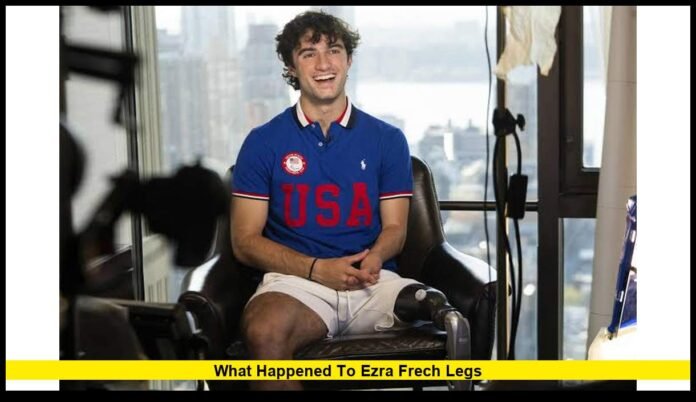

The question what happened to ezra frech leg has sparked curiosity among sports fans who want to understand the personal story behind one of America’s most successful Paralympic athletes. Ezra Frech was born with congenital limb differences affecting his left leg and left hand, and he underwent surgery during early childhood to help improve his mobility. Today, he is recognized for his achievements in track and field, including two gold medals at the Paris 2024 Paralympic Games. His journey from childhood medical challenges to international athletic success has made him an influential figure in adaptive sports and disability awareness.
Frech’s story is about more than the circumstances of his birth or the prosthetic leg he uses to compete. It also reflects years of training, family support, access to specialized equipment, and a determination to pursue opportunities in competitive sports. His growing public profile has introduced his experiences to audiences far beyond the Paralympic community.
What Happened to Ezra Frech’s Leg?
Ezra Frech was born with a congenital limb difference affecting the development of his left leg. He was missing his left fibula, one of the two bones in the lower leg, and did not have a normally developed left knee.
These differences affected how his leg could function and presented challenges for movement as he grew. Rather than resulting from an accident or sports injury, his condition was present at birth.
Frech underwent an amputation during early childhood as part of a treatment approach intended to improve his mobility and make prosthetic use more practical. The procedure allowed him to use a prosthetic leg suited to his physical needs.
His experience illustrates an important distinction: not every amputation occurs because of an accident, an infection, or an illness. Some children with congenital limb differences undergo planned procedures to help them move more comfortably and use assistive equipment effectively.
Frech began adapting to prosthetic technology at a very young age. He received his first prosthetic leg during infancy and eventually progressed to equipment designed specifically for running.
These early experiences helped establish the foundation for his future in athletics. As he grew older, he learned how to coordinate his movements with specialized equipment and develop the skills needed to participate in increasingly competitive sports.
Why Did Ezra Frech Need a Leg Amputation?
Frech’s amputation was connected to the congenital differences affecting his left leg. Because his knee and fibula had not developed normally, his medical care involved finding a practical way to support movement and long-term prosthetic use.
For children born with significant limb differences, treatment decisions are individualized. Medical teams consider anatomy, comfort, mobility, development, and the potential benefits of different interventions.
In some situations, an amputation can provide a more functional foundation for a prosthesis than attempting to preserve a limb that cannot support the person’s mobility needs. However, the appropriate treatment depends on the specific condition and should never be generalized to every child with a limb difference.
For Frech, prosthetic technology became an important part of his daily life and sporting development. The equipment allowed him to explore physical activities and gradually develop the abilities needed for competitive athletics.
His childhood surgery did not determine the limits of his future. Instead, it became one part of a much larger story involving rehabilitation, athletic development, and the pursuit of ambitious goals.
What Condition Was Ezra Frech Born With?
Frech was born with congenital limb differences affecting his left leg and left hand. Congenital means that a condition is present at birth.
His left leg lacked a normally developed knee and fibula, while his left hand originally had only one finger. These differences required medical attention and adaptations during his childhood.
It is important to distinguish the physical characteristics of his condition from a specific medical diagnosis. Unless a particular syndrome has been reliably confirmed, assigning him a named disorder would be inappropriate.
Congenital limb differences vary widely. Some involve missing bones, while others affect the formation of joints, fingers, toes, or other parts of the limbs. Treatment depends on each person’s anatomy and functional needs.
Frech’s experience demonstrates how early medical intervention and access to appropriate equipment can support independence. It also highlights the importance of recognizing people with disabilities as individuals whose abilities, interests, and ambitions extend beyond their medical histories.
What Happened to Ezra Frech’s Hand?
Although questions about Frech’s leg receive considerable attention, his left hand is another important part of his medical history.
He was born with only one finger on his left hand. During childhood, surgeons performed a toe-to-hand transfer, using the big toe from his amputated foot to help reconstruct his hand.
This type of reconstructive procedure can provide an additional digit and potentially improve grasping ability. The outcome depends on the patient’s anatomy, the surgical technique, and the rehabilitation process.
For Frech, the procedure was part of the effort to improve function in a hand that had developed differently from a typical hand.
His experiences with both his leg and hand illustrate how congenital limb differences can affect several aspects of everyday life. Activities that many people take for granted, such as holding objects, running, or maintaining balance, may require different techniques or specialized equipment.
Frech’s athletic accomplishments have helped shift attention away from assumptions about what people with limb differences can achieve. His story emphasizes adaptation, access to opportunities, and the importance of treating disability as one aspect of a person’s life rather than their entire identity.
How Ezra Frech Learned to Run With a Prosthetic Leg
Frech began using a running blade at approximately four years old. A running blade is a specialized prosthetic device designed to support running rather than simply replace the everyday functions of a leg.
Many running blades have a curved, spring-like design that stores and releases energy during movement. Athletes must learn to coordinate their stride, posture, balance, and timing while using the equipment.
Learning to run with a prosthesis requires practice. The equipment must fit appropriately, and athletes need training that reflects their individual abilities and sporting goals.
Frech developed these skills over many years. During childhood, he participated in several sports, including basketball, soccer, baseball, flag football, and karate.
Basketball was among his early sporting interests. Playing alongside children without disabilities gave him opportunities to develop competitive instincts and adapt his movements in different environments.
As his athletic interests developed, he increasingly focused on track and field. Sprinting and high jumping require different forms of preparation, making strength, speed, coordination, and technique essential to his progress.
His development demonstrates that prosthetic equipment is not a substitute for training. Instead, it is one component of a broader process that includes physical conditioning, technical instruction, equipment adjustments, and consistent practice.
Ezra Frech’s Road to Paralympic Success
Frech’s journey to the top of international athletics involved years of competition and development. His performances have established him as a leading American athlete in Para track and field.
His Paralympic Debut in Tokyo
Frech competed at the Tokyo 2020 Paralympic Games, which were held in 2021 following a pandemic-related postponement.
He entered the men’s high jump T63 and long jump T63 events, gaining valuable experience against athletes from around the world.
Although he did not win a medal at those Games, the experience provided an important foundation for his future. Competing at the Paralympic level requires athletes to manage pressure, prepare for international conditions, and perform against highly experienced opponents.
Frech continued working toward his goals after Tokyo, using the experience as motivation for future competitions.
Two Gold Medals at the Paris 2024 Paralympics
The Paris 2024 Paralympic Games represented a defining moment in Frech’s career. He won two gold medals for Team USA.
His victories came in the men’s 100-meter T63 and men’s high jump T63 events.
The T63 classification includes eligible athletes with certain lower-limb impairments. Paralympic classifications are designed to organize competition among athletes with qualifying impairments and help ensure meaningful sporting contests.
Winning gold in both sprinting and high jumping demonstrated Frech’s versatility. The 100-meter sprint demands acceleration, speed, and efficient movement, while high jumping requires explosive power, coordination, and precise technique.
His performances also brought greater visibility to athletes who use prosthetic limbs and compete at the highest levels of international sport.
The double victory established Frech as a Paralympic champion and marked a major milestone following his earlier experience in Tokyo.
World Championship Achievements
Frech has also achieved success at the World Para Athletics Championships. He won the men’s T63 high jump world title in 2023 and earned a silver medal in the same event at the 2025 championships.
These results demonstrate that his athletic accomplishments extend beyond one major competition.
World championships provide another opportunity for elite athletes to test their abilities against international opponents. Success at these events requires consistent preparation, technical development, and the ability to perform under pressure.
For Frech, his championship record reinforces his standing as one of the prominent athletes in his classification.
What Happened to Ezra Frech Leg: Did an Accident Cause His Amputation?
Despite public curiosity about his prosthetic leg, Frech’s amputation was not caused by a documented accident.
His condition was congenital, meaning the limb differences were present from birth. His childhood surgery was associated with the development of his left leg and the goal of supporting effective prosthetic use.
This distinction matters because amputations can occur for many different reasons, including traumatic injuries, serious medical conditions, and congenital limb differences.
Frech’s experience belongs to the congenital category. There is no basis for attributing his amputation to a later sporting injury or a sudden accident.
Understanding this part of his story provides a clearer picture of his childhood and the medical decisions that helped shape his athletic journey.
His subsequent success also demonstrates that an amputation does not automatically prevent someone from participating in demanding physical activities. Individual outcomes depend on many factors, including health, training, equipment, support, and personal goals.
Ezra Frech’s Appearance on Dancing With the Stars
Frech expanded his public profile in 2026 through his participation in Season 35 of ABC’s Dancing With the Stars. He competed alongside professional dancer Daniella Karagach.
The television appearance introduced him to audiences who might not regularly follow Paralympic athletics. It also gave him an opportunity to explore a different type of physical performance.
Competitive dancing requires coordination, timing, balance, rhythm, and the ability to work closely with a partner. These demands differ from those involved in sprinting or jumping and can require adjustments for dancers who use prosthetic limbs.
Frech’s participation highlighted the role of accessibility and creativity in mainstream entertainment. It also allowed viewers to see him in a setting outside the running track.
His appearance reflects a broader effort to encourage people to look beyond physical differences and recognize individual talent, personality, and ambition.
For Frech, public visibility also provides opportunities to discuss disability inclusion and encourage young people to pursue their interests.
How Ezra Frech Inspires People With Disabilities
Frech’s influence extends beyond his medals. His experiences have helped him connect with young people and families who may be navigating disability, adaptive equipment, or barriers to participating in sports.
Growing up with visible limb differences can involve practical and social challenges. Children may encounter unwanted attention, insensitive comments, or environments that have not been designed with their needs in mind.
Frech’s story highlights the value of supportive families, inclusive sports programs, accessible facilities, and coaches who understand adaptive athletics.
His achievements challenge the assumption that people with disabilities should have limited sporting ambitions. They also show why access to equipment and professional coaching matters.
Importantly, his story does not suggest that every child with a disability must become a champion to lead a fulfilling life. Instead, it demonstrates the importance of allowing individuals to explore their interests and define success on their own terms.
What Is Next for Ezra Frech?
Following his achievements at the Paris Paralympics and his continued involvement in public life, the Los Angeles 2028 Paralympic Games represent a major future milestone.
As a Los Angeles native, Frech has a particularly meaningful connection to the prospect of competing at a Paralympic Games hosted in his hometown.
Preparing for another Paralympic cycle requires sustained training, competition experience, physical conditioning, and careful attention to equipment and technique.
His career also continues to provide opportunities to promote adaptive sports and disability awareness. Through athletics and public appearances, he can help encourage broader participation and challenge outdated assumptions about disability.
While future competitive results cannot be guaranteed, his achievements to date have already secured his place among the notable figures in American Paralympic sport.
Conclusion
Ezra Frech was born with congenital limb differences affecting his left leg and left hand. His left leg was amputated during early childhood to support mobility and prosthetic use, and he learned to use specialized equipment from a young age.
Over time, he transformed his interest in sports into an elite athletic career, winning two gold medals at the Paris 2024 Paralympic Games and earning recognition at world championships. His appearance on Dancing With the Stars has further introduced his story to a wider audience.
Frech’s journey demonstrates the value of adaptive equipment, consistent training, supportive communities, and opportunities for people with disabilities to participate in sports and public life. His accomplishments continue to inspire young athletes and promote a more inclusive understanding of athletic potential.
What stands out most about Ezra Frech’s journey? Share your thoughts in the comments and follow the latest updates on his athletic career and road to Los Angeles 2028.