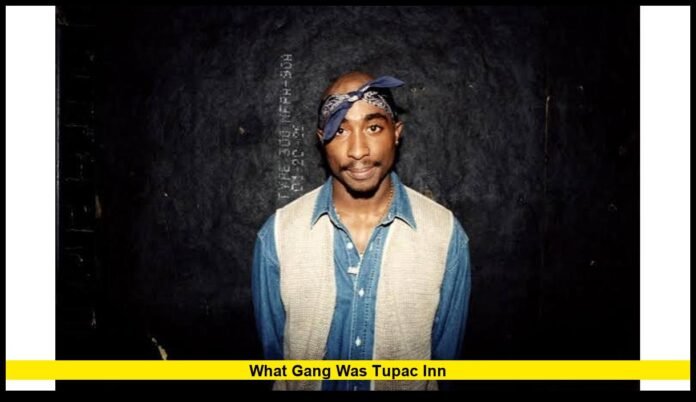

When people ask what gang was Tupac in, the answer requires more context than simply calling him a Blood or a Crip. Tupac Shakur became closely associated with the Death Row Records circle and the Compton-based Mob Piru faction during the final year of his life, while his connection to organized street-gang membership has remained more complicated than his public image sometimes suggests. His relationships with Death Row figures became particularly important in the events surrounding his fatal shooting in Las Vegas in 1996.
Key Points Summary
╔════════════════════════════════════════════════════════════════════╗
║ – Tupac Shakur became closely associated with Death Row Records and its Mob Piru-connected circle. ║
║ – His public image was strongly influenced by the street culture surrounding Death Row during the final period of his life. ║
║ – Tupac’s conflict with members of the South Side Compton Crips became an important part of the events leading to his murder. ║
║ – The September 1996 shooting followed a confrontation involving Tupac’s entourage and Orlando “Baby Lane” Anderson. ║
║ – In August 2026, Duane “Keffe D” Davis was convicted of first-degree murder for orchestrating Tupac’s killing. ║
╚════════════════════════════════════════════════════════════════════╝
Tupac’s Connection to the Los Angeles Gang Scene
Tupac was not born into the Los Angeles gang environment that later became associated with his name. His early life was shaped by family, politics, music and frequent moves rather than by a lifelong identity as a Los Angeles street-gang member.
His mother, Afeni Shakur, was involved in the Black Panther movement, and Tupac grew up around political discussions involving racial inequality, poverty, police conduct and social justice. Those experiences eventually became major themes in his music.
Before becoming one of hip-hop’s biggest stars, Tupac spent important parts of his youth in Baltimore and later Northern California. His early professional career developed through music rather than through street-gang activity.
That changed significantly after he became involved with Death Row Records.
How Death Row Changed Tupac’s Image
Tupac joined Death Row Records in 1995 after serving time in prison. The move transformed both his career and his public identity.
Death Row was already one of the most powerful labels in hip-hop. Founded by Marion “Suge” Knight and Dr. Dre, the company had built a reputation through artists such as Dr. Dre and Snoop Dogg before Tupac became its dominant star.
The label was also closely associated with Compton street culture. Knight had connections to the Mob Piru community, and people with Piru affiliations were part of the broader Death Row environment.
Once Tupac joined the company, he increasingly surrounded himself with Death Row personnel and individuals connected to that world.
His music and public behavior also became more aggressive. He adopted a tougher image and became increasingly involved in confrontations connected to the growing rivalry between Death Row and its enemies.
Was Tupac a Blood?
Tupac is frequently described as being associated with the Bloods, particularly the Mob Piru faction.
However, there is an important distinction between gang affiliation and formal gang membership.
Death Row’s connections to Mob Piru were well documented, and Tupac became closely associated with that network after joining the label. That association led many people to identify him with the Bloods.
But Tupac’s situation was different from that of someone who had spent years as a neighborhood street-gang member.
He was primarily a recording artist and entertainer who became deeply embedded in a record-label environment that included people with established gang affiliations.
That distinction matters because the public discussion often reduces a complicated network of relationships into a simple label.
What Was Mob Piru?
Mob Piru is associated with the broader Bloods network in Compton.
Piru groups developed in the Los Angeles area and became historically associated with the Bloods alliance. Different Piru sets maintained their own identities and neighborhood affiliations.
Mob Piru became especially relevant to hip-hop history because of its connections to Death Row Records.
Several people surrounding Death Row had relationships with the group, and those connections contributed to the perception that Death Row operated at the intersection of the music business and Los Angeles street culture.
For Tupac, that environment became increasingly important during the final year of his life.
Tupac’s “MOB” Identity
Another reason Tupac’s gang affiliation remains a subject of debate is his use of the word “MOB.”
Tupac famously had “MOB” tattooed on his body, and the term has been interpreted in different ways.
Some people have connected it directly to the Mob Piru identity. Others have pointed to Tupac’s own use of “MOB” as meaning “Money Over Bitches.”
The tattoo and his association with Death Row helped reinforce his connection to the street-oriented culture surrounding the label.
Still, a tattoo alone does not prove formal membership in a particular street organization. Tupac’s identity was influenced by music, personal relationships, business alliances and the culture surrounding him.
The Death Row and South Side Compton Crips Rivalry
The most important gang-related conflict in Tupac’s final days involved people connected with Death Row’s Mob Piru circle and the South Side Compton Crips.
These groups had longstanding tensions in Compton.
By the mid-1990s, those neighborhood rivalries had become intertwined with the rapidly expanding hip-hop industry.
Death Row represented the dominant West Coast rap establishment, while Bad Boy Records in New York became closely associated with artists such as The Notorious B.I.G. and Sean “Puffy” Combs.
The resulting East Coast-West Coast feud was often portrayed as a battle between music scenes. In reality, personal disputes and street affiliations sometimes overlapped with the record-business rivalry.
Tupac became one of the most visible figures caught in the middle.
The Fight at the MGM Grand
The events of September 7, 1996, became critical to the later investigation.
Tupac was in Las Vegas with Suge Knight and a Death Row entourage to watch Mike Tyson fight Bruce Seldon at the MGM Grand.
After the boxing match, Tupac and members of his group encountered Orlando “Baby Lane” Anderson.
Anderson was associated with the South Side Compton Crips.
A confrontation erupted inside the casino. Tupac and members of the Death Row group attacked Anderson before the group left the property.
Investigators later considered the incident a major turning point in the chain of events leading to Tupac’s shooting.
The confrontation was especially significant because it involved people associated with rival Compton street organizations.
The Fatal Las Vegas Shooting
Later that night, Tupac and Suge Knight were traveling through Las Vegas in Knight’s BMW.
A white Cadillac pulled alongside the vehicle at a traffic light.
Gunfire erupted from the Cadillac, striking Tupac several times. Knight was also injured.
Tupac was rushed to the hospital and remained in critical condition.
Despite medical treatment, he died six days later on September 13, 1996. He was only 25 years old.
His death shocked the music industry and became one of the most enduring mysteries in modern popular culture.
Why Orlando Anderson Became a Major Suspect
Orlando Anderson quickly became one of the central names in the investigation.
The reason was straightforward: he had been involved in the physical confrontation with Tupac and his entourage only hours before the shooting.
Anderson was also connected to the South Side Compton Crips, making the incident particularly significant within the broader gang rivalry.
However, Anderson denied responsibility for Tupac’s murder and was never convicted or charged with killing the rapper.
Anderson died in an unrelated shooting in Compton in 1998.
His death meant that one of the people long associated with the suspected retaliation was no longer available to investigators or prosecutors.
What Gang Was Tupac In During His Final Years?
The most accurate answer is that Tupac became strongly associated with the Mob Piru side of the Bloods-associated street culture surrounding Death Row Records.
However, saying simply that Tupac was a Blood can leave out important details.
He did not spend his entire life as a street-gang member, nor was his career built around gang membership. His connection became much stronger after he entered the Death Row environment.
That distinction explains why different accounts sometimes describe his affiliation differently.
Tupac’s relationship with Mob Piru was primarily connected to the people he surrounded himself with, Death Row’s organizational culture and the increasingly confrontational environment surrounding the label.
How Tupac’s Gang Image Influenced His Music
Tupac’s music during the Death Row period reflected his changing environment.
Songs released during this era were often more aggressive than some of his earlier material. He openly addressed rival artists, enemies and perceived threats.
His music also incorporated themes of retaliation, loyalty and survival.
Yet his catalog cannot be described as purely gang-oriented.
Tupac continued writing about poverty, racism, family relationships, police brutality, women, loneliness and social inequality.
This combination helped make him different from artists who were marketed primarily through gangsta-rap imagery.
His contradictions were part of his appeal.
He could present himself as a dangerous and confrontational figure in one song while delivering an emotionally vulnerable message in another.
The 2026 Tupac Murder Verdict
The long-running investigation into Tupac’s death reached a historic milestone in August 2026.
Duane “Keffe D” Davis, a former South Side Compton Crips leader, was convicted in Las Vegas of first-degree murder in connection with Tupac’s killing.
Prosecutors argued that Davis helped orchestrate the shooting in retaliation for the confrontation involving his nephew, Orlando Anderson.
Davis was not accused of personally firing the shots. Prosecutors instead argued that he participated in organizing the attack and provided the weapon used by another person in the vehicle.
The conviction represents the first successful prosecution in the nearly three-decade-old murder case.
Davis faces the possibility of life in prison, and sentencing is scheduled for October 2026. His defense has indicated that an appeal is expected.
Why the Davis Conviction Matters
The conviction has renewed attention on the street-gang rivalries that surrounded Tupac during his final days.
For decades, many theories about the murder circulated among fans, journalists and investigators.
Some focused on the East Coast-West Coast rap rivalry. Others centered on Death Row Records, Suge Knight, Orlando Anderson or various alleged conspiracies.
The prosecution of Davis provided the first major courtroom examination of the events surrounding the shooting.
It also highlighted the difference between the music industry’s public image and the real-world relationships that existed behind the scenes.
Was Tupac’s Death Caused by a Bloods-Crips Conflict?
The gang rivalry is an important part of the story, but it should not be viewed as the only factor.
The immediate confrontation at the MGM Grand involved Tupac, his entourage and Anderson. The prosecution argued that retaliation followed.
At the same time, the wider situation included personal disputes, record-label tensions, neighborhood rivalries and the enormous pressure surrounding the East Coast-West Coast hip-hop conflict.
The 1990s rap industry was experiencing unprecedented commercial success, but artists were also operating in an environment where street reputations could influence business relationships and personal security.
Tupac became one of the most famous people caught inside that complicated world.
Tupac’s Legacy Is Bigger Than His Gang Associations
Although questions about what gang was Tupac in remain popular, his legacy extends far beyond his relationships with Death Row and Compton street culture.
Tupac became an internationally recognized artist whose work continues to influence rappers, filmmakers, writers and activists.
His albums remain central to discussions about 1990s hip-hop, while his acting career demonstrated that his ambitions extended beyond music.
His songs addressed issues that remain relevant decades later, including poverty, violence, inequality, family struggles and the experiences of young people growing up in difficult circumstances.
That broader legacy is why Tupac remains important to audiences who were not even alive when he was killed.
The Bottom Line
Tupac Shakur’s relationship with gangs was complicated by his rapid rise from young rapper to one of the world’s biggest music stars.
He became closely connected to Death Row Records, whose environment had strong ties to Mob Piru and the Bloods. That association placed him directly within a street culture that was already involved in longstanding conflicts with rival groups, including the South Side Compton Crips.
The confrontation with Orlando Anderson on the night of September 7, 1996, became a pivotal event, and the subsequent shooting changed hip-hop history forever.
The 2026 conviction of Duane Davis has added a major new chapter to that story, but Tupac’s lasting significance ultimately comes from his music, creativity and cultural influence rather than any gang label.
Tupac’s story continues to spark debate nearly three decades later—share your thoughts on his Death Row era and follow along for the latest developments in one of hip-hop’s most enduring stories.