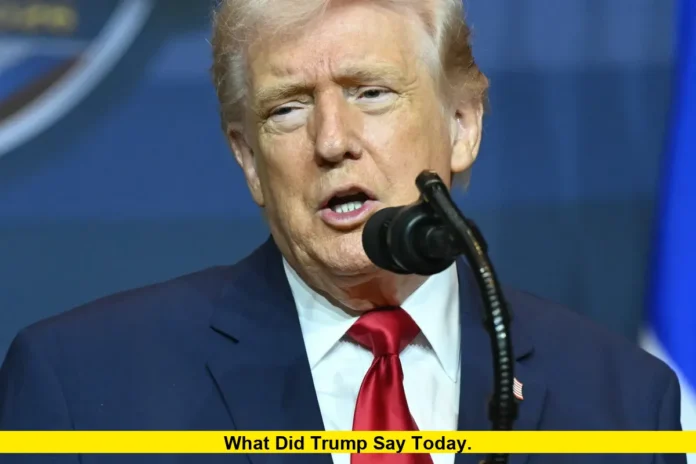

When Donald Trump delivered his prime-time speech on the Iran conflict, it instantly dominated headlines. But the Trump Iran address wasn’t just another wartime update—it was a carefully crafted message that mixed confidence, pressure, and political calculation in ways many readers haven’t fully unpacked.
Here’s a deeper, fully updated breakdown of what actually happened—and why it matters more than it seems.
A Speech Designed to Sound Like Victory—Without Ending the War
Trump’s central message was simple: the U.S. is winning and close to finishing the job.
He claimed that:
- Iran’s military capabilities have been heavily damaged
- U.S. objectives are “nearing completion”
- The conflict could end within 2–3 weeks
At the same time, he made it clear that:
- more strikes are coming, not fewer
- escalation—including targeting key infrastructure—remains on the table
That combination is important. It creates the perception of progress while justifying continued military action.
The Timing Confusion Everyone Is Talking About
A major reason this speech exploded online is timing.
- The address was delivered April 1 (U.S. evening)
- But it dominated April 2 global news cycles
This created the illusion that it was “today’s speech,” even though it was technically delivered the night before. The confusion amplified engagement—and helped the message spread faster.
Markets Reacted Instantly—and Not in a Good Way
Despite Trump’s confident tone, financial markets told a different story.
- Oil prices surged amid fears of prolonged conflict
- Stocks showed volatility tied to geopolitical risk
- Energy supply concerns—especially around key shipping routes—remained unresolved
This disconnect matters:
👉 The speech aimed to reassure
👉 The markets reacted with caution
A Message to Multiple Audiences at Once
The address wasn’t just for the American public. It was aimed at three different audiences simultaneously:
U.S. voters
Trump emphasized that the war would be short and successful, framing it as a necessary move despite rising gas prices and public concern
Iran
He issued a clear warning:
- negotiate—or face more aggressive strikes
Allies (and critics)
He criticized NATO and suggested others should take responsibility for stabilizing key oil routes, signaling a shift in U.S. expectations
The Big Contradiction in His Speech
One of the most striking elements was a contradiction that many casual readers missed:
- Trump claimed the U.S. is “close to finishing” the war
- But also said weeks of intensified attacks are still needed
At the same time:
- He downplayed unresolved issues like Iran’s remaining capabilities
- He offered no clear exit strategy
This raises a critical question:
👉 If the mission is nearly complete, why is escalation still required?
🔍 What People Are Missing (Exclusive Insight)
Most coverage focuses on what Trump said. But the real story is what he didn’t say.
No clear endgame
There was no detailed plan for how the war actually ends, only a rough timeline.
No solution for global energy disruption
The Strait of Hormuz—a critical oil route—remains unstable, yet the speech avoided concrete solutions
No clarity on long-term consequences
Even if military goals are achieved:
- Iran’s leadership remains in place
- regional tensions are still high
- retaliation risks are unresolved
👉 In short:
The speech projected closure—but the reality suggests ongoing uncertainty.
Why This Speech Matters More Than It Looks
This wasn’t just an update—it was a strategic narrative reset.
Trump:
- framed the war as nearly won
- justified continued escalation
- shifted responsibility to allies
- attempted to calm domestic concerns
But the gap between message and reality is what makes this moment significant.
Final Takeaway
The Trump Iran address is being widely shared as a decisive turning point. But a closer analysis shows something more complex:
- the war is not over yet
- escalation is still very real
- and key questions remain unanswered
What you’re seeing isn’t just a speech—it’s an attempt to control the narrative at a critical moment.