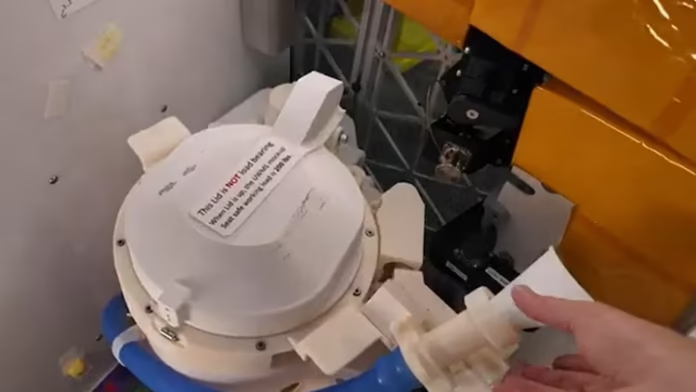

The Artemis II Toilet is unexpectedly stealing the spotlight after NASA’s historic April 2026 crewed Moon mission launched, sending four astronauts aboard the Orion spacecraft on a 10-day journey around the Moon. While the mission itself marks a major milestone in space exploration, it’s this surprisingly relatable detail—how astronauts use the bathroom in deep space—that has sparked massive curiosity online.
From social media threads to viral discussions, people across the U.S. are diving into how everyday human needs are handled hundreds of thousands of miles from Earth. And once you understand the challenges, it makes perfect sense why this topic is trending.
Keep reading as we break down what’s really behind the buzz—and why this system matters more than most people realize.
What Started the Conversation
The Artemis II mission launched on April 1, 2026, marking the first time astronauts have traveled toward the Moon since the Apollo era. With a crew of four sharing a tight spacecraft for more than a week, questions about daily life quickly surfaced.
Among them: how do astronauts go to the bathroom in space?
That question alone ignited widespread interest, especially as details emerged about how different this mission is from earlier ones.
What People First Noticed About Life Inside Orion
Once details about the Orion spacecraft’s interior became widely discussed, one thing stood out—space is extremely limited.
The crew lives in a compact environment for the entire mission. They sleep, eat, work, and manage hygiene in the same small area.
Unlike Earth, there’s no gravity to make basic bodily functions simple. That means even something as routine as using a toilet requires advanced engineering.
This realization sparked curiosity—and quickly turned the Artemis II toilet into a trending topic.
How Apollo-Era Systems Shocked a New Generation
As conversations grew, many people compared Artemis II to NASA’s Apollo missions from the 1960s and 1970s.
The difference surprised a lot of readers.
Back then, astronauts used basic collection bags attached to their bodies. There was no dedicated bathroom space, no privacy, and very limited odor control.
For modern audiences, this felt almost unbelievable.
That contrast helped fuel viral interest, with many people expressing surprise at how challenging space travel used to be.
Why This New Toilet System Is a Big Deal
The Artemis II mission introduces a major upgrade: a compact, advanced waste management system built specifically for deep space.
It uses airflow instead of gravity to guide waste, ensuring it stays contained and doesn’t float around the cabin.
Even more notably, the system includes a private area with a door—a feature that wasn’t available during Apollo missions.
This shift reflects NASA’s focus on improving astronaut comfort and well-being, not just mission performance.
For a crew spending 10 days together in close quarters, that upgrade matters.
What Social Media Users Are Saying
Online reactions have been a mix of curiosity, humor, and genuine fascination.
Many users joked about how space travel still comes down to basic human needs, while others praised the engineering behind the system.
Some of the most common reactions include:
- Surprise at how complicated bathroom use is in space
- Appreciation for the added privacy in Orion
- Comparisons to how far technology has come since Apollo
The topic has also become a gateway for people to learn more about life in space—drawing in audiences who might not usually follow NASA missions.
What Astronaut Life Really Looks Like on This Mission
Beyond the viral discussions, the reality of life aboard Orion is both fascinating and demanding.
Astronauts are:
- Sleeping in shared quarters
- Eating packaged and rehydrated meals
- Performing mission tasks in a confined environment
- Managing hygiene with limited resources
The Artemis II toilet plays a key role in making this routine sustainable.
Without a reliable system, even a short mission like this could become uncomfortable—or even unsafe.
Why Space Toilets Are More Important Than You Think
At first glance, it might seem like a minor detail.
But in reality, waste management is a critical part of any space mission.
A malfunctioning system could:
- Affect air quality inside the spacecraft
- Create sanitation issues
- Impact astronaut health and focus
That’s why NASA has spent years developing and testing improved designs.
The system used on Artemis II builds on technology previously tested in orbit but adapted for deep-space conditions.
How This Connects to Future Moon and Mars Missions
The attention around the Artemis II toilet isn’t just about curiosity—it highlights a bigger story.
NASA is preparing for longer missions, including:
- Future lunar landings
- Extended stays on the Moon
- Eventually, missions to Mars
These journeys will require systems that can operate reliably for months, not days.
What’s being tested on Artemis II will help shape the future of human space exploration.
Why This Story Is Resonating Right Now
The Artemis II mission represents a return to deep space after more than 50 years.
For many people, it feels like a historic moment—but also a relatable one.
The idea that astronauts face the same basic needs as everyone else makes the mission feel more human.
That connection is part of what’s driving the story’s popularity.
It’s not just about rockets and science—it’s about real people living in extraordinary conditions.
What Happens Next
The Artemis II mission will continue its planned trajectory around the Moon before returning to Earth after approximately 10 days.
During that time, NASA will closely monitor all onboard systems, including life-support and waste management.
The data collected will be critical for upcoming missions that aim to land astronauts on the lunar surface and expand human presence beyond Earth.
Final Takeaway
The Artemis II toilet may not have been designed to go viral, but it has become one of the most talked-about elements of this historic mission.
It’s a reminder that space exploration isn’t just about reaching new destinations—it’s about making life possible once you get there.
What do you think about this side of space travel? Share your thoughts and keep checking back for more updates as the mission unfolds.