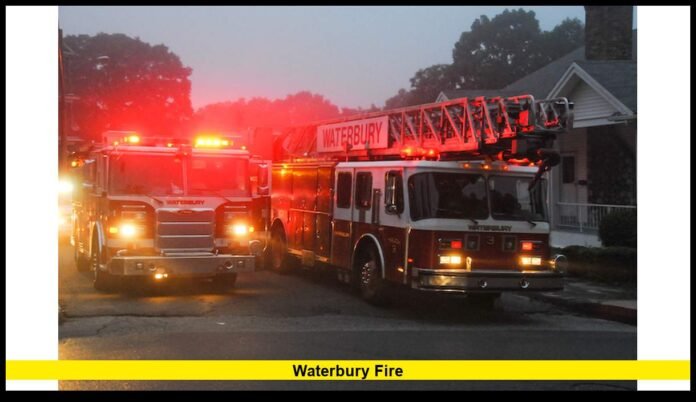

The most recent Waterbury fire has focused attention on a late-night blaze that destroyed a detached barn on North Main Street and prompted an intense response from city firefighters due to the presence of propane tanks and the risk of explosion.
Crews were dispatched shortly before midnight after reports of a structure fire. When firefighters arrived, they encountered heavy flames already consuming the building. Because the fire involved stored fuel containers, operations immediately shifted to a safety-first approach to protect nearby homes and emergency personnel. All hazardous materials were secured, the fire was contained, and no injuries were reported. Officials have confirmed that the investigation into the cause is ongoing.
Where the Fire Happened and How It Unfolded
The incident took place at a residential property on North Main Street. The building involved was a detached barn, estimated to be roughly 30 by 20 feet in size. By the time the first engine companies reached the scene, the structure was already fully involved.
Firefighters established a perimeter and began defensive suppression while assessing additional risks. Several propane tanks were located inside and around the barn. These tanks posed a serious danger, as extreme heat can cause them to rupture or explode.
Key actions during the first phase of the response included:
- Securing the surrounding area
- Cooling the exterior of the structure
- Removing propane tanks from the immediate fire zone
- Preventing fire extension to nearby properties
- Monitoring for potential structural collapse
Once the most severe heat was reduced, crews moved closer to the structure and continued suppression until the flames were knocked down and the fire was declared under control.
No Injuries, But Significant Structural Loss
Authorities confirmed that no residents or firefighters were hurt. However, the barn sustained heavy damage and is considered a total loss. Firefighters remained on scene well after the main body of the fire was extinguished to conduct overhaul operations, locate hidden hotspots, and ensure the blaze would not reignite.
Traffic in the immediate area was temporarily restricted while hoses, apparatus, and lighting equipment were deployed. Neighbors reported seeing heavy smoke and flashing emergency lights for several hours as crews worked through the night.
Why Propane Tanks Raised the Risk Level
The presence of propane tanks significantly increased the danger of the Waterbury fire. Propane, when exposed to high temperatures, can rapidly expand and rupture its container, potentially causing a violent explosion. This risk required firefighters to take careful, methodical steps before advancing too close to the structure.
The response strategy focused on:
- Cooling the tanks with water streams
- Physically relocating them to a safer distance
- Preventing flame contact with pressurized containers
- Maintaining a wide safety buffer zone
These actions likely prevented a far more dangerous outcome and protected nearby homes from secondary blasts or flying debris.
Current Status of the Investigation
Fire officials have confirmed that the cause of the blaze has not yet been determined. Investigators are examining several standard factors, including:
- Electrical systems
- Heating equipment
- Stored materials inside the barn
- Possible accidental ignition sources
- Structural conditions that may have contributed to rapid fire spread
The scene has been documented, and physical evidence is being reviewed. Until the investigation is complete, no official determination will be released.
Recent Waterbury Fire Activity
The North Main Street incident is part of a series of serious fire events that have occurred in Waterbury over recent months. These incidents have included residential, commercial, and auxiliary structures, each presenting unique challenges for firefighters.
Confirmed recent events in the city include:
- A fatal residential fire at a condominium on Mark Lane in late December.
- A multi-alarm commercial fire in a Store Avenue strip mall that caused extensive damage to a long-standing restaurant.
- A house fire on Sylvan Avenue where interior conditions complicated rescue and suppression efforts.
- A commercial structure fire on Thomaston Avenue that resulted in smoke and structural damage.
Together, these incidents show the wide range of fire risks present in urban and suburban environments.
How Fire Crews Operate During High-Risk Blazes
When a structure is already heavily involved and hazardous materials are present, firefighters often employ defensive tactics. This approach prioritizes containment and exposure protection before committing crews inside unstable buildings.
During the latest Waterbury fire, operations followed several critical steps:
- Scene size-up to identify hazards and structural stability
- Establishment of water supply and multiple hose lines
- Hazard removal, including propane tanks
- Exterior attack to reduce heat and flame intensity
- Controlled interior access only after conditions improved
- Overhaul to locate smoldering materials
This sequence reduces the chance of flashover, collapse, or explosion while allowing crews to gradually gain control of the fire.
Impact on the Surrounding Neighborhood
Although no evacuations were ordered, residents in the area experienced temporary disruptions. Emergency vehicles blocked portions of the roadway, and heavy smoke drifted through the neighborhood during the height of the fire.
City officials confirmed that:
- Nearby homes were not damaged
- Utilities remained operational
- No secondary fires occurred
- Air quality concerns were short-term and localized
Once the scene was stabilized, normal traffic flow resumed.
The Role of the Waterbury Fire Department
The Waterbury Fire Department operates as a full-time career service with multiple engine, ladder, and rescue companies positioned across the city. The department responds to thousands of calls each year, ranging from structure fires and hazardous materials incidents to medical emergencies and technical rescues.
The response to the North Main Street blaze demonstrated:
- Rapid dispatch and arrival
- Effective hazard identification
- Coordinated multi-unit operations
- Successful prevention of fire spread
- Strong command and control under high-risk conditions
Fire officials credited teamwork and training for the safe outcome.
Winter Fire Risks in Connecticut
Cold-weather months traditionally bring an increase in fire incidents. Common contributing factors include:
- Space heater use
- Overloaded electrical systems
- Improper storage of flammable materials
- Heating equipment malfunctions
- Indoor use of fuel-powered devices
Fire safety officials continue to urge residents to take extra precautions during winter, especially in garages, basements, and outbuildings where fuel and heating equipment are often stored.
Fire Safety Steps for Property Owners
To reduce the risk of future incidents, authorities recommend:
- Storing propane tanks outdoors and away from structures
- Keeping ignition sources away from fuel containers
- Installing and maintaining smoke alarms
- Avoiding extension-cord overuse
- Ensuring heating systems are professionally inspected
- Keeping combustible materials away from heat sources
- Maintaining clear access for emergency responders
Simple preventive measures can significantly lower the chance of a fast-spreading fire.
What Investigators Look for After a Structure Fire
Fire investigations focus on determining the point of origin and the first material ignited. Specialists examine:
- Burn patterns
- Electrical wiring
- Appliance conditions
- Ventilation paths
- Fuel load distribution
- Witness observations
These elements help reconstruct how the fire started and how it spread so quickly.
Why Each Waterbury Fire Matters
Every confirmed Waterbury fire contributes to a broader understanding of risk patterns within the city. Data from these incidents helps shape:
- Building inspection programs
- Public safety education
- Fire code enforcement
- Emergency response planning
- Resource allocation
Lessons learned from one incident can help prevent the next.
Timeline of Recent Confirmed Incidents
| Date | Area | Structure Type | Outcome |
|---|---|---|---|
| January 2026 | North Main Street | Detached barn | Total loss, no injuries |
| December 2025 | Mark Lane | Residential condo | One fatality |
| October 2025 | Store Avenue | Commercial strip mall | Severe damage |
| November 2025 | Sylvan Avenue | Residential home | Firefighter treated |
| November 2025 | Thomaston Avenue | Commercial building | Smoke and structural damage |
Looking Forward
As investigators continue examining the North Main Street scene, the focus remains on determining how the fire began and what conditions allowed it to spread so rapidly. While the outcome could have been far worse due to the presence of propane tanks, swift action prevented additional destruction.
The latest Waterbury fire serves as a reminder of how quickly routine storage areas can become dangerous when ignition sources and fuel are present, and how vital rapid response and preparedness are for protecting lives and property.
Stay informed and share your thoughts on recent Waterbury fire activity and safety awareness in your community.