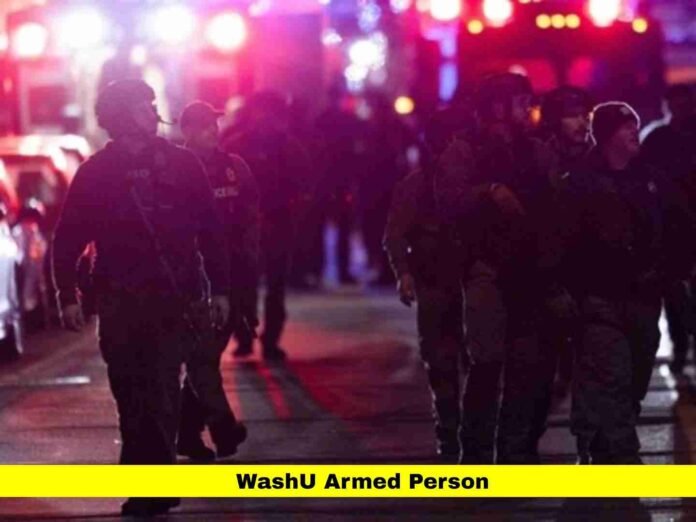

Early Tuesday morning, an emergency notification went out across the Washington University community after a washu armed person alert was issued on the Danforth Campus, prompting lockdowns, police sweeps, and heightened concern among students, faculty, and staff. The alert sparked immediate safety actions, a coordinated response by campus law enforcement, and ongoing efforts to keep the community informed and secure throughout the unfolding situation.
This detailed news article provides a complete timeline of confirmed developments, explains how the emergency alert system works, outlines law enforcement activity, and helps readers understand what occurred on one of the nation’s most prominent college campuses.
Emergency Alert Triggers Campuswide Response
At 9:18 a.m. this morning, an emergency alert was activated for Washington University’s main campus in St. Louis. The message stated that there was an armed person on the Danforth Campus and instructed people to run, hide, or fight, with specific advice to lock or barricade themselves in rooms if they were sheltering in place. Individuals off campus were cautioned to stay away and wait for updates.
Phones, email accounts, and campus communication channels all delivered the same alert at once, reaching thousands of students, faculty, and staff. The notification used standardized safety language to quickly convey urgency and recommended immediate protective action. Individuals inside buildings locked doors and sought secure spaces, while some who were outdoors sought shelter at nearby locations.
Within moments, classes paused, offices secured their doors, and the campus transformed from a typical weekday morning into a full safety response event where every second mattered.
Law Enforcement Activity Focused Near Brookings Hall
Shortly after the alert was issued, campus police and supporting law enforcement began concentrating their response efforts around Brookings Hall — a central academic and administrative hub on the Danforth Campus. Officers arrived quickly and began systematically checking buildings and nearby areas after reports that indicated someone might be carrying a weapon.
In communications sent to the campus, authorities later clarifed that police were actively checking buildings near Brookings Hall after receiving reports of a person with a weapon. Officials emphasized that there was no confirmation of an active shooter, but urged community members to remain in place until further notice.
During these building checks, officers cleared rooms, stairwells, and public areas and maintained a visible presence outside to discourage movement that could complicate safety efforts. The presence of law enforcement vehicles and uniformed officers was noticeable across multiple parts of campus as the scene evolved.
Understanding Campus Lockdown Protocols
When an emergency alert signals a potential threat involving a weapon, Washington University’s lockdown procedures swing into action immediately. These procedures focus on protecting lives by limiting movement and ensuring individuals secure themselves in safe spaces.
In classrooms, professors secured doors and instructed students to stay out of sight and silence electronic devices. Study groups in libraries and lounges quietly followed instructions, closing doors or retreating to interior rooms. Office staff locked doors and turned off lights, awaiting further updates.
Residence halls also tightened security as students came inside and followed guidance from university staff. Doors remained locked and community members stayed inside personal rooms or shared suites. Dining halls and common areas restricted access until campus safety officials confirmed it was safe to reopen.
The “run, hide, fight” guidance provided flexibility based on location, and individuals who were already indoors were told to lock or barricade their rooms and remain silent until confirmed safe by authorities.
How the Emergency Communication System Works
Washington University uses a layered emergency notification system designed to deliver alerts simultaneously through multiple channels. Text messages and emails are the first to reach registered devices, ensuring that most members of the campus community receive critical information within seconds.
In addition to personal devices, the university’s internal alert system pushes messages to desktop computers connected to the campus network and displays alerts on relevant university webpages. This system redundancy is intentional — if one communication channel fails, others deliver the message.
Emergency notifications like today’s are carefully crafted to provide immediate protective action instructions without requiring full details to be verified first. This approach prioritizes safety by alerting people to take action while officials investigate and confirm the nature of the reported situation.
Clarifications on the Reported Armed Person
While the initial alert announced the presence of an armed person, authorities later updated the message to state that police were checking buildings after reports of a weapon were received. Importantly, this update also noted that there was no confirmation of an active shooter.
This distinction matters. A report of an armed person can trigger precautionary actions even when there is not yet verified evidence of someone firing a weapon or actively threatening individuals. University officials maintained this wording to avoid spreading unverified details, while still urging people to stay in secure locations.
Throughout the morning, follow-up alerts reminded members of the campus community to remain in place and take protective action until more information could be confirmed.
Campus Reaction and Real-Time Experiences
Tweets and posts from individuals on and around campus described the moment the alert appeared. Students mentioned receiving messages at around 9:18 a.m. on their phones and through campus email. Some said they heard sirens as they entered buildings, while others inside classrooms watched as doors were locked and lights were dimmed as part of sheltering procedures.
One account described how doors were locked across academic halls even before some students fully comprehended the reason for the alert. Others noted that campus police began their search from the vicinity of Brookings Hall and moved throughout several buildings as part of their response.
Despite the intense nature of the alert, there were no immediate reports of injuries as of mid-morning, and authorities continued to provide guidance to community members about staying secure while the situation unfolded.
Law Enforcement Coordination and Campus Safety Infrastructure
Washington University maintains its own campus police department responsible for routine patrols and emergency responses on the Danforth Campus. These officers work closely with local law enforcement agencies when additional support is needed, especially in situations involving reported weapons or potential threats.
The campus safety infrastructure includes controlled access systems for buildings, 24/7 patrols in residence halls, and monitoring of emergency call stations located throughout the campus. These systems support coordinated action during emergency alerts like the one experienced today.
Teams trained in handling potential threats involving weapons moved methodically through buildings near the reported area — checking entrances, interiors, stairwells, and other spaces where individuals might be located. Maintaining calm and coordinated action is crucial in minimizing risk and ensuring that safety protocols are followed carefully.
How Individuals Should Respond During Alerts
When an alert like this occurs, the primary focus for individuals is to protect themselves by following guidance from officials. Students were advised to lock or barricade doors, silence phones, and stay out of sight until confirmed safe.
Off-campus individuals were reminded to stay clear of the campus until authorities announced it was safe to return. Avoiding unnecessary movement helps prevent additional risk and allows law enforcement to conduct their search without extra complications.
Emergency alerts are designed to give clear instructions that empower individuals to take immediate protective action, even before full details of the situation are verified.
Why Alerts Trigger Without Immediate Confirmation
University officials often activate emergency alerts before all details are confirmed because early protective action can save lives. Waiting for complete verification before warning people can delay critical safety decisions and put individuals at greater risk.
In this case, the alert issued at 9:18 a.m. reflected a report of a person with a weapon. While the investigation was ongoing and no active shooter was confirmed at that time, precautionary measures ensured that people took immediate steps to secure themselves.
This approach is standard in emergency management, where speed often matters more than complete certainty.
No Reports of Injuries During Response
As of the latest update this morning, there have been no reports of injuries connected to the incident at Washington University’s Danforth Campus. The alert remained active as officers continued to check buildings and provide updates but no confirmation had emerged of shots fired or individuals harmed.
Campus safety officials consistently reminded the community to remain in place and follow instructions until police completed their assessments and provided further information.
Campus Safety Systems Reviewed Amid Alert
Washington University regularly evaluates its emergency communication networks and safety infrastructure to ensure rapid response during crises. Messaging systems are tested and updated to reach students and staff as quickly as possible. Access control systems limit entry into academic and residential buildings, while patrol units work around-the-clock to monitor campus safety.
Emergency alerts like today’s also serve as real-world tests of these systems and may inform future updates to improve response times and clarity of communication.
Community Response and Support Channels
Students and staff impacted by the alert are encouraged to lean on campus support services after the situation has been resolved. University counseling and student support programs remain available for those needing assistance processing a stressful event.
Even without injuries, situations involving reports of weapons can leave lingering anxiety and concern among community members. Providing support resources is an important part of the post-alert response.
Comparison With Campus Safety Protocols Elsewhere
Universities across the United States maintain similar emergency alert systems designed to communicate threats involving weapons or other dangers. The approach typically includes standardized messages with clear protective instructions, layered communication channels, and coordinated law enforcement responses tailored to the specific campus layout.
Today’s alert at Washington University illustrated how these systems function in real time — activating swiftly, reaching a large and diverse community, and prompting organized action from trained responders.
Looking Ahead at the Danforth Campus Environment
As the situation continues to develop, campus officials will provide updates on the status of building checks and when people can safely resume normal campus activities. Until an official all-clear is announced, individuals are advised to stay where they are and wait for confirmed guidance from university authorities.
The Danforth Campus, a 169-acre central hub of academic, residential, and administrative life at the university, remains a focal point for student learning and research. Today’s events highlight both the potential risks that large communities face and the systems in place to protect them.
Why This Matters to Students and Families
For students, faculty, and family members, understanding how the university responds to threats enhances trust in safety systems. Emergency alerts, even when triggered by reports that later prove unverified, signal that authorities prioritize protection above all else. Campus safety infrastructure and coordinated law enforcement responses are designed to minimize risk and guide individuals through uncertain situations with clear instructions.
While no explanation can erase anxiety from moments like these, knowing that systems worked as intended — reaching people quickly and prompting coordinated action — offers reassurance in a challenging time.
Share your experience or questions in the comments below and stay updated as more details become available.