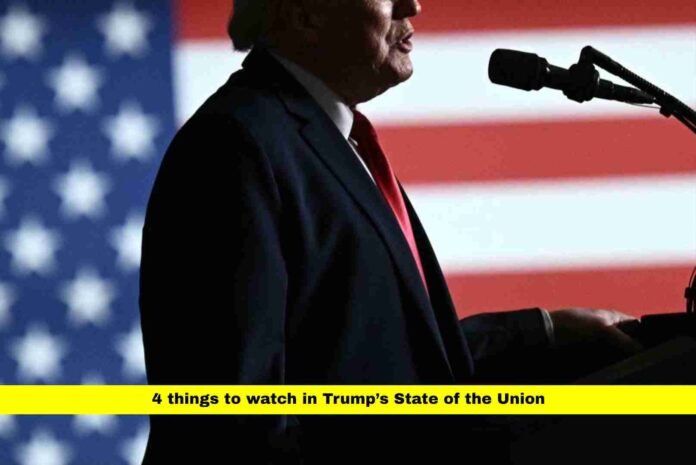

President Donald Trump is set to deliver his 2026 State of the Union address before a joint session of Congress, and Trump to address economy, tariffs and foreign policy stands at the center of national anticipation. The annual speech provides the president with a powerful platform to outline his administration’s direction, defend policy decisions, and define legislative priorities for the year ahead. At a time when economic pressures, trade disputes, and global tensions dominate headlines, this address carries significant weight for lawmakers, markets, and voters alike.
The speech takes place in the House Chamber of the U.S. Capitol, where members of Congress, Cabinet officials, Supreme Court justices, and military leaders gather for one of the most high-profile events in American governance. Millions of Americans are expected to watch across television and digital platforms, focusing closely on how the president frames the current state of the country and what proposals he advances moving forward.
This year’s address comes during Trump’s second term, as his administration navigates legal challenges to tariff policies, ongoing debates over economic performance, and a complex international landscape. With midterm elections approaching, the tone and content of the speech may influence not only policy discussions but also the broader political climate.
Economic Performance and Cost-of-Living Pressures
The economy is expected to anchor a major portion of the president’s remarks. Inflation, consumer spending, job growth, and energy prices remain central to public concern. Many households continue to monitor the costs of groceries, housing, transportation, and healthcare, and the administration has repeatedly emphasized its efforts to strengthen domestic production and support American workers.
During the address, Trump is likely to highlight employment trends, manufacturing growth, and business investment as indicators of economic stability. He may underscore policies aimed at expanding industrial output, boosting energy production, and encouraging private-sector investment. Tax policy could also feature prominently, particularly discussions about maintaining or extending provisions designed to stimulate economic activity.
Energy independence may receive attention as well. The administration has linked domestic energy production to lower costs and greater economic security. By emphasizing oil and gas output, infrastructure development, and regulatory adjustments, the president may argue that energy policy directly supports broader economic resilience.
At the same time, the speech may acknowledge ongoing affordability concerns. Americans remain sensitive to price fluctuations, and the administration’s response to inflationary pressures will likely form a key narrative thread. The president may present data and policy measures that he believes demonstrate progress while outlining additional steps intended to support working families.
Tariffs and Trade Strategy Moving Forward
Trade policy stands as one of the defining elements of Trump’s economic agenda, and tariffs are expected to play a prominent role in the address. Earlier this year, the U.S. Supreme Court struck down a broad global tariff program that had been implemented under emergency powers. Following that decision, the administration introduced a revised tariff framework using different statutory authority, establishing a 10 percent baseline on certain imports with plans to raise that rate to 15 percent.
In the speech, Trump is likely to defend his approach to tariffs as a necessary tool for protecting American industries and addressing trade imbalances. He may argue that these measures strengthen domestic manufacturing and reduce reliance on foreign supply chains. By framing tariffs as part of a broader economic strategy, the president could present them as central to national competitiveness.
Trade relationships with major global partners may also be discussed. Tariffs often affect diplomatic and economic ties, and the administration has maintained that its trade policies aim to secure more favorable terms for U.S. businesses and workers. The address may reinforce this message while calling on Congress to support trade-related legislation or expanded executive authority.
The impact of tariffs on supply chains, consumer prices, and global markets will likely remain a subject of debate beyond the speech. However, within the address itself, Trump is expected to present tariffs as a cornerstone of his administration’s economic doctrine.
Foreign Policy and National Security Priorities
Foreign policy is another area poised to receive substantial attention. The global environment remains complex, with shifting alliances, regional conflicts, and economic competition shaping U.S. engagement abroad. Trump may outline his administration’s diplomatic efforts, military positioning, and strategic objectives as evidence of strong leadership on the world stage.
National security priorities such as defense spending, military modernization, and border protection could intersect with broader foreign policy themes. The president may emphasize readiness, deterrence, and the importance of maintaining a robust military presence in key regions. These messages often resonate with voters concerned about global stability and national safety.
Trade and foreign policy frequently overlap, particularly when tariffs affect international relations. The address may connect economic protection measures with diplomatic leverage, suggesting that economic strength enhances America’s negotiating position abroad.
Humanitarian efforts, international partnerships, and regional diplomacy may also appear in the speech. By highlighting engagements with allied nations and efforts to address global challenges, Trump could aim to portray the United States as assertive yet strategic in its international approach.
Political Landscape and Legislative Goals
The State of the Union address unfolds against a backdrop of heightened political tension as midterm elections approach. Approval ratings, party dynamics, and legislative negotiations all influence how the speech will be received. Trump may use the platform to rally supporters while urging bipartisan cooperation on key issues.
Healthcare policy, energy regulation, and public safety initiatives could feature among legislative priorities. The president may outline proposals requiring congressional action and call on lawmakers to support measures aligned with his administration’s agenda. By doing so, he positions the speech as both a policy roadmap and a political statement.
Economic performance remains intertwined with electoral outcomes, and messaging during the address may aim to strengthen public confidence. The administration’s emphasis on job growth, investment, and trade enforcement serves not only as policy justification but also as campaign messaging in advance of upcoming elections.
Opposition lawmakers may respond critically, but the address ensures that the president’s narrative reaches a national audience simultaneously. How effectively that narrative resonates could shape political momentum in the months ahead.
Public Reaction and Broader Implications
State of the Union addresses often spark immediate reaction from voters, analysts, and policymakers. Markets may respond to policy signals, and international observers closely watch statements related to trade and diplomacy. For many Americans, the speech provides clarity about where the country stands and where leadership intends to steer it.
Public discussion will likely center on how convincingly the president addresses economic concerns, justifies tariff policies, and articulates foreign policy goals. The tone of the speech—whether conciliatory, assertive, or combative—may also influence public perception.
In an era of rapid media cycles, the address serves as a defining moment that shapes headlines, debates, and legislative priorities. Its themes may dominate political discourse for weeks, especially as lawmakers and candidates reference key passages in speeches and campaign events.
A Pivotal Moment in the National Conversation
The 2026 State of the Union address arrives at a time when economic uncertainty, global competition, and domestic political divisions remain prominent. By focusing on economic growth, trade enforcement, and international strategy, Trump aims to present a cohesive vision for the country’s future.
Whether the speech reassures skeptical voters or energizes supporters will become clearer in the days that follow. What remains certain is that the issues discussed—jobs, tariffs, security, and diplomacy—touch nearly every American household in some way.
What are your thoughts on the direction outlined in tonight’s address? Join the conversation and stay engaged as these policies continue to shape the nation’s path forward.